
Supreme Court denies bail to Umar Khalid after 5 years. Analysis of the new "terrorist act" definition and its threat to dissent.
 Brajesh Mishra
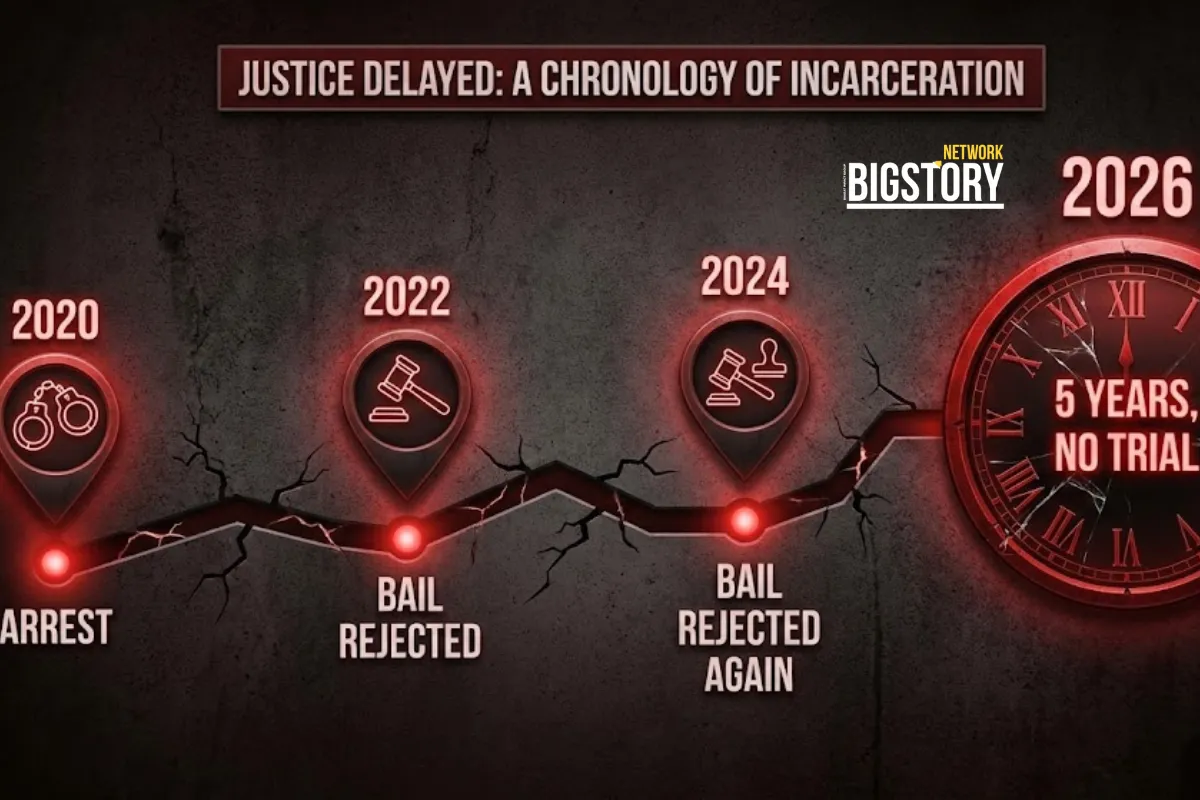
In a judgment that could reshape the contours of civil liberty in India, the Supreme Court on January 5, 2026, denied bail to student activist Umar Khalid and co-accused Sharjeel Imam in the Delhi riots conspiracy case. The verdict comes after Khalid has spent over five years in jail without the trial even commencing. While the bench of Justices Aravind Kumar and N.V. Anjaria granted bail to five other co-accused, it held that the accusations against Khalid and Imam were "prima facie true" under the Unlawful Activities (Prevention) Act (UAPA). The ruling establishes a chilling precedent: organizing protests that lead to disruption can now be legally equated with a "terrorist act," allowing indefinite pre-trial detention.
The saga began in December 2019 during the anti-CAA protests. Khalid, a former JNU student, was accused of orchestrating the February 2020 Delhi riots that killed 53 people. Arrested in September 2020, he was charged under the UAPA for a "larger conspiracy" to destabilize the government. His defense argued that his speeches called for peaceful protest and that he was not even present in Delhi during the violence. However, the prosecution relied on WhatsApp chats and statements from protected witnesses to paint him as the "mastermind." For five years, his bail pleas were rejected by lower courts, with the judiciary repeatedly deferring to the "gravity" of the allegations over the constitutional right to a speedy trial.
While mainstream media focuses on the "Bail Denied" headline, the deeper story is the "Judicial Contradiction." The Supreme Court’s own precedent in Sheikh Javed Iqbal (2019) held that the more serious the charge, the greater the imperative for a speedy trial to prevent injustice. This judgment flips that logic: because the charge is "grave" (terrorism), the delay is irrelevant. The court effectively ruled that for certain categories of accused, the presumption of innocence is suspended indefinitely.
Furthermore, the "Redefinition of Terrorism" is profound. The court accepted the prosecution's argument that a "chakka jam" (roadblock) designed to disrupt city life constitutes a threat to the "economic security" and sovereignty of India. This interpretation transforms a common method of political protest into a terrorist offense. If organizing a disruptive demonstration is terrorism, then the scope of legitimate dissent in India has just contracted significantly.
This verdict is a warning shot to civil society. It signals that the judiciary may not rescue activists from the UAPA's grip, even after half a decade of incarceration without trial. For the police, it validates the strategy of using conspiracy charges to bypass the need for direct evidence of violence. Khalid’s case is no longer just about the Delhi riots; it is a template for how the state can legally incapacitate dissenters for years.
If five years in jail without a trial isn't enough to warrant bail, how long is too long in the world’s largest democracy?
Did the Supreme Court grant bail to Umar Khalid in January 2026? No. On January 5, 2026, the Supreme Court denied bail to Umar Khalid and Sharjeel Imam in the Delhi riots conspiracy case. The court ruled that there was a prima facie case against them under the UAPA, despite their incarceration for over five years without the trial completing.
Why is the Supreme Court's decision on Umar Khalid's bail controversial? Legal experts criticize the decision for potentially redefining "terrorist act" to include the planning of disruptive protests (like chakka jams). Critics argue this criminalizes political dissent and ignores the court's own precedents on the right to a speedy trial under Article 21.
What is the "larger conspiracy" case in the Delhi riots? The "larger conspiracy" refers to the prosecution's claim that the 2020 Delhi riots were not spontaneous but a pre-planned attempt to destabilize the government, orchestrated by activists like Umar Khalid through WhatsApp groups and meetings during the anti-CAA protests.
News Coverage
Legal Analysis
 Exclusive Content


Sign up for the Daily newsletter to get your biggest stories, handpicked for you each day.


 Trending Now! in last 24hrs


