BIGSTORY Network


India Jan. 29, 2026, 4:36 p.m.

Supreme Court Stays UGC "Black Law": No Equity Squads for Now

SC stays UGC Equity Regulations 2026 (Jan 29). CJI calls rules "divisive." Equity Squads halted; 2012 rules restored until March 19 hearing.
by Author Brajesh Mishra
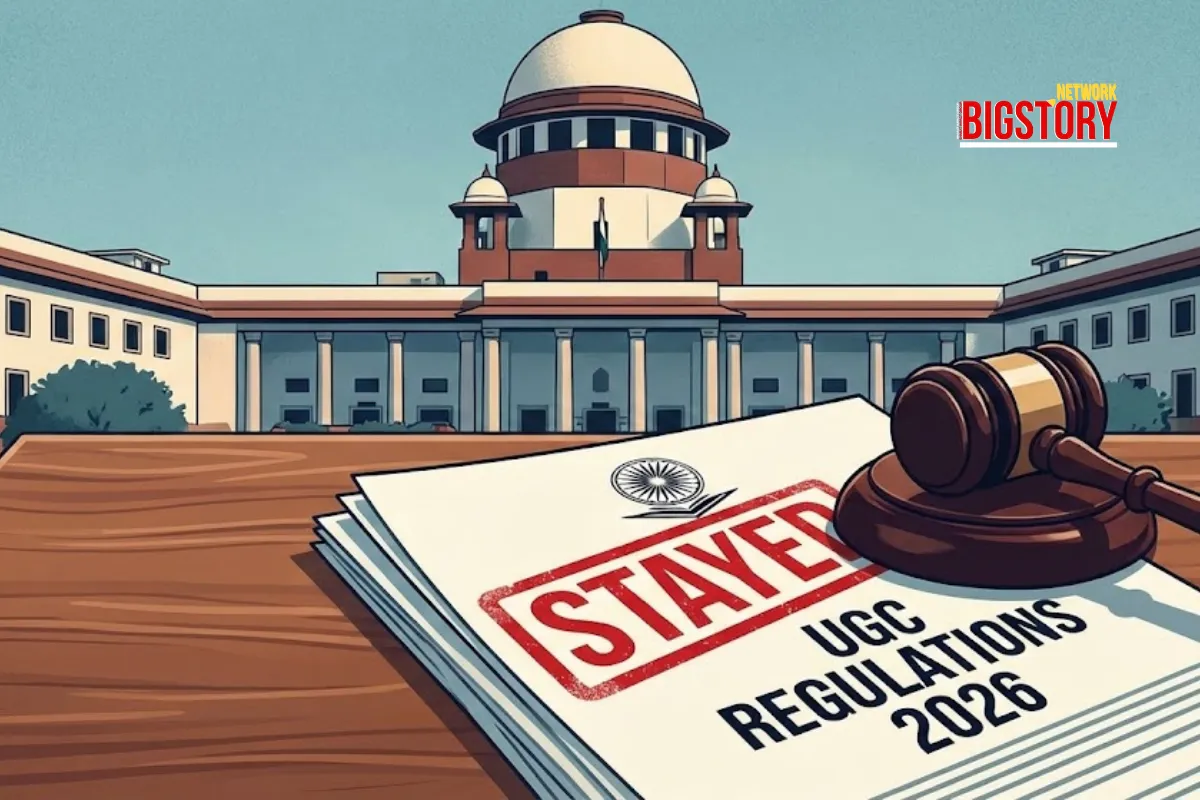
Hero Image

In a decisive judicial intervention today, January 29, 2026, the Supreme Court bench led by Chief Justice of India Surya Kant stayed the operation of the controversial UGC Equity Regulations 2026. The Court explicitly cited that the rules appeared "vague" and capable of "dividing society" rather than promoting inclusion.

The interim order effectively halts the mandate for universities to form "Equity Squads"—mobile vigilance teams that had triggered nationwide student protests over surveillance fears. The Bench ordered that the earlier UGC Regulations of 2012 will remain in force immediately, pausing the new "surveillance mechanism" while an expert committee reviews the constitutional validity of the 2026 draft.

The Context (How We Got Here)

  • The Notification (Jan 13): The University Grants Commission (UGC) notified the new "Promotion of Equity" regulations to curb caste-based discrimination. Key changes included defining "victims" specifically within SC/ST/OBC categories and removing penalties for filing false complaints.
  • The Backlash (Jan 27): Massive protests erupted outside UGC offices, with student groups labeling the rules a "Black Law" that institutionalized reverse discrimination and moral policing through "Equity Squads."
  • The Intervention (Jan 29): Hearing a plea by advocate Vineet Jindal, the Supreme Court expressed shock at provisions that seemingly hinted at segregation (e.g., separate facilities) and ordered the Centre to form a committee of "eminent jurists" to redraft the rules.

The Key Players (Who & So What)

  • CJI Surya Kant (Chief Justice of India): The Presiding Judge. He delivered the critical observation that universities cannot be turned into "policing states." His sharp rebuke—"If we don't intervene, it will lead to dangerous impacts"—signaled that the Court saw the rules as a threat to social cohesion.
  • Vineet Jindal (Petitioner): The Challenger. He successfully argued that Regulation 3(c) violated Article 14 (Equality) by defining "victim" exclusively as members of marginalized communities, thereby leaving General Category students vulnerable to harassment without legal recourse.
  • Tushar Mehta (Solicitor General): The Government Voice. While defending the intent of social justice, Mehta conceded to the Court's view on "drafting defects" and agreed to a broader consultation process, buying the government time until the next hearing on March 19.

The BIGSTORY Reframe (The "Competence" Critique)

While the media frames this as a victory for "General Category" students, the deeper story is a Bureaucratic Failure.

  • Drafting Deficit: The Supreme Court didn't just critique the politics; it slammed the competence of the UGC's drafting. Calling the rules "vague" is a judicial indictment of the technocrats who wrote them. The Court noted that vague laws are dangerous because they allow for arbitrary enforcement—a "squad" can interpret any interaction as discrimination if the rulebook isn't precise.
  • The AI Pause: The stay has a hidden technological impact. The UGC was set to deploy an AI-driven 'e-Samadhan' portal to auto-tag complaints based on the new definitions. With the 2026 definitions stayed, this AI rollout is effectively frozen, forcing universities to revert to human-led, manual grievance redressal under the 2012 norms.

The Implications (Why This Matters)

  • For Campuses: The immediate effect is the dissolution of any "Equity Squads" that were formed in the last two weeks. Vice-Chancellors and Principals must revert to the 2012 Anti-Discrimination Guidelines.
  • For the Government: This is a significant policy setback. The Centre now has roughly 7 weeks (until March 19) to redraft the regulations. They must balance the political need to support SC/ST rights with the legal necessity of keeping the law neutral and clear.
  • The "Segregation" Warning: The Court was particularly alarmed by language in the regulations that could be interpreted as mandating separate hostels or facilities. The CJI’s remark—"For God's sake, don't do that"—sets a hard red line against any form of "separate but equal" policy in Indian education.

The Closing Question (Now, Think About This)

If a regulation designed to create "Equity" ends up requiring a Supreme Court stay to prevent "social division," was the problem the goal, or the method?

FAQs: The Supreme Court Order Explained

1. Did the Supreme Court cancel the UGC Equity Regulations 2026? No. The Court has issued an interim stay, which means the rules are put on hold (in abeyance). They are not permanently struck down yet. The Court has asked for a review by an expert committee, and the next hearing is on March 19, 2026.

2. What rules apply now for discrimination complaints? With the 2026 rules stayed, the legal framework reverts to the UGC (Promotion of Equity in Higher Educational Institutions) Regulations, 2012. Universities must follow the grievance redressal mechanisms outlined in that document until further orders.

3. Do colleges still need to form "Equity Squads"? No. The mandate to form "Equity Squads" is part of the 2026 Regulations, which are now stayed. Administrators should stop the formation of these squads immediately to comply with the Supreme Court order.

4. Why did the Court find the rules "vague"? The Bench noted that definitions regarding "victim" and "discrimination" were not precise, potentially excluding large sections of the student body (General Category) and leaving room for misuse. The implication of "separate facilities" was also flagged as regressive.

5. Does this affect reservation in admissions? No. This case is strictly about conduct regulations (anti-discrimination rules) on campus. It has absolutely no impact on constitutional reservation policies in admissions or jobs.

Sources

News Coverage

Context & Analysis


Brajesh Mishra
Brajesh Mishra Associate Editor

Brajesh Mishra is an Associate Editor at BIGSTORY NETWORK, specializing in daily news from India with a keen focus on AI, technology, and the automobile sector. He brings sharp editorial judgment and a passion for delivering accurate, engaging, and timely stories to a diverse audience.

BIGSTORY Trending News! Trending Now! in last 24hrs

Red Fort to CBSE Exams: What You Need to Know About Delhi's New Terror Alert
India
Red Fort to CBSE Exams: What You Need to Know About Delhi's New Terror Alert
The 74 Lakh Missing Voters: How AI Just Reshaped the 2026 Tamil Nadu Election
India
The 74 Lakh Missing Voters: How AI Just Reshaped the 2026 Tamil Nadu Election
Shame to Our Country": How the AI Summit Protest Just Fractured the INDIA Bloc
India
Shame to Our Country": How the AI Summit Protest Just Fractured the INDIA Bloc
The "Already Naked" Jibe: How PM Modi Turned the AI Summit Protest Against Congress
India
The "Already Naked" Jibe: How PM Modi Turned the AI Summit Protest Against Congress