
Zomato CEO Deepinder Goyal defends 10-minute delivery after massive gig worker strikes. Police data and unions challenge his "safe speed" claims.
 Brajesh Mishra
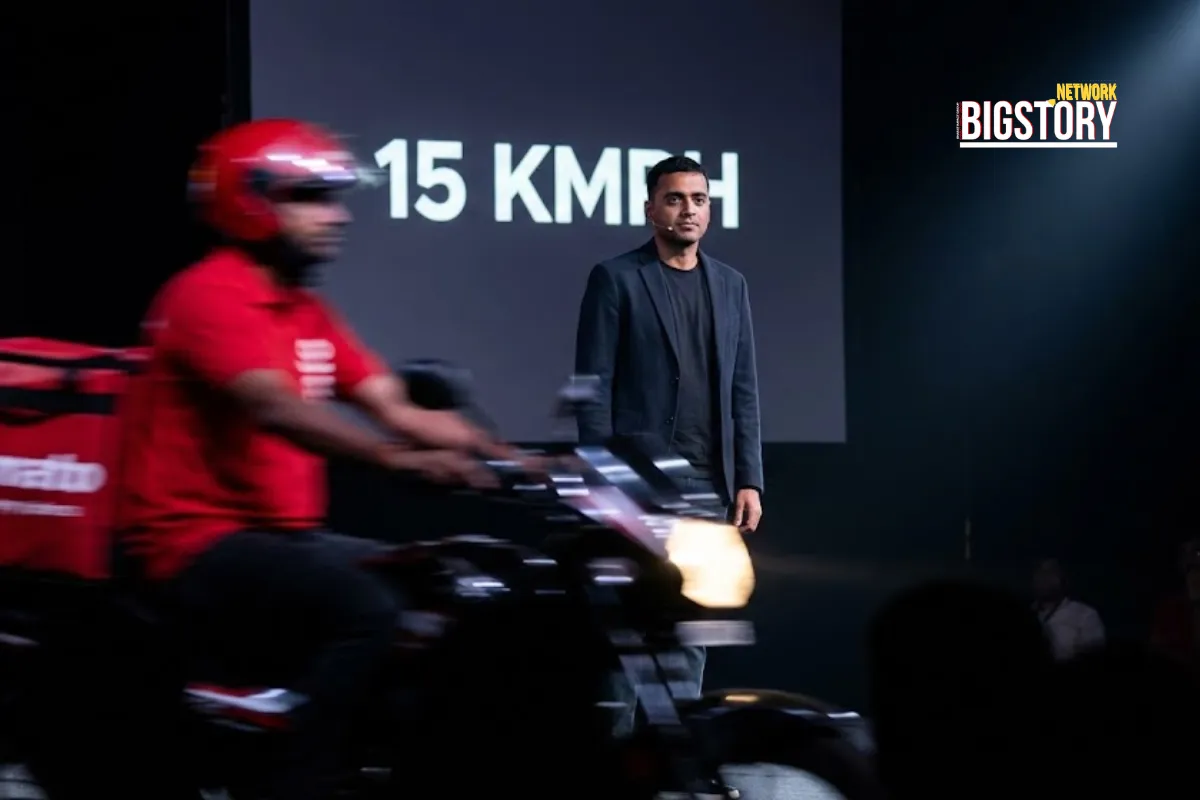
The battle over India's "10-minute delivery" addiction has exploded into a public confrontation. On January 1, 2026, Zomato CEO Deepinder Goyal took to social media to defend Blinkit's ultra-fast delivery model, claiming it relies on store density rather than reckless riding. His statement was a direct response to a massive New Year's Eve strike by gig workers across India, who demanded a ban on the 10-minute mandate, citing safety risks. However, Goyal's defense—that riders average just 15 kmph—is being fiercely contested by industry veterans and police data, exposing a deep rift between the boardroom narrative and the reality on the streets.
The conflict has been brewing for months. On December 25 and 31, tens of thousands of delivery partners logged off platforms like Swiggy, Zomato, and Blinkit, protesting wage cuts and unsafe working conditions. Unions claim that base pay has plummeted from ₹10/km to ₹6/km, forcing riders to chase impossible targets to survive. The pressure cooker burst on New Year's Eve, the busiest day of the year, with unions claiming 1.7 lakh participants in the strike. Goyal's intervention attempts to quell the PR firestorm, but his argument that "riders don't even have a timer" contradicts the algorithmic reality where speed determines earnings.
While mainstream media focuses on the "Strike vs. CEO" drama, the deeper story is the "Data Discrepancy." Goyal claims riders travel at a leisurely 15 kmph. Yet, Bengaluru Traffic Police booked 17,218 violations by delivery riders in a single week in November 2024, explicitly linking the surge to the launch of 10-minute services. If riders aren't pressured, why are they breaking laws at record rates? The math of "15 kmph" assumes zero friction—no traffic, no elevators, no security guards. In the real world, to meet the 10-minute promise, riders often have to break the speed limit.
Furthermore, the "Algorithmic Coercion" angle is critical. Even without a visible timer, the app's algorithm penalizes riders for delays by reducing their "rating," which in turn throttles their future orders. It is a system of invisible punishment: you aren't fired for being slow; you are just slowly starved of work. This "soft coercion" is what Goyal's defense conveniently omits.
Goyal’s defense has unintentionally invited regulatory scrutiny. By claiming the system is safe, he has set a benchmark that can be audited. If accident data continues to contradict his claims, the government may be forced to intervene, potentially capping delivery speeds or mandating minimum wages as demanded by the unions. The era of unregulated "quick commerce" expansion may be hitting its political limit.
The Closing Question (Now, Think About This)
If a pizza arrives in 10 minutes but the rider risks his life to bring it, is the convenience worth the moral cost?
Is Deepinder Goyal's 15 kmph claim realistic? Deepinder Goyal claims Blinkit riders travel 2km in 8 minutes, averaging 15 kmph. However, critics point out this calculation ignores time spent on parking, elevators, and security checks. To meet the 8-minute travel window in real-world traffic, actual riding speeds often need to be much higher, as evidenced by the high rate of traffic violations among delivery riders.
Why do delivery workers want to ban 10-minute deliveries? Workers argue that the 10-minute mandate creates immense pressure to drive recklessly to meet algorithmic targets. Unions state that failure to deliver quickly results in lower ratings and reduced earnings, effectively forcing riders to prioritize speed over safety.
What happened to Blinkit workers who struck in Varanasi? In April 2025, after Blinkit workers in Varanasi struck to protest a wage cut (from ₹35 to ₹26 per order), the company reportedly responded by suspending the IDs of over 150 participating riders, effectively firing them. This retaliation pattern is a key driver of the current nationwide protests.
News Coverage
Context & Data
 Exclusive Content


Sign up for the Daily newsletter to get your biggest stories, handpicked for you each day.



 Trending Now! in last 24hrs


