BIGSTORY Network


India Feb. 2, 2026, 9:40 p.m.

South India's "Golden Triangle": The 7 New Rail Routes Explained

Railway Budget 2026 sanctions 7 new high-speed corridors, 5 in South India. Hyderabad-Bangalore in 3 hours. New "Rare Earth Corridors" for mining logistics.

by Author Brajesh Mishra
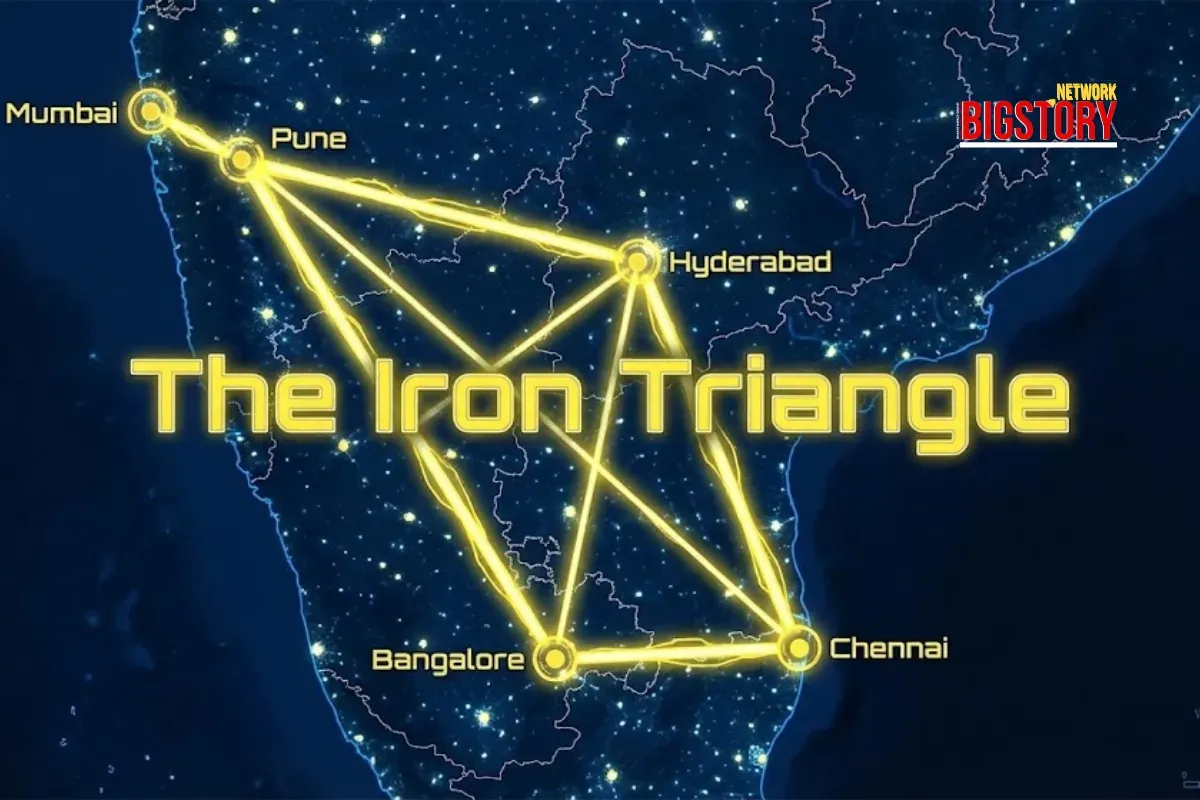
Hero Image

For years, the Railway Budget was about "safety," "cleanliness," and "electrification." Budget 2026 marks the decisive shift to velocity. Railway Minister Ashwini Vaishnaw has announced a record ₹2.93 lakh crore capital expenditure, but the headline isn't the money—it's the map.

The government sanctioned 7 new "High-Speed Rail Corridors," five of which—Mumbai-Pune, Pune-Hyderabad, Hyderabad-Bangalore, Hyderabad-Chennai, and Chennai-Bangalore—effectively create a "Golden Triangle" in South India. This infrastructure push is designed not just to move people, but to merge the disparate economic engines of the South into a unified $500 billion mega-zone.

The Context (The "Super-Region" Strategy)

  • The Problem: Currently, traveling between India's tech capitals (Bangalore and Hyderabad) takes 8-10 hours by train or involves a flight with long airport transit times. This segregates talent pools.
  • The Solution: The new corridors target a speed of 160-200 kmph (Semi-High Speed).
  • Result: A travel time of under 3 hours between these hubs.
  • Impact: This allows for a "de-congestion" of metro cities. A techie could theoretically live in a satellite town like Hosur or Tumkur (where rent is low) and commute to Bangalore swiftly. It mirrors the Tokyo-Osaka or China's Pearl River Delta model of urban agglomeration.

The "Rare Earth" Pivot

While the South gets speed, the East gets strategy. The Budget introduced "Rare Earth Corridors" in Odisha, Kerala, and Andhra Pradesh.

  • What are they? Dedicated rail freight lines connecting remote mines (Lithium, Monazite, Bauxite) directly to processing zones and ports.
  • Why now? To break China’s chokehold on the critical mineral supply chain. By reducing the "mine-to-port" logistics cost, India aims to make its EV and Semiconductor manufacturing competitively viable globally.

The Implications (Why This Matters)

  • For Real Estate: Land prices in "corridor towns" (the stops between the big cities) will explode. Watch out for Krishnagiri, Tumkur, and Zaheerabad. These will become the new logistics and residential hubs.
  • For Airlines: The "Short-Haul" flight market (e.g., Chennai-Bangalore) faces an existential threat. Just as the Eurostar killed the London-Paris flight route, these trains will likely capture the business traveler market.
  • For Logistics: The integration of these rail lines with MMLPs (Multi-Modal Logistics Parks) means Amazon and Flipkart can promise "Same Day Delivery" across the entire Southern peninsula, slashing inventory costs.

The Closing Question (Now, Think About This)

If you can live in a small town with clean air and cheap rent, but work in a metropolis just a 90-minute high-speed train ride away, does the "Big City Dream" change forever?

FAQs: Railway Budget 2026

1. Which cities got new high-speed rail corridors? The 7 announced corridors are:

  1. Mumbai - Pune
  2. Pune - Hyderabad
  3. Hyderabad - Bangalore
  4. Hyderabad - Chennai
  5. Chennai - Bangalore
  6. Delhi - Varanasi
  7. Varanasi - Siliguri

2. Are these Bullet Trains? No. They are Semi-High Speed corridors (likely RRTS or upgraded Vande Bharat tracks) designed for speeds of 160-200 kmph. They are distinct from the Mumbai-Ahmedabad "Bullet Train" (300 kmph+) project.

3. What is the "Rare Earth Corridor"? It is a dedicated freight rail network in mineral-rich states (Odisha, Kerala) designed to transport critical minerals like Lithium and Rare Earth Elements (REEs) from mines to factories/ports efficiently, supporting India's EV ambitions.

4. Did train fares increase? No. There was no direct announcement of a passenger fare hike in the Budget speech.

5. When will these corridors be ready? The projects are fast-tracked under the PM Gati Shakti masterplan. Land acquisition begins immediately, with a targeted completion date of 2030.

Sources

News Coverage


Brajesh Mishra
Brajesh Mishra Associate Editor

Brajesh Mishra is an Associate Editor at BIGSTORY NETWORK, specializing in daily news from India with a keen focus on AI, technology, and the automobile sector. He brings sharp editorial judgment and a passion for delivering accurate, engaging, and timely stories to a diverse audience.

BIGSTORY Trending News! Trending Now! in last 24hrs

Red Fort to CBSE Exams: What You Need to Know About Delhi's New Terror Alert
India
Red Fort to CBSE Exams: What You Need to Know About Delhi's New Terror Alert
The 74 Lakh Missing Voters: How AI Just Reshaped the 2026 Tamil Nadu Election
India
The 74 Lakh Missing Voters: How AI Just Reshaped the 2026 Tamil Nadu Election
Shame to Our Country": How the AI Summit Protest Just Fractured the INDIA Bloc
India
Shame to Our Country": How the AI Summit Protest Just Fractured the INDIA Bloc
The "Already Naked" Jibe: How PM Modi Turned the AI Summit Protest Against Congress
India
The "Already Naked" Jibe: How PM Modi Turned the AI Summit Protest Against Congress