
Bhubaneswar AQI hits hazardous 423. Winter inversion and construction dust blamed for severe pollution. Health alerts issued as PM2.5 soars.
 Brajesh Mishra
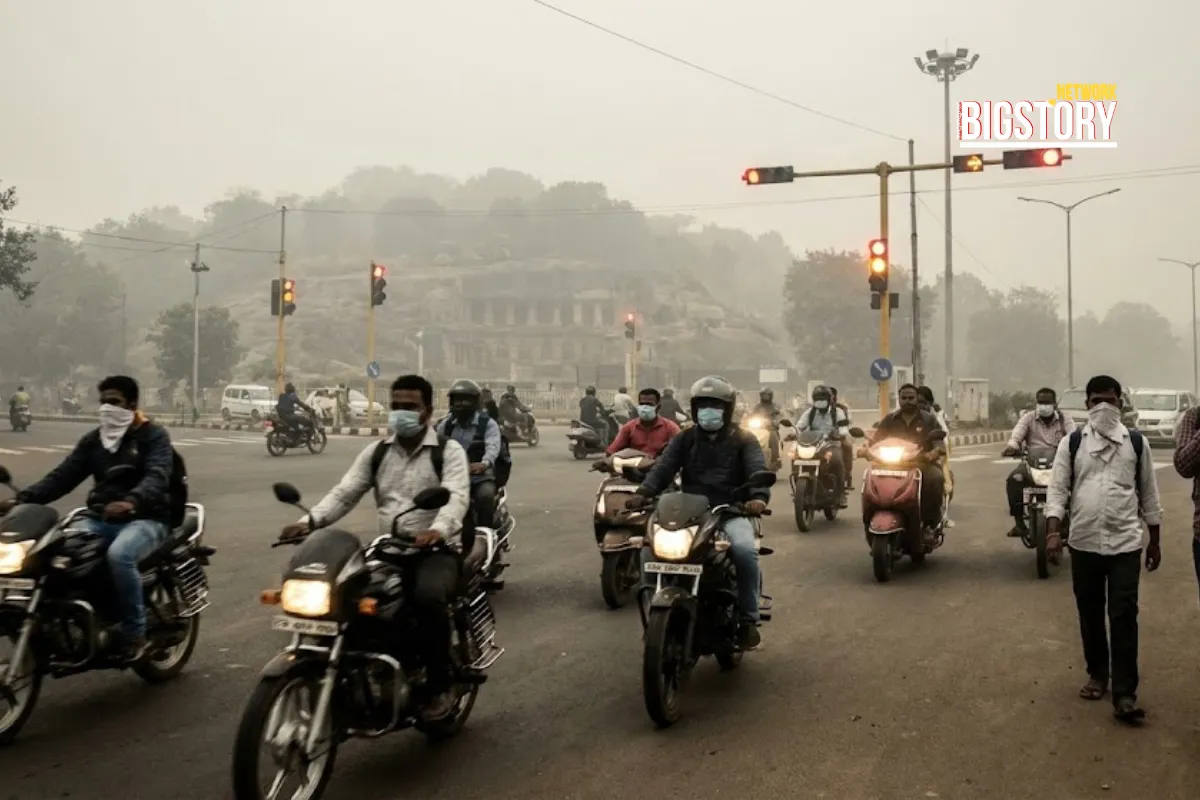
Bhubaneswar, Odisha’s capital known for its greenery, is facing an unprecedented environmental emergency. On December 12-13, 2025, the city’s Air Quality Index (AQI) spiked to a hazardous 423, marking its worst pollution levels in recent history. The crisis has persisted throughout the month, with AQI consistently hovering in the "Unhealthy" to "Severe" range (262-348), rivaling pollution hotspots like Delhi. On December 23, readings remained critical at 262, confirming that this is not a transient spike but a sustained public health disaster driven by unregulated construction and meteorological factors.
The deterioration has been building for weeks. Since late November, PM2.5 levels have soared to 256 µg/m³, nearly 7.3 times the WHO safe limit. The primary culprits are "winter inversion"—where cold air traps pollutants near the ground—combined with massive dust emissions from ongoing "Smart City" projects, including metro rail excavation and NH-16 highway expansion. Despite the launch of the State Clean Air Programme (SCAP) in June 2025 with a ₹150 crore budget, enforcement on the ground remains visible only in its absence.
While local coverage focuses on the "winter chill," the deeper story is the "Smart City Paradox." Bhubaneswar’s development model is cannibalizing its livability. The very projects designed to modernize the city are making it uninhabitable. Unlike Delhi’s GRAP (Graded Response Action Plan), Odisha lacks an automated emergency response mechanism to halt construction when AQI hits severe levels. Furthermore, the "Silent Health Crisis" is unfolding without data. Peer-reviewed studies show a 94% correlation between PM2.5 levels and respiratory illness in the city, yet hospitals are not releasing real-time admission data, masking the true human cost of this pollution spike.
The sustained pollution levels challenge the narrative of Tier-II cities being "cleaner" alternatives to metros. It signals that without rigorous environmental governance, rapid urbanization will inevitably lead to the same toxic outcomes seen in Delhi and Mumbai. For the state government, the failure of the SCAP to prevent this winter crisis puts the efficacy of its environmental policy on trial just months after its launch.
If a "Smart City" cannot guarantee clean air for its citizens, is it truly smart, or just structurally suffocating?
What is the current air quality in Bhubaneswar today? As of late December 2025, Bhubaneswar's Air Quality Index (AQI) has been fluctuating between "Unhealthy" and "Hazardous," peaking at 423 on December 12-13 and remaining above 260 on December 23.
Why is Bhubaneswar's air so polluted? The severe pollution is caused by a combination of winter inversion (trapping pollutants), vehicular emissions, and massive dust from unregulated construction projects like the metro and highway expansion.
Is it safe to breathe in Bhubaneswar right now? With AQI levels consistently exceeding 200 and peaking over 400, the air is considered unsafe, particularly for sensitive groups like children, the elderly, and those with respiratory conditions. It is advisable to limit outdoor activities and use masks.
What is the government doing about the pollution? The Odisha government launched the State Clean Air Programme (SCAP) in June 2025 with a ₹150 crore budget to reduce particulate matter by 40% over 5 years. However, immediate emergency measures like construction bans have been criticized as inadequate or absent.
News Coverage
Data & Research
 Exclusive Content


Sign up for the Daily newsletter to get your biggest stories, handpicked for you each day.

 Trending Now! in last 24hrs


