
Protests erupt in West Bengal after a Hindu man is lynched in Bangladesh. RSS Chief Mohan Bhagwat urges support but rules out open borders.
 Brajesh Mishra
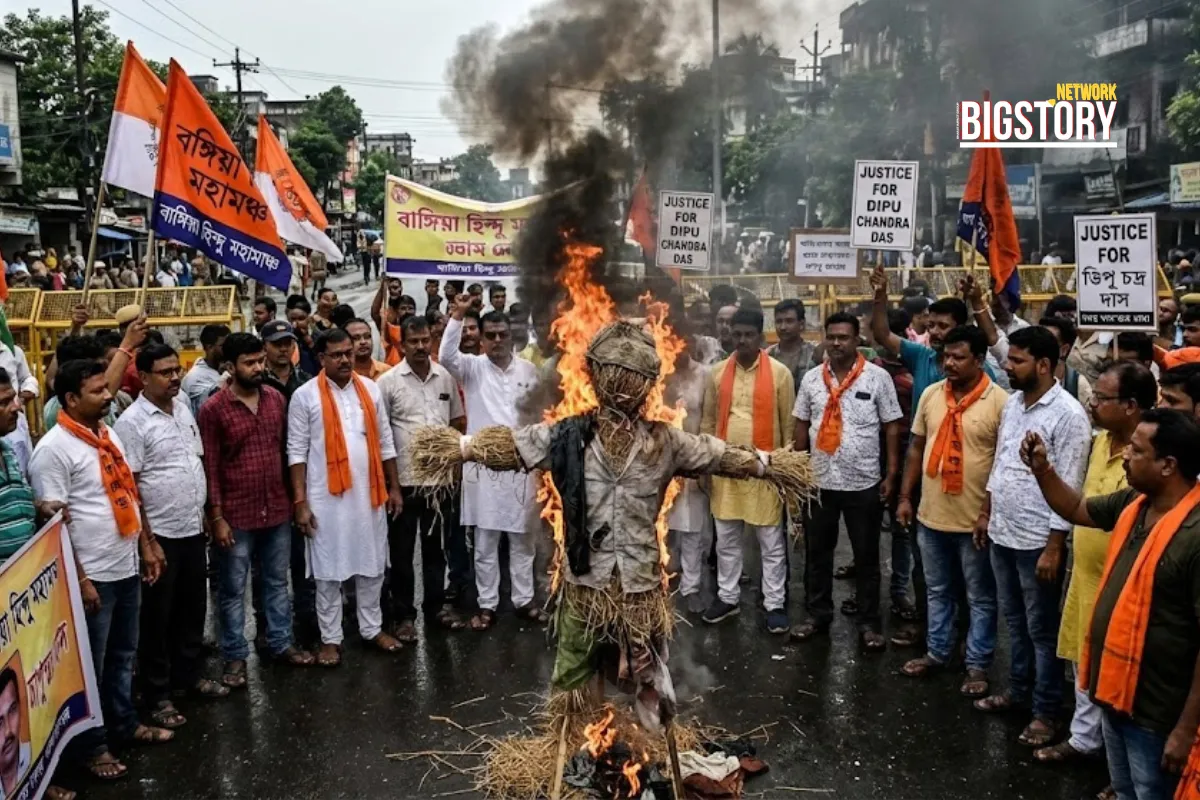
The streets of West Bengal, from the trade hub of Siliguri to the diplomatic quarters of Kolkata, erupted in anger this weekend following the brutal lynching of 25-year-old Dipu Chandra Das in Mymensingh, Bangladesh. On December 20–21, pro-Hindu groups like the Bangia Hindu Mahamancha burned effigies of Bangladesh’s Interim Chief Advisor Muhammad Yunus and blocked traffic, demanding immediate Indian intervention. The unrest has forced a complex diplomatic balancing act, highlighted by RSS Chief Mohan Bhagwat’s address in Kolkata, where he called for solidarity with the victims while firmly shutting the door on a refugee influx.
The flashpoint was the December 19 mob attack in Mymensingh, where Das was lynched over alleged blasphemy charges—an incident that coincided with arson attacks on media houses in Dhaka. This violence reverberated across the border, leading to demonstrations outside the Bangladesh High Commission in Kolkata. The tension is palpable at the Petrapole border, where anti-India marches in Bangladesh were reportedly halted just 500 meters from Indian soil. Simultaneously, reports that 63 ISKCON monks were denied entry into India at the Benapole border have further inflamed the narrative of religious persecution.
While headlines focus on the street protests, the deeper story is the "Border Paradox." The RSS and BJP find themselves in a strategic bind: they are ideologically committed to protecting Hindus in Bangladesh but are politically terrified of a refugee crisis in Bengal. Bhagwat’s refusal to demand an open border reveals this tension—solidarity has a geographical limit. Consequently, the protests have pivoted to a new demand: the "Trade Weapon." Demonstrators in Siliguri aren't just asking for diplomatic notes; they are demanding an immediate halt to India-Bangladesh trade. This shifts the narrative from humanitarian aid to economic sanctions, pressuring New Delhi to weaponize its export dominance (electricity and goods) to force Dhaka’s hand.
The unrest in Bengal is narrowing the diplomatic space for the Modi government. With the state opposition (BJP) aligning with street protests, the central government faces intense domestic pressure to act against the Yunus administration beyond standard diplomatic demarches. If the demand for a trade blockade gains traction, it could destabilize the fragile economic interdependence between the two nations.
If India refuses to open its doors to fleeing Hindus due to security risks, does it have any leverage left other than turning off the power to Dhaka?
Why are there protests in Siliguri and Kolkata against Bangladesh in December 2025? The protests were triggered by the lynching of Dipu Chandra Das, a 25-year-old Hindu factory worker in Mymensingh, Bangladesh, over alleged blasphemy. Groups like the Bangia Hindu Mahamancha organized demonstrations to condemn the killing and the broader attacks on minorities.
What did RSS Chief Mohan Bhagwat say about Bangladeshi Hindus in Kolkata? Speaking on December 21, 2025, Mohan Bhagwat urged the Indian government to "stand beside" persecuted Hindus in Bangladesh. However, he explicitly ruled out opening the borders indiscriminately, citing security concerns about potential infiltration by non-Hindus under the guise of refugees.
Who is Dipu Chandra Das? Dipu Chandra Das was a 25-year-old Hindu youth working in a factory in Mymensingh, Bangladesh. His brutal killing by a mob on December 19, 2025, following accusations of blasphemy, became the immediate catalyst for the current wave of protests in West Bengal.
News Coverage
Context & Analysis
 Exclusive Content


Sign up for the Daily newsletter to get your biggest stories, handpicked for you each day.

 Trending Now! in last 24hrs


