When Finance Minister Nirmala Sitharaman told the press on Sunday that "US tariffs didn't influence the budget," it was a diplomatic necessity, not a factual reality. A deeper dissection of the Customs Duty overhaul in Union Budget 2026-27 reveals a calculated defense strategy against the "Trump Shock."
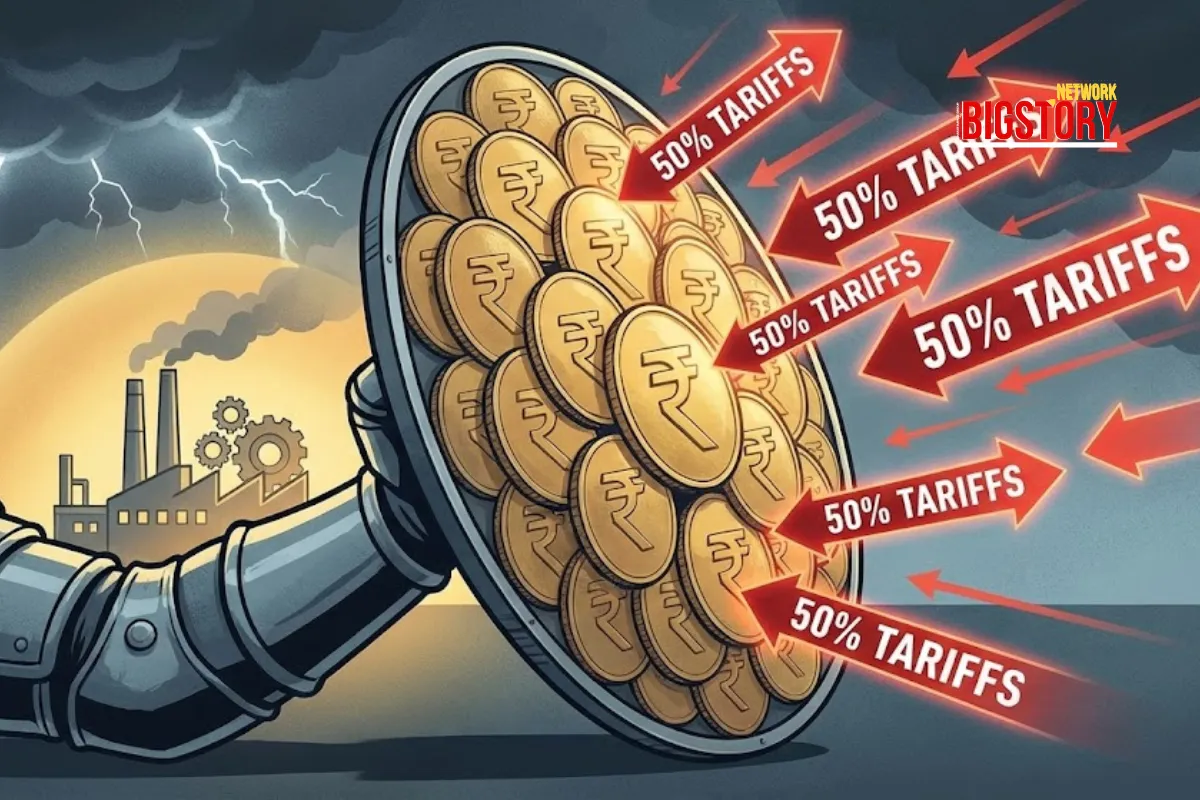
Facing a hostile 50% tariff regime (25% reciprocal + 25% penal) from the US, the Budget has deployed a "Stealth Subsidy" mechanism. By slashing import duties on critical inputs for leather (shoe uppers) and seafood (shrimp feed), and allowing Special Economic Zones (SEZs) to dump inventory domestically, the government is effectively underwriting the cost of production to keep Indian exporters alive in the American market.
The Context (The "50% Wall")
- The Threat: In 2025, the US imposed a crushing tariff structure on Indian goods: a base 25% reciprocal tariff plus an additional 25% penalty linked to India's purchase of Russian oil. This threatened to wipe out the margins of India's labor-intensive sectors.
- The Counter-Move: Instead of a loud "tariff-for-tariff" retaliation (which would hurt Indian consumers), Budget 2026 chose cost suppression.
- Leather: Duty-free import of "shoe uppers" is now allowed, reducing the final cost of Indian shoes exported to the US.
- Seafood: The limit for duty-free import of inputs (like feed) was raised from 1% to 3% of export value, directly subsidizing the aquaculture industry in Andhra Pradesh and Tamil Nadu.
- SEZ Rescue: With US orders drying up, SEZ units have been granted a "one-time" permission to sell their goods in the Indian domestic market at concessional duty rates—essentially a bailout for factories sitting on unsold inventory.
The Key Players (Who & So What)
- Nirmala Sitharaman (Finance Minister): The Strategist. Her public denial of a "trade war" budget allows India to avoid further US sanctions, even as her policy fine-print provides a financial lifeline to the very sectors Trump targeted.
- Donald Trump (US President): The Agitator. His "America First" protectionism is the invisible hand writing India's 2026 trade policy. The 50% tariff wall on Indian textiles was the single biggest external shock the Budget had to manage.
- Andhra Shrimp Farmers & Tiruppur Knitwear Hubs: The Beneficiaries. These specific clusters were facing an existential crisis. The Budget's specific relief on "marine inputs" and "textile machinery modernization" is a direct response to their lobbying.
The BIGSTORY Reframe (The "Stealth Subsidy")
Mainstream media is reporting "Duty Cuts." The real story is Geopolitical Insulation.
- Subsidizing Survival: If it costs less to make a shoe in Chennai because the "upper" was imported duty-free, the Indian exporter can lower their selling price. This allows them to absorb a portion of the 50% US tariff and still compete against Vietnam. The Government of India is effectively foregoing tax revenue to subsidize the American consumer's price tag, just to keep the Indian factory running.
- The SEZ Pivot: The decision to let export-only SEZs sell to the domestic market is a tacit admission that the "Export-Led Growth" model is broken. By turning inward, the Budget acknowledges that the Indian consumer must now rescue the Indian manufacturer.
The Implications (Why This Matters)
- For Exporters: The extension of the export obligation period from 6 months to 1 year is a massive liquidity relief. It acknowledges that selling to the US now takes longer due to supply chain checks and tariff negotiations.
- For Consumers: Expect a temporary price drop in high-quality apparel and electronics in the domestic market, as SEZ units divert their "export-quality" stock to Indian malls to clear inventory.
- For Diplomacy: This "defensive" budget signals that India is preparing for a long economic winter with the West. It aligns perfectly with the Economic Survey's pivot to "Swadeshi"—protecting the home turf rather than aggressively expanding abroad.
The Closing Question (Now, Think About This)
If the government has to subsidize exporters just so they can afford to pay foreign tariffs, are we building a competitive industry, or just paying 'protection money' to access the US market?
FAQs: The Trade War Impact
1. Did the Budget announce retaliatory tariffs against the US? No. The Budget avoided direct confrontation. Instead of raising tariffs on US goods, it lowered duties on Indian imports of raw materials. This makes Indian products cheaper to produce, helping exporters survive the high US tariffs without starting a diplomatic war.
2. How does the Budget help the leather industry? It allows duty-free import of "shoe uppers" (components). Previously, only finished footwear had certain exemptions. This reduces the manufacturing cost for Indian shoemakers, helping them offset the US import duties.
3. What is the relief for SEZs? Special Economic Zones (SEZs), which are usually required to export 100% of their goods, have been given a one-time permission to sell their products in the Indian domestic market at lower duties. This is a bailout measure for units whose US orders were cancelled.
4. Why did seafood exporters get special attention? India's shrimp and seafood exports to the US were hit hard by the 50% tariff. The Budget raised the duty-free limit for importing shrimp feed and other inputs from 1% to 3%, lowering the cost of aquaculture farming to keep the sector viable.
Sources
News Coverage

 Brajesh Mishra
 Exclusive Content