
Commerce Minister Piyush Goyal rejects deadlines for the India-US trade deal, telling the US to "sign" if happy. Agriculture remains a key hurdle amid 50% tariffs.
 Brajesh Mishra
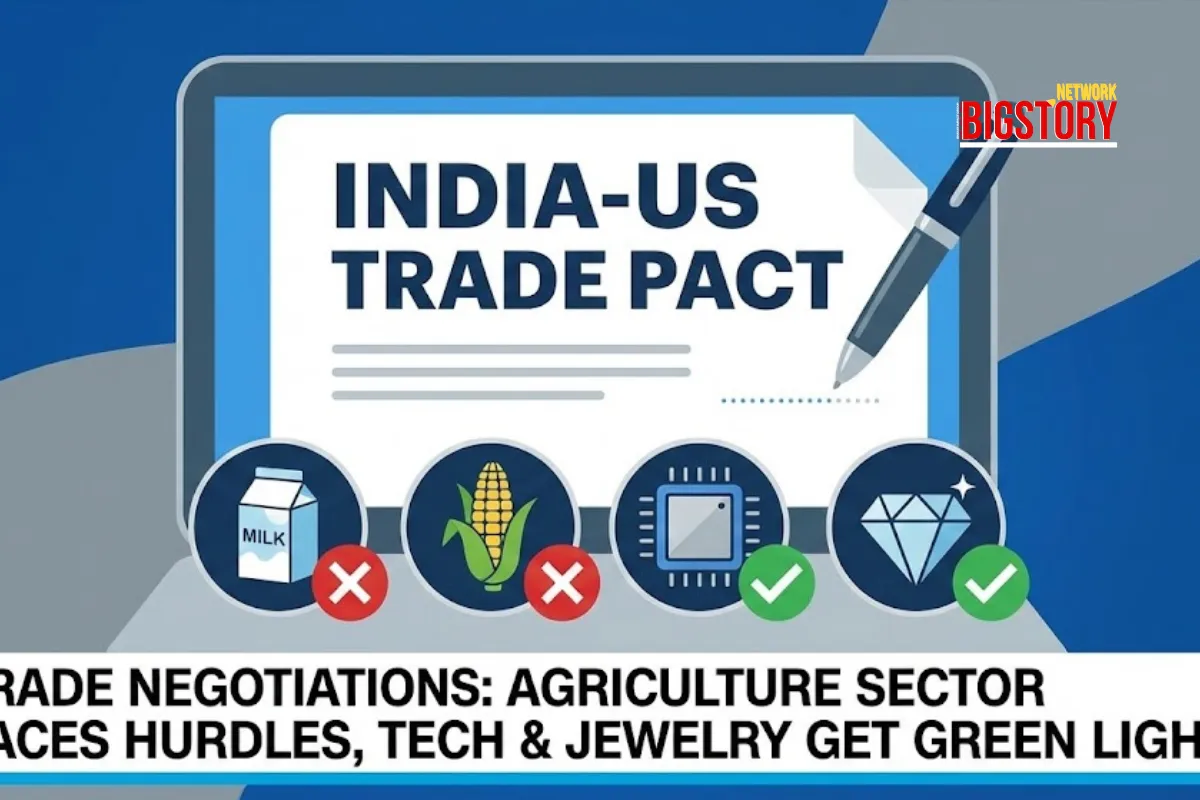
In a defiant stance against mounting American pressure, Commerce Minister Piyush Goyal has rejected any fixed deadline for the India-US trade deal, placing the ball squarely in Washington's court. Speaking just as a high-level US delegation led by Deputy USTR Rick Switzer arrived in New Delhi for critical talks, Goyal responded to US Trade Representative Jamieson Greer's claim that India had made its "best offer ever" by stating, "If they are very happy, they should be signing on the dotted line." This rhetorical pushback signals that New Delhi is unwilling to compromise on sensitive sectors like agriculture and dairy, even as it seeks to dismantle the punitive 50% tariff regime imposed by President [Donald Trump].
The negotiations are taking place under the shadow of Trump's aggressive "America First" trade policy. Since July 2025, Indian exports have faced a crushing 50% combined tariff—25% base reciprocity plus a 25% penalty for purchasing Russian oil. While the US is eager to close a deal by year-end to offload its agricultural surplus (soybean, corn) caused by the collapse of its China market, India is holding firm. The US desperation for a "viable alternative market" has ironically strengthened India's hand, allowing Goyal to resist opening up markets that support over 60 million Indian farmers.
While headlines focus on "progress," the deeper story is the "Farmer Firewall." The US isn't just asking for lower tariffs; it wants access to India's dairy and agricultural markets—sectors that are politically explosive suicide for any Indian government. This isn't a trade negotiation; it's a clash of survival. US farmers need a market; Indian farmers need protection. By holding the line on agriculture, India is effectively telling the US: we will buy your jets and tech, but we won't buy your corn if it kills our farmers. This stalemate over the "sensitive list" is the real reason there is no signature on the dotted line.
If India successfully resists opening its agricultural sector while securing tariff relief for its textiles and gems, it will be a major diplomatic coup. However, if the talks collapse, Indian exporters face a prolonged period of uncompetitive pricing in their biggest market. For the US, failure to sign a deal would mean losing out on the only large economy capable of absorbing its agricultural surplus, potentially hurting Trump's own voter base in the Farm Belt.
If the "best offer ever" still isn't enough to sign the deal, what is the US really asking for that India is refusing to give?
Will the India-US trade deal be signed by December 31, 2025? While both sides are optimistic and a US delegation is in Delhi for final talks, Commerce Minister Piyush Goyal has explicitly rejected any "fixed deadline," stating that a deal will only be signed when India's interests are fully met.
What are the main sticking points in the negotiations? The primary conflict is over market access for US agricultural and dairy products (like soy, corn, and milk). The US is pressuring India to open these sectors, but India considers them "sensitive" due to the impact on millions of small farmers.
What tariff rate is India facing from the US? Currently, Indian exports to the US face a combined tariff of approximately 50%. This includes a base reciprocal tariff and an additional penalty tariff imposed by President Trump due to India's purchase of Russian oil.
Why is the US calling India's offer the "best ever"? USTR Jamieson Greer described India's proposals as the "best we've ever received" to signal that significant progress has been made and to pressure India to close the deal, reflecting the US need to find alternative markets to China for its agricultural surplus.
News Coverage
Research & Analysis
 Exclusive Content


Sign up for the Daily newsletter to get your biggest stories, handpicked for you each day.

 Trending Now! in last 24hrs


