
Congress launches "MGNREGA Bachao Abhiyan" on Jan 5 to protest the new VB-G RAM G Act. The new law replaces MGNREGA, offering 125 work days but changing funding rules.
 Brajesh Mishra
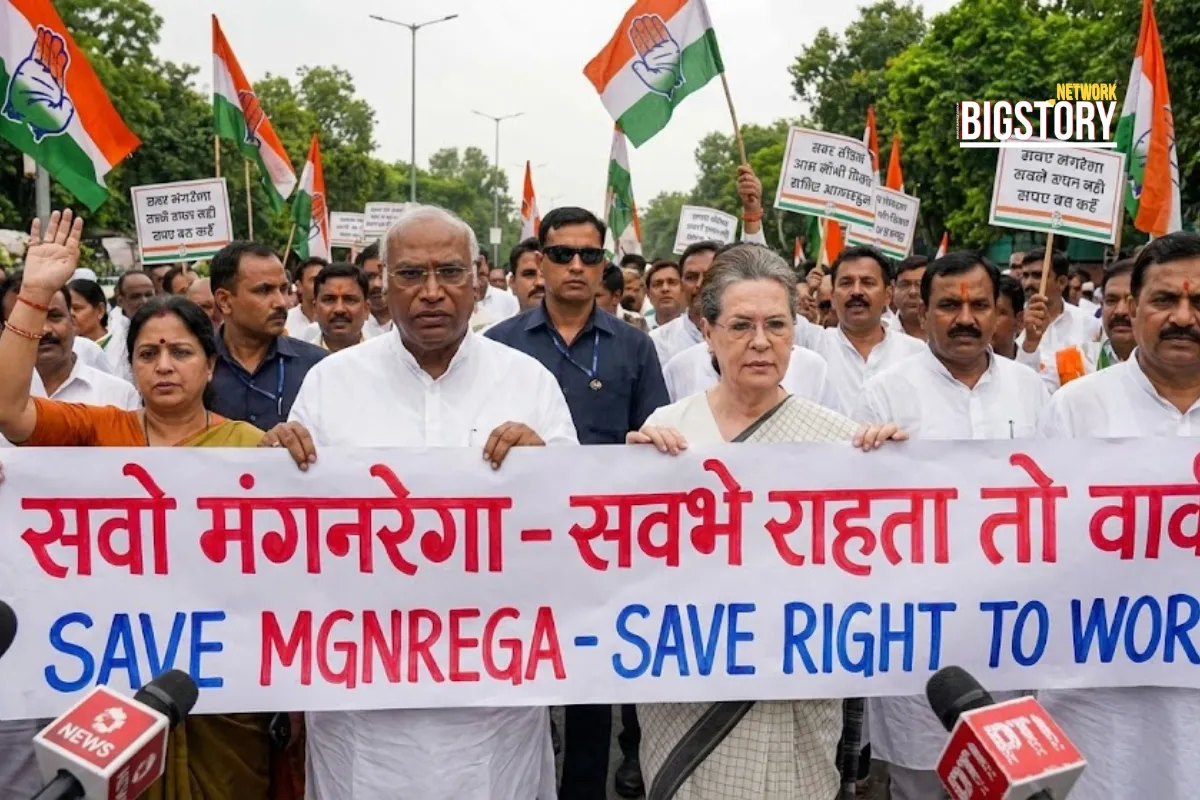
The Congress party has sounded the bugle for a nationwide agitation against the repeal of the Mahatma Gandhi National Rural Employment Guarantee Act (MGNREGA). Following a Working Committee (CWC) meeting in New Delhi today, party president Mallikarjun Kharge announced the launch of the "MGNREGA Bachao Abhiyan" (Save MGNREGA Campaign) starting January 5, 2026. The mass protest is a direct challenge to the newly passed Viksit Bharat Guarantee for Rozgar and Ajeevika Mission (Gramin) Bill, 2025, which the government touts as a modernization of rural welfare but the opposition condemns as a "conspiracy to crush the poor."
This legislative overhaul comes exactly 20 years after the original MGNREGA Act was passed in 2005. During the Winter Session, the BJP-led central government pushed through the VB-G RAM G Bill, positioning it as a key pillar of "Viksit Bharat 2047." The new law promises to increase guaranteed work days from 100 to 125 annually and focuses on creating durable rural infrastructure. However, it also fundamentally alters the financial architecture of the scheme, shifting from a 100% centrally funded wage bill to a shared model, and controversially drops "Mahatma Gandhi" from the title.
While media headlines focus on the removal of "Mahatma Gandhi's" name, the deeper story is the "Right vs. Mission" Shift. MGNREGA was unique because it made employment a justiciable legal right—if the government failed to provide work, it had to pay an allowance. The new act frames employment as a "Mission." This semantic pivot is legally dangerous: a government "Mission" target can be adjusted based on budgets, whereas a "Right" cannot.
Furthermore, the "Federal Burden Trap" is the hidden political explosive. By mandating that states pay 40% of the cost, the Centre is effectively offloading a massive fiscal liability. This could lead to a scenario where poorer states simply cannot afford to generate work, causing the scheme to collapse regionally—not by law, but by "death by funding."
The January 5 protests will likely be strongest in rural belts of Rajasthan, West Bengal, and Odisha, where demand for work is highest. If the new funding rules force state governments to cap workdays due to lack of funds, the promised "125 days" could remain a paper tiger. The battle is no longer just about rural jobs; it is about the financial autonomy of India's states.
If employment is no longer a legal right but just a government "mission," do the poor still have a guarantee, or just a promise?
Why is Congress launching the MNREGA Bachao Abhiyan on Jan 5? The Congress party is launching the campaign to protest the repeal of the 20-year-old Mahatma Gandhi National Rural Employment Guarantee Act (MGNREGA) and its replacement by the VB-G RAM G Act, 2025. They allege the new law dilutes the "Right to Work" and hurts the poor.
What is the VB-G RAM G Act 2025? The Viksit Bharat Guarantee for Rozgar and Ajeevika Mission (Gramin) is a new law passed in December 2025 to replace MGNREGA. It aims to align rural employment with the government's "Viksit Bharat 2047" goals, focusing on creating durable assets and digital infrastructure stacks.
How is VB-G RAM G different from MGNREGA? Key differences include:
News Coverage
Official Context & Analysis
 Exclusive Content


Sign up for the Daily newsletter to get your biggest stories, handpicked for you each day.


 Trending Now! in last 24hrs


