Secretary of State Marco Rubio has ordered the State Department to switch from Calibri back to Times New Roman, calling the previous font a "wasteful" DEI measure.
 Sseema Giill
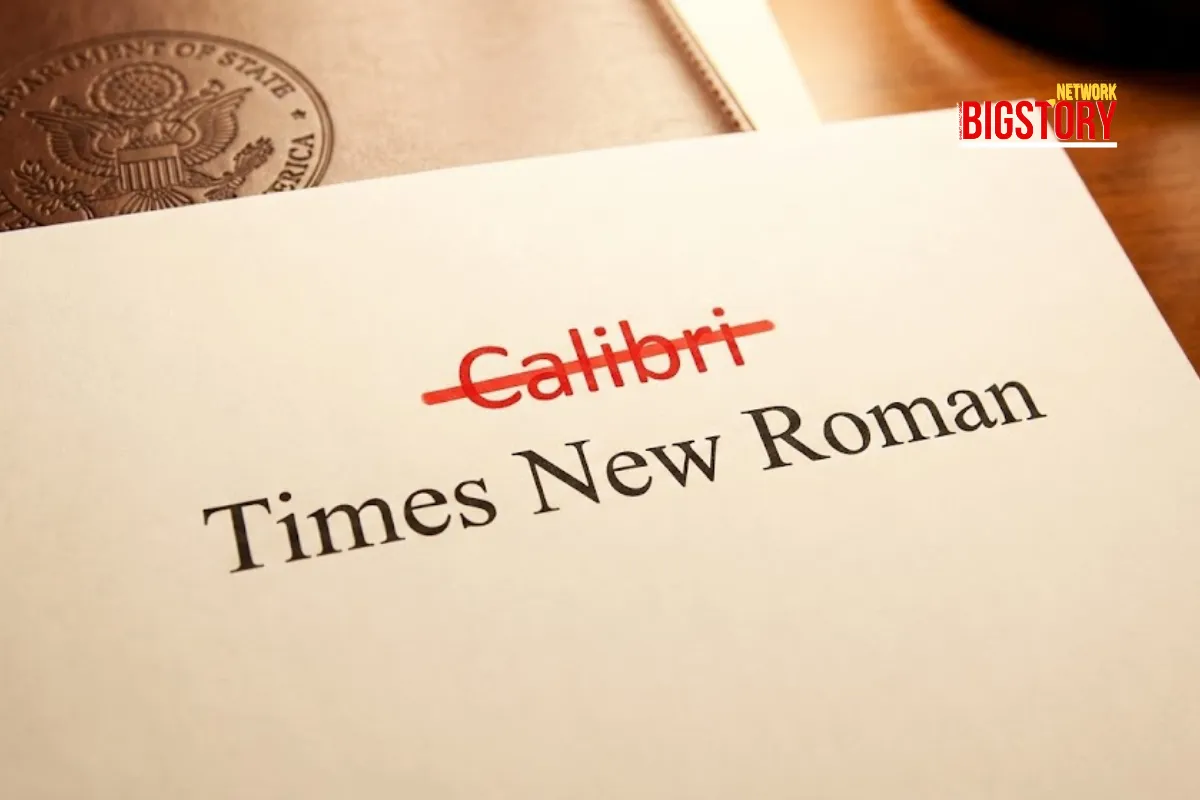
In a directive that frames typography as a cultural battleground, US Secretary of State Marco Rubio has ordered the State Department to immediately cease using the Calibri font for official communications. The mandate, issued on December 9, 2025, requires all diplomatic cables and memos to revert to Times New Roman (14-point), reversing a policy implemented by the previous administration. Rubio explicitly criticized the 2023 switch to the sans-serif font as a "wasteful" Diversity, Equity, and Inclusion (DEI) effort that "achieved nothing except the degradation of the department's official correspondence."
For nearly two decades (2004–2023), Times New Roman was the standard bearer of US diplomacy. That changed in January 2023 when then-Secretary [Antony Blinken] mandated the use of Calibri. The rationale was accessibility: sans-serif fonts are widely considered easier to read for individuals with visual impairments or dyslexia, and they are optimized for digital screens where most modern diplomacy occurs. Rubio’s memo, titled "Return to Tradition," dismantles this logic, prioritizing "decorum and professionalism" over accessibility standards, which he categorizes as ideological excess.
While headlines focus on the "War on Woke," the deeper story is the "Analog vs. Digital Diplomacy." Times New Roman is a typeface designed for print—specifically for newspapers in 1932. Calibri was designed for screens. By forcing a return to a serif font, the State Department is implicitly prioritizing the printed page over the digital display. In an era where diplomatic cables are read on smartphones and tablets, serif fonts can suffer from pixelation and readability issues. This decision isn't just about culture; it's a technical regression. It signals a nostalgic view of diplomacy as a paper-based institution in a digital world, potentially at the cost of operational efficiency.
The move is symbolic but carries a financial cost. Rubio claims the original switch cost $145,000; reversing it will likely incur similar administrative overheads in re-formatting and compliance training. More significantly, it sends a message to the civil service that "accessibility" is no longer a priority if it conflicts with "tradition." It may also create friction with international partners and NGOs who prioritize inclusive design standards in official documentation.
If the authority of a superpower depends on the "feet" of its letters, is it projecting strength, or insecurity?
Why did Marco Rubio ban Calibri at the State Department? Marco Rubio issued a directive to stop using Calibri because he viewed the previous administration's switch to it as a "wasteful" Diversity, Equity, and Inclusion (DEI) initiative. He argued that Calibri was "informal" and that its adoption "degraded" the professionalism of the department's correspondence.
Is Times New Roman more professional than Calibri? Conventionally, serif fonts like Times New Roman are associated with tradition, formality, and printed authority (like newspapers and legal documents). Sans-serif fonts like Calibri are seen as modern, clean, and optimized for digital readability. Rubio's preference for Times New Roman aligns with a desire for "decorum" and "ceremony."
Why was Calibri considered a "woke" font? Calibri itself is just a font, but its adoption by the State Department in 2023 was explicitly framed as an accessibility measure to help staff and readers with visual impairments or dyslexia. Rubio's memo categorized this reasoning and the associated office of diversity and inclusion as part of a "radical" or "woke" agenda he intends to dismantle.
When does the font change take effect? The directive from Secretary Rubio is effective immediately as of the issuance of the cable on December 9, 2025. All official Department "paper" and correspondence must now use Times New Roman, 14-point size.
News Coverage
Research & Analysis
 Exclusive Content


Sign up for the Daily newsletter to get your biggest stories, handpicked for you each day.



 Trending Now! in last 24hrs