
Millions of voters in Bihar and UP are being deleted from electoral rolls as "permanently shifted" during the SIR process, sparking fears of migrant disenfranchisement.
 Brajesh Mishra
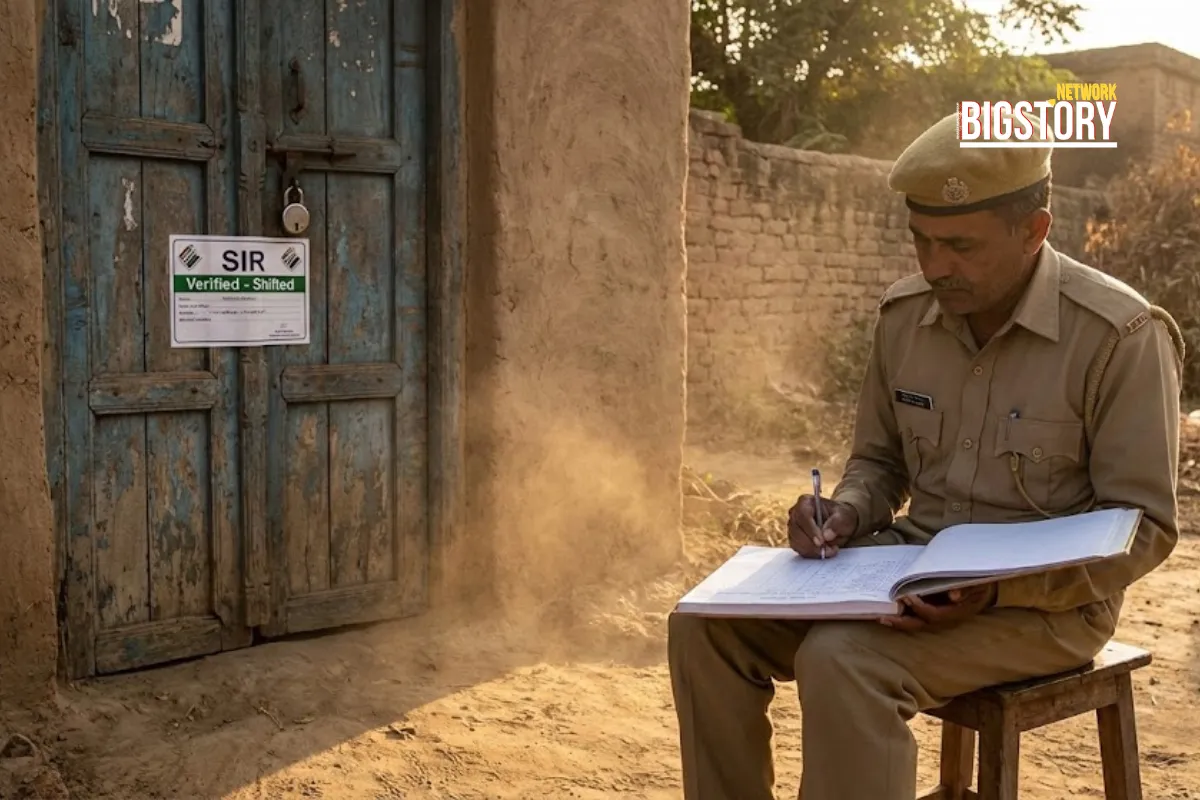
A bureaucratic classification is silently stripping millions of Indians of their right to vote. The ongoing Special Intensive Revision (SIR) of electoral rolls has deleted or flagged huge swathes of voters under the category of "Permanently Shifted." In Bihar alone, 36.74% of deletions in key districts were attributed to this label—often applied to migrant workers who were simply away earning a living when officials visited. The crisis deepened on December 11, when it was revealed that over 11 lakh voters in Prayagraj have been marked as "Absent, Shifted, or Dead," raising the specter that laborers returning home for the next election will find their names erased.
The SIR began in June 2025 with the stated goal of "purifying" electoral rolls by removing duplicate and bogus entries. However, the process relies heavily on physical verification by Booth Level Officers (BLOs). For India's massive migrant workforce, who spend months away from their home constituencies, this requirement has become a trap. In August, the Supreme Court intervened after reports emerged that 65 lakh names were deleted in Bihar's draft rolls, demanding an explanation from the Election Commission. Despite this, the classification of temporary migrants as "permanently shifted" continues to drive high deletion numbers across 12 states.
While headlines focus on "clean rolls," the deeper story is the "Absentee Trap." The SIR is failing to distinguish between absence (temporary) and shifting (permanent). A worker building a road in Mumbai for eight months is technically just "absent" from his village in Bihar. But under pressure to clean lists, overwhelmed BLOs are categorizing these absences as "permanently shifted," leading to immediate deletion. This isn't just a clerical error; it is the systemic disenfranchisement of the mobile working class. It penalizes citizens for the economic necessity of migration, effectively telling them: if you leave to work, you lose your vote.
If these deletions stand, the demographic composition of the electorate in states like Bihar and UP will fundamentally shift before the next assembly elections. The purge disproportionately affects young, working-age males and, surprisingly, women—data from Bihar shows "shifting" was the top reason for deleting female voters, hinting at a failure to track marriage-based migration properly. Politically, this could skew results in constituencies with high migration rates, as the "missing" voters are often from specific socio-economic backgrounds.
In a digital India where money can move instantly across borders, why does your right to vote still depend on being home when the officer knocks?
What is the difference between 'Absent' and 'Permanently Shifted' in the SIR process? "Absent" refers to a voter who is temporarily away from their registered residence (e.g., for work or travel) but intends to return. "Permanently Shifted" means the voter has relocated their residence for good. However, in the current SIR, many temporary absentees are reportedly being wrongly marked as "shifted," leading to their deletion.
Can migrant workers vote if their name is deleted in SIR? No. If a name is deleted, the individual cannot vote. They must re-register by filing Form 6 with the Election Commission to be added back to the electoral roll, a process that can be difficult for workers living away from home.
Why are so many voters being deleted in Bihar and UP during SIR 2025? The high deletion rates are largely due to strict physical verification protocols. Booth Level Officers (BLOs) visiting homes often mark entire families as "shifted" or "dead" if they are not present to verify their residency, disproportionately affecting migrant laborers.
What did the Supreme Court say about the SIR deletions? In August 2025, the Supreme Court expressed concern over the deletion of 65 lakh voters in Bihar and ordered the Election Commission to provide a detailed breakdown of the reasons for these deletions to ensure no legitimate voter was disenfranchised.
News Coverage
Research & Analysis
 Exclusive Content


Sign up for the Daily newsletter to get your biggest stories, handpicked for you each day.



 Trending Now! in last 24hrs


