
Yunus condemns violence as mobs lynch a Hindu man and torch media houses in Dhaka. The unrest follows the killing of youth leader Sharif Osman Hadi.
 Brajesh Mishra
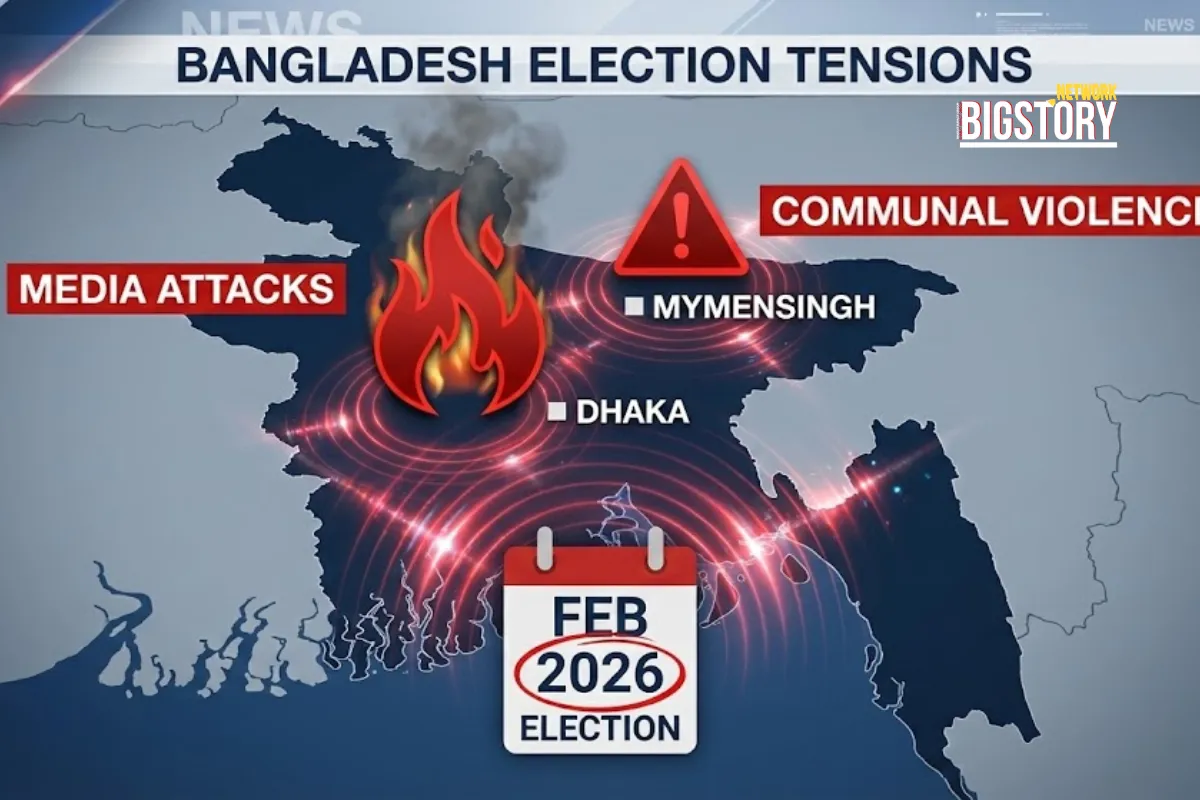
Bangladesh's fragile interim government is scrambling to restore order after a wave of violence engulfed the capital and surrounding districts on December 19, 2025. Following the targeted killing of youth leader Sharif Osman Hadi, mobs rampaged through Dhaka, torching the offices of leading newspapers like The Daily Star and Prothom Alo. Simultaneously, in Mymensingh, a Hindu garment worker was brutally lynched over blasphemy allegations. In a stark address to the nation, Chief Advisor Muhammad Yunus declared, "There is no place for such violence in the new Bangladesh," warning that the unrest is a conspiracy to derail the upcoming February 2026 elections.
The current turmoil began on December 12 with the shooting of Hadi, a spokesperson for the radical student group Inquilab Mancha and a key figure in the 2024 uprising that ousted Sheikh Hasina. His death on December 18 acted as a detonator, releasing pent-up tensions within the revolutionary coalition. The violence has quickly metastasized from political vengeance to institutional attacks and communal hatred. Since August 2024, rights groups have documented over 205 attacks on minority communities, but the brazen nature of today's assaults—targeting the pillars of free press and the historical legacy of Sheikh Mujibur Rahman—signals a dangerous escalation.
While headlines focus on "political unrest," the deeper story is the "Institutionalization of Mob Justice." The simultaneous attacks on media houses and a minority individual aren't random; they represent a collapse of state authority. When mobs can burn down newspaper offices in the capital and lynch citizens in broad daylight despite "strong statements," it suggests that the "New Bangladesh" is currently being ruled by the street, not the secretariat. This isn't just about election disruption; it's a battle for the soul of the post-revolution state—will it be a democracy governed by law, or a radical state governed by the mob?
The violence directly threatens the February 2026 election timeline. If the interim government cannot guarantee the safety of media institutions and minority voters, the legitimacy of any future poll will be compromised. Furthermore, the targeting of The Daily Star and Prothom Alo—bastions of independent journalism—signals an attempt to silence the only credible witnesses to this unraveling.
If the government can't protect the press in the capital or a worker in Mymensingh, who is actually in charge of the "New Bangladesh"?
Why are there protests in Bangladesh in December 2025? The protests were triggered by the assassination of Sharif Osman Hadi, a prominent youth leader and spokesperson for the radical student group Inquilab Mancha. His death on December 18 mobilized thousands, leading to widespread unrest and arson.
What did Muhammad Yunus say about the lynching of a Hindu man? Chief Advisor Muhammad Yunus condemned the lynching of Dipu Chandra Das in Mymensingh as "brutal" and a "heinous act." He stated unequivocally that "there is no place for such violence in the new Bangladesh" and vowed that perpetrators would face strict legal action.
Who is Sharif Osman Hadi in Bangladesh politics? Sharif Osman Hadi was a key figure in the 2024 pro-democracy uprising that ousted Sheikh Hasina. As a leader of Inquilab Mancha, he represented a radical youth faction within the revolutionary coalition. His killing is seen as part of an internal power struggle.
Is the Bangladesh election postponed due to violence? Currently, the election is still scheduled for February 2026. However, the interim government has warned that the escalating violence is a calculated "conspiracy" designed to derail the democratic process and create instability ahead of the polls.
News Coverage
Research & Analysis
 Exclusive Content


Sign up for the Daily newsletter to get your biggest stories, handpicked for you each day.

 Trending Now! in last 24hrs


