
Modi and Netanyahu discuss Gaza peace plan and terror in first call of 2026. Analysis of India's strategic shift towards Israel.
 Sseema Giill
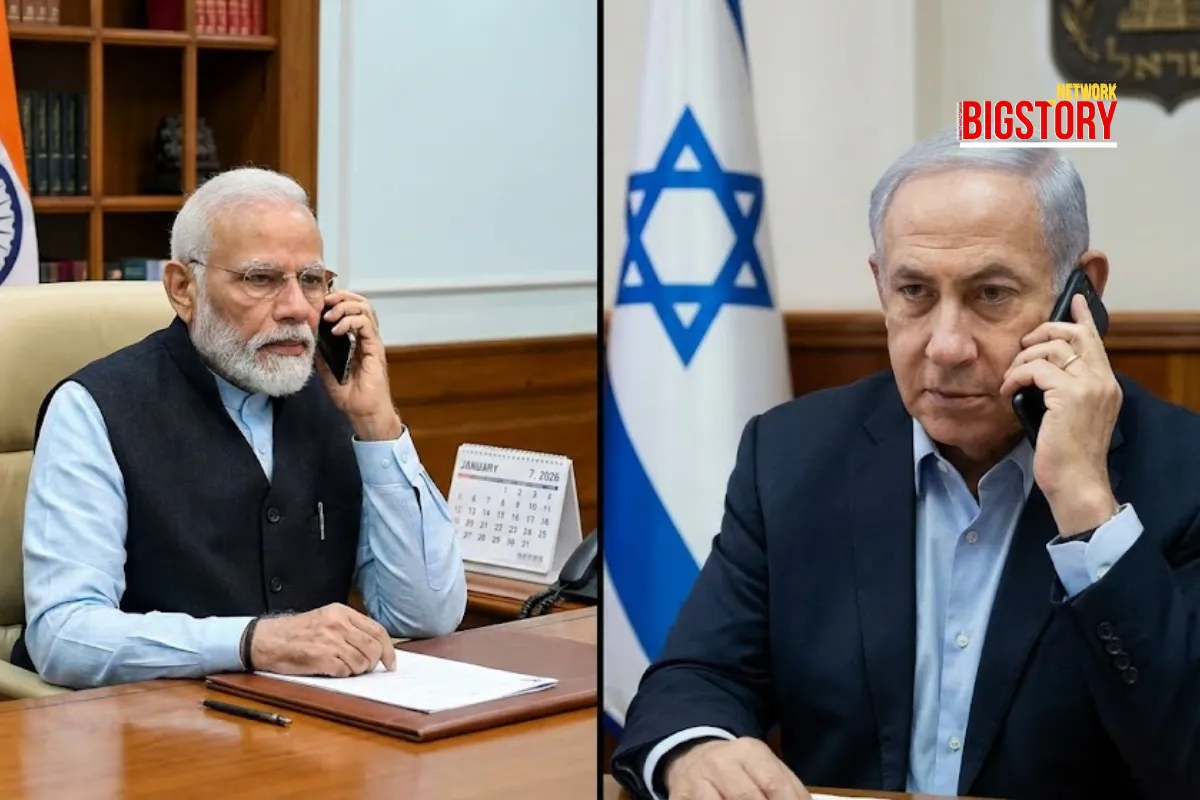
In a geopolitical landscape where silence often speaks volumes, Prime Minister Narendra Modi’s phone call to Benjamin Netanyahu on January 6-7, 2026, was a loud declaration. Breaking the customary diplomatic caution of the region, the two leaders not only exchanged New Year greetings but explicitly discussed the "Gaza peace plan" and reaffirmed a "zero-tolerance" approach to terrorism. This conversation—the first direct contact of 2026—comes as Netanyahu prepares for a rescheduled visit to India, signaling that New Delhi is no longer just balancing ties in West Asia; it is actively aligning with Tel Aviv.
The trajectory of India-Israel relations has shifted dramatically since October 7, 2024. While the Global South has largely condemned Israel’s operations in Gaza, India has taken a different path. Netanyahu, facing unprecedented isolation, has publicly credited Modi for his "unprecedented support." The postponed December 2025 visit, now being rescheduled for early 2026 with promises of "royal honors" in Gujarat and Mumbai, underscores this warmth. For India, this isn't just about sentiment; it's a calculated move to secure advanced defense technology and counter-terrorism intelligence, with an eye firmly on Pakistan.
While mainstream media reports the call as "Diplomatic Routine," the deeper story is the "Strategic Realignment." India is quietly pivoting from its historical position as a champion of the Palestinian cause to becoming Israel's most vital non-Western ally. This shift is happening without a robust domestic debate, despite India being home to over 200 million Muslims who have traditionally empathized with Palestine. The government is banking on the "counter-terrorism" narrative to bridge this disconnect, framing the alliance as a necessity for national security rather than a foreign policy choice.
Furthermore, the "Unspoken Trade-Off" is critical. In exchange for diplomatic cover, India is likely securing access to next-generation Israeli defense tech—drones, cyber warfare capabilities, and missile defense systems—that the West might be hesitant to share. This transaction transforms the relationship from a diplomatic friendship into a military-industrial interdependence.
This alliance risks alienating India's traditional partners in the Arab world, although the Abraham Accords have provided some cover. More significantly, it sends a message to Pakistan and China: India now has a "tech-superpower" partner in its corner. However, by tethering itself so closely to Netanyahu, New Delhi also inherits the reputational risks associated with his government's actions in Gaza.
If India is now Israel's "best friend" outside the West, what happens to its claim of being the "Voice of the Global South"?
What did PM Modi and Benjamin Netanyahu discuss in their January 2026 call? Prime Minister Modi and Israeli PM Netanyahu exchanged New Year greetings and discussed the implementation of the Gaza peace plan. They also reaffirmed their commitment to a "zero-tolerance" approach towards terrorism and reviewed ways to strengthen the India-Israel Strategic Partnership in areas like technology and security.
Is Benjamin Netanyahu visiting India in 2026? While specific dates have not been finalized, reports indicate that Netanyahu's visit, originally planned for December 2025, is being rescheduled for early 2026. The visit is expected to include trips to Gujarat and Mumbai, highlighting the deepening personal and strategic ties between the two leaders.
How has India's stance on the Israel-Palestine conflict shifted under Modi? Under PM Modi, India has moved from its traditional strong support for the Palestinian cause towards a more overt strategic partnership with Israel. While India continues to advocate for a two-state solution, it has abstained from some UN votes critical of Israel and has emphasized counter-terrorism cooperation, signaling a "de-hyphenation" of its policy where ties with Israel are pursued independently of the Palestinian issue.
News Coverage
Context & Background
 Exclusive Content


Sign up for the Daily newsletter to get your biggest stories, handpicked for you each day.



 Trending Now! in last 24hrs


