
Violence erupts at Turkman Gate during MCD demolition. 5 cops injured after "mosque demolition" rumor goes viral. Analysis of the midnight operation.
 Brajesh Mishra
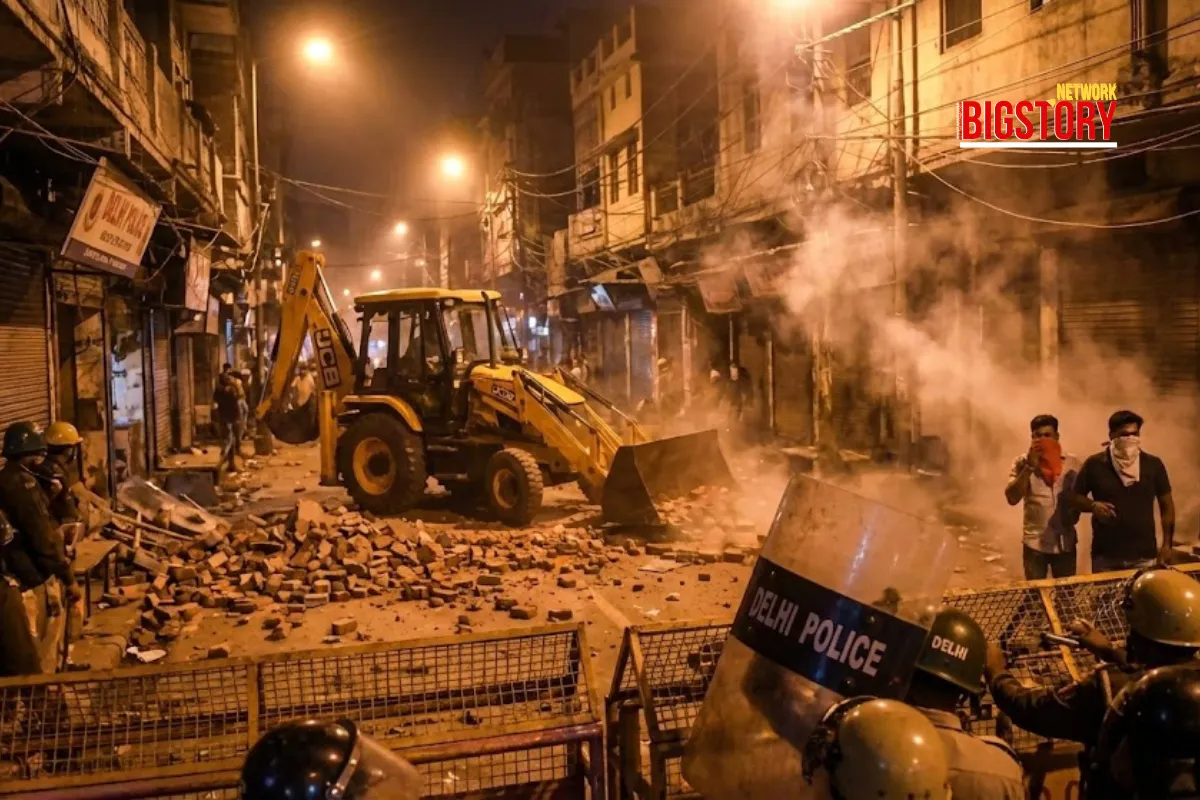
In the dead of night, the historic Turkman Gate area of Old Delhi turned into a battleground. Around 1:30 AM on January 7, 2026, an anti-encroachment drive by the Municipal Corporation of Delhi (MCD) descended into violence, leaving five Delhi Police officers injured. As 30 bulldozers rolled in to clear illegal structures adjacent to the Faiz-e-Elahi Mosque, a mob of roughly 150 people resisted, pelting stones and glass bottles. The trigger? A viral rumor claiming the mosque itself was the target—a claim authorities have vehemently denied, stating the operation was strictly limited to illegal commercial properties on public land.
This was not a spontaneous raid. The Delhi High Court had ordered the removal of illegal encroachments—specifically a banquet hall and a dispensary—that had occupied MCD land near the mosque and a graveyard. Aware of the sensitivity, the police held a coordination meeting with the local "Aman Committee" (Peace Committee) on January 6 to ensure a smooth operation. However, the fragile peace was shattered by a video circulated on social media, allegedly by a local resident named Khalid Malik, urging the community to "step out" to save the mosque. When the bulldozers arrived hours later, the ground was already primed for conflict.
While mainstream media focuses on the "Clash," the deeper story is the "Midnight Bulldozer Strategy." Why conduct a demolition drive at 1:30 AM in a densely populated, sensitive zone? Officials cite traffic management, but the opacity of a night operation creates a vacuum of information that rumors easily fill. Waking up to the sound of heavy machinery feeds paranoia, transforming a legal eviction into a perceived siege. The tactical decision to avoid daytime traffic likely cost the police the trust of the community.
Furthermore, the "Digital Trigger" is critical. The violence wasn't just about land; it was about a narrative war. The speed at which the "mosque under attack" rumor mobilized a crowd at 1 AM exposes a dangerous disconnect between civic actions and public communication. In the age of WhatsApp, a bulldozer cannot move faster than a lie.
The incident has resulted in the reclamation of 36,000 sq. ft. of public land, but at a high social cost. It reinforces the pattern of mistrust between Old Delhi residents and civic authorities. With five arrests already made, including a juvenile, the crackdown may cool tensions temporarily, but the underlying friction over land and identity remains a tinderbox waiting for the next spark.
If the authorities had operated in broad daylight with transparent announcements, would the rumor have survived the sun?
Was the Faiz-e-Elahi mosque in Delhi demolished on January 7, 2026? No. The Municipal Corporation of Delhi (MCD) and Delhi Police have confirmed that the mosque was not touched. The demolition drive targeted illegal commercial encroachments, including a banquet hall and a dispensary, on the adjacent public land, as per a High Court order.
Why did violence erupt at Turkman Gate during the demolition drive? Violence broke out due to a viral rumor claiming the mosque itself was being demolished. This mobilized a crowd of around 150 people at 1:30 AM, some of whom pelted stones and glass bottles at the police and MCD teams.
How many police officers were injured in the Turkman Gate incident? Five Delhi Police personnel were injured during the stone-pelting. They sustained minor injuries and were treated at a nearby hospital. The police used tear gas to disperse the mob and have arrested five individuals so far.
News Coverage
Context & Background
 Exclusive Content


Sign up for the Daily newsletter to get your biggest stories, handpicked for you each day.



 Trending Now! in last 24hrs


