
Lok Sabha passes VB-G RAM G Bill 2025, replacing MGNREGA. It guarantees 125 days of work but shifts 40% cost to states, sparking opposition protests.
 Brajesh Mishra
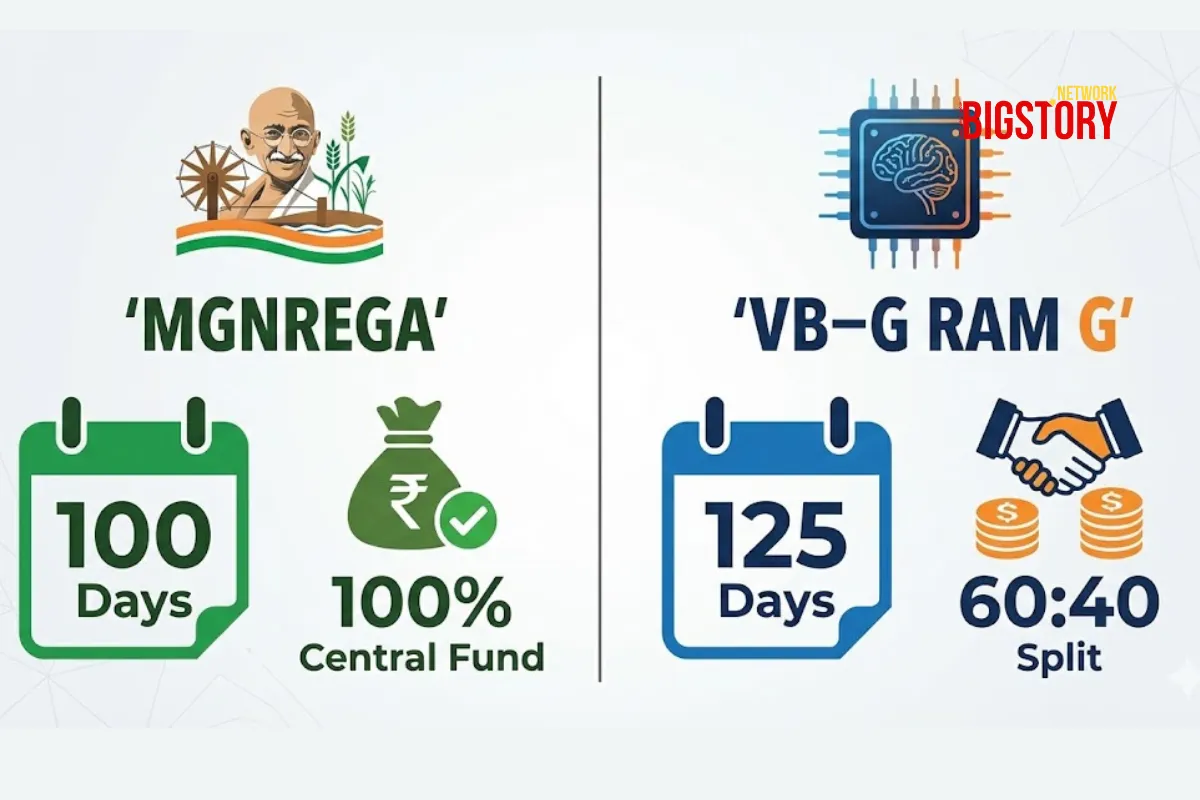
In a historic legislative overhaul, the Lok Sabha today passed the Viksit Bharat–Guarantee for Rozgar and Ajeevika Mission (Gramin), or VB-G RAM G Bill, 2025, via voice vote. The new law replaces the 20-year-old Mahatma Gandhi National Rural Employment Guarantee Act (MGNREGA), the world's largest rural jobs program. While the government touts an increase in guaranteed employment from 100 to 125 days, the passage was marred by chaotic scenes, with opposition MPs tearing copies of the bill in the well of the House. At the heart of the conflict is a structural shift: the Centre is ending its 100% funding of wages, forcing states to bear 40% of the cost, a move critics say will cripple rural employment in poorer states.
Enacted in 2005, MGNREGA was a lifeline for rural India, guaranteeing 100 days of work. However, data reveals a stark gap between promise and delivery—the national average has hovered around just 50 days over the past five years. The government argues the old law had become a "tool of corruption" and needed modernization aligned with the "Viksit Bharat 2047" vision. Shivraj Singh Chouhan, introducing the bill, framed it as an anti-corruption reform that uses AI and biometrics to plug leaks, while controversially removing Mahatma Gandhi's name from the title to "focus on delivery rather than symbolism."
While headlines focus on the "125 days," the deeper story is the "Implementation Roulette." The bill introduces a 60-day agricultural pause, prohibiting work during harvest seasons. This effectively shrinks the working year to 305 days. Squeezing 125 days of work into this compressed window, while asking broke states to pay 40% of the bill, creates a setup for failure. It risks creating a two-tier system: wealthy states like Gujarat might deliver the guarantee, while poorer states like Odisha may default, leaving the most vulnerable workers with a paper promise but no wages. This isn't just a name change; it's a fundamental shift from a "universal right" to a "fiscal capability" model.
The mandatory integration of AI-based fraud detection and GPS tracking aims to clean up the rolls but risks excluding the most marginalized—the elderly and illiterate—who may fail biometric authentication. As the bill heads to the Rajya Sabha, the transition period looms as a danger zone. With administrative changeovers expected to take 4-6 months, millions of rural workers could face a wage vacuum in mid-2026, right when they need the safety net most.
If the old law couldn't deliver 100 days with full central funding, how will the new law deliver 125 days with states paying nearly half the bill?
What is the VB-G RAM G Bill passed by the Lok Sabha? The Viksit Bharat–Guarantee for Rozgar and Ajeevika Mission (Gramin) Bill, 2025, is a new law passed by the Lok Sabha on December 18, 2025. It replaces the 2005 MGNREGA, aiming to modernize rural employment by increasing the guaranteed work days to 125 annually and introducing digital reforms.
How does the VB-G RAM G Bill differ from MGNREGA? Key differences include:
Why did the opposition protest the VB-G RAM G Bill? Opposition parties like Congress, TMC, and DMK protested the removal of Mahatma Gandhi's name from the scheme, calling it disrespectful. They also opposed the 60:40 funding split, arguing it puts an unfair financial burden on poorer states, and criticized the centralized control over fund allocation.
Will the new bill actually provide 125 days of work? While the law guarantees 125 days, critics argue that the new 60:40 funding burden on states and the compressed 305-day work window (due to the agricultural pause) may make it difficult for cash-strapped states to actually deliver on this promise, potentially leading to lower implementation rates than MGNREGA.
News Coverage
Research & Analysis
 Exclusive Content


Sign up for the Daily newsletter to get your biggest stories, handpicked for you each day.



 Trending Now! in last 24hrs


