BIGSTORY Network


Bharat One Oct. 21, 2025, 5:02 p.m.

H-1B $100k: Relief for Indian Students—Uncertainty Isn’t Over

USCIS clarifies Trump’s $100,000 H-1B fee: in-country F-1→H-1B and extensions are exempt. Relief for Indian students—uncertainty remains at consulates.

by Author Sseema Giill
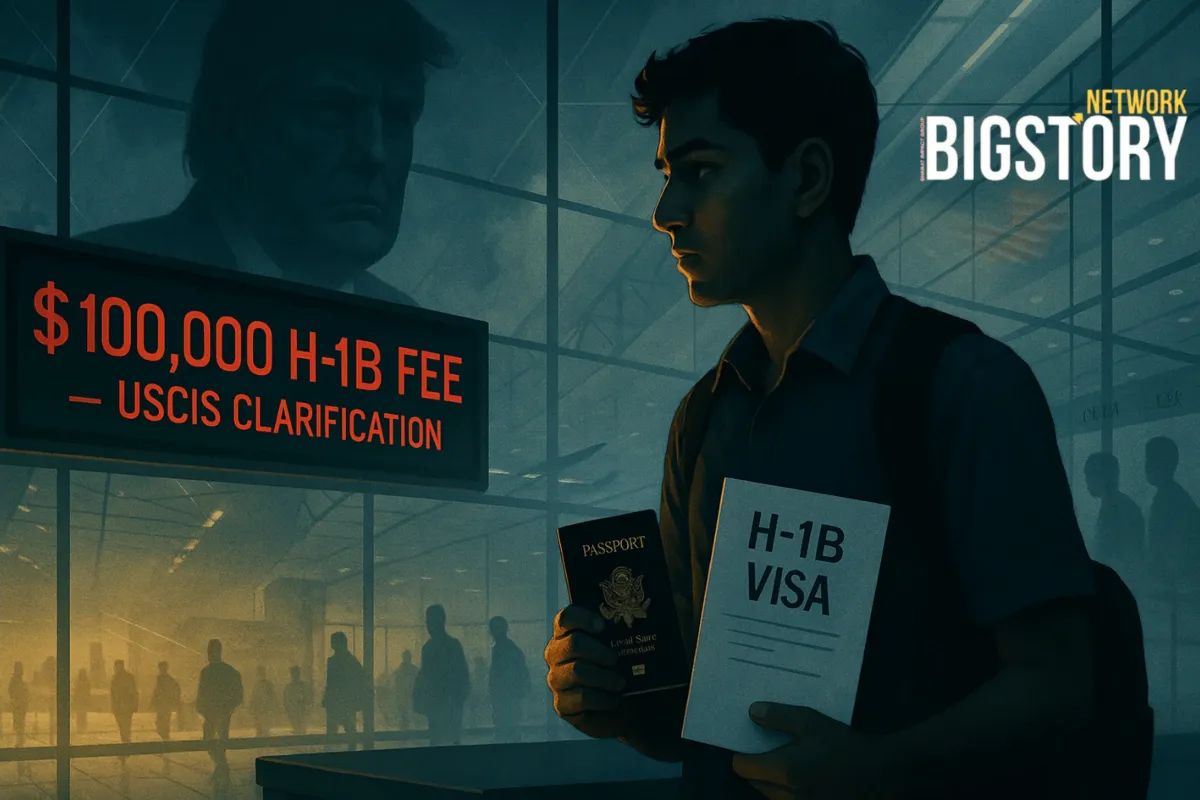
Hero Image

Oct 20, 2025 — Washington, D.C. The U.S. immigration agency issued detailed guidance on who must pay the $100,000 H-1B fee announced last month. Key point: most in-country status moves are exempt.

  • Exempt: F-1→H-1B change of status filed while physically in the U.S.; in-country extensions/renewals; petitions filed before Sept 21, 2025 (12:01 a.m. EDT).
  • Not exempt (headline risk persists): New consular H-1B stamping abroad; many out-of-country first-time H-1Bs; cases filed after the effective cut-off that require a new visa to enter.

The fee itself remains on the books. Today’s move clarifies scope, not policy intent.

Why this matters to India

  • Indians hold ~70% of H-1Bs and form the largest cohort of U.S. STEM master’s grads and OPT participants. The exemption for in-country F-1→H-1B is a lifeline for graduating Indian students already in the U.S.
  • But the headline risk (and potential fee at consulates) still chills decisions: families defer U.S. plans; employers curb international travel; startups freeze cross-border hiring.
  • Net effect: Canada/UK/Australia gain; Indian talent may choose those pathways—reducing future India–U.S. tech integration and diaspora-led entrepreneurship.

The signal behind the “clarification”

This looks less like a “relaxation” and more like damage control after a month of uncertainty that spooked students, employers, and universities. It doesn’t solve the bigger shift: a looming H-1B redesign (wage-weighted lottery, stricter role–degree fit, tougher enforcement) that could raise costs, raise bar, and lower predictability.

What Indian students & workers should do now

If you’re already in the U.S.:

  • File change of status in-country where possible; avoid travel until approval if feasible.
  • Keep petitions consistent with job title, wage level, worksite—USCIS is signaling tighter audits.
  • If you must travel, get counsel on whether a consular touch could trigger the fee.

If you’re outside the U.S.:

  • Budget for the worst-case fee until litigation or new guidance changes it; assess alternative destinations and timing.
  • Employers: rethink on-site rotations and short trips that create visa touchpoints.

Startups in India with U.S. aspirations:

  • Consider remote-first plus Canada/UK hubs as hedges; reserve U.S. transfers for roles with the clearest business case.

The bigger policy arc (what’s next)

  • Legal risk: Multiple suits challenge the fee’s legality; an injunction could pause it—but timing is uncertain.
  • Wage-weighted lottery (proposed): From March 2026, higher wage levels could get multiple “entries” in selection, disadvantaging entry-level grads and lower-cost geos.
  • Enforcement (Project Firewall): Expect coordinated audits across Labor, USCIS, DOJ; client-site consulting models face the most scrutiny.

The BIGSTORY reframe

The clarification admits implementation gaps—and the strategy looks like industrial policy via immigration, pushing visas toward a narrow slice of high-pay roles while making the rest prohibitively risky or expensive. That’s a talent-repellent posture in an AI race.

At a glance: Who likely pays now

  • New, out-of-country H-1BsHigh risk of fee
  • Consular stamping after approval (travel-dependent) → Risk—get counsel
  • In-country F-1→H-1B change of statusExempt
  • In-country H-1B extensions/renewalsExempt
  • Filed before Sept 21 cut-offExempt

What it means for India–U.S. strategy

This is where geopolitics meets HR. Washington says it wants deeper India tech ties to balance China, yet this framework taxes Indian talent pipelines and injects uncertainty into university and industry planning. Expect India Inc. to diversify with Toronto/London nodes and selective U.S. roles only where returns justify six-figure visa friction.

FAQ

Is the $100,000 H-1B fee gone?

No. USCIS clarified who pays; it did not revoke the fee.

Do F-1 students converting to H-1B pay?

If you file in-country for a change of status, current guidance says no.

Will consular stamping trigger the fee later?

Possibly. This is fact-specific—get counsel before travel.

What about H-1B extensions?

In-country extensions/renewals are exempt under current guidance.

What’s this wage-weighted lottery?

A proposal to give more chances to higher-wage registrations from 2026, likely shrinking odds for fresh grads.

Could courts block the fee?

Yes; lawsuits are underway. No guaranteed timeline.

Sseema Giill
Sseema Giill Founder & CEO

Sseema Giill is an inspiring media professional, CEO of Screenage Media Pvt Ltd, and founder of the NGO AGE (Association for Gender Equality). She is also the Founder CEO and Chief Editor at BIGSTORY NETWORK. Giill champions women's empowerment and gender equality, particularly in rural India, and was honored with the Champions of Change Award in 2023.

BIGSTORY Trending News! Trending Now! in last 24hrs

Beyond Petra: The Strategic "Fertilizer Play" Behind Modi’s Jordan Trip
Bharat One
Beyond Petra: The Strategic "Fertilizer Play" Behind Modi’s Jordan Trip
Modi and Trump Speak: Is the 50% Tariff War Finally Ending?
Bharat One
Modi and Trump Speak: Is the 50% Tariff War Finally Ending?
"Sign on the Dotted Line": Piyush Goyal Dares US as Trade Talks Heat Up
Bharat One
"Sign on the Dotted Line": Piyush Goyal Dares US as Trade Talks Heat Up
Trade War Expands: After US, Mexico Hits Indian Goods with Massive Duties
Bharat One
Trade War Expands: After US, Mexico Hits Indian Goods with Massive Duties