
The VB-G RAM G Bill 2025 replaces MGNREGA, offering 125 work days but removing the universal guarantee and forcing states to pay 40% of wages.
 Brajesh Mishra
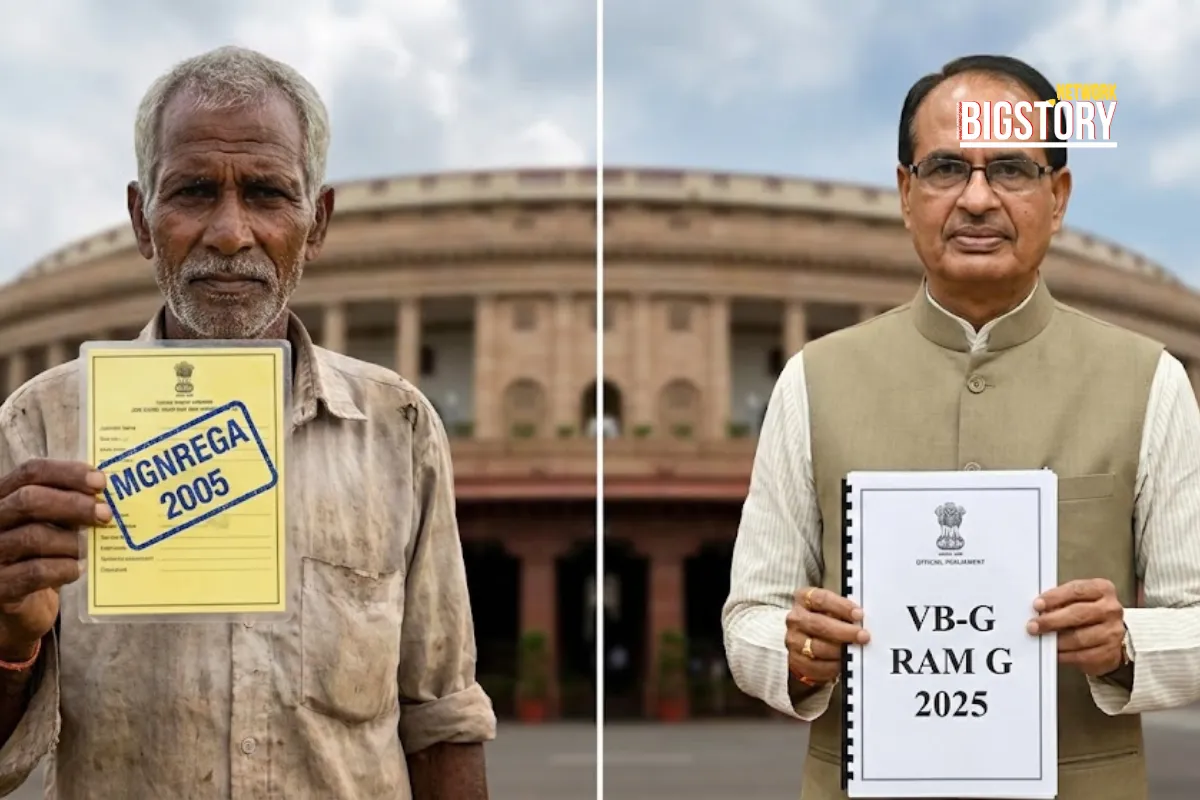
In a move that fundamentally rewrites India's rural welfare architecture, Union Rural Development Minister Shivraj Singh Chouhan introduced the Viksit Bharat–Guarantee for Rozgar and Ajeevika Mission (Gramin), or VB-G RAM G Bill, 2025, in the Lok Sabha on December 16. The bill seeks to repeal the iconic MGNREGA Act of 2005. While the government promotes it as an upgrade offering 125 days of guaranteed work (up from 100) aligned with the vision of "Ram Rajya," critics and opposition parties staged a walkout, labeling it a death blow to the "right to work" by introducing clauses that restrict the guarantee to centrally "notified areas" only.
The introduction follows months of tension over the Aadhaar-Based Payment System (ABPS), made mandatory in January 2024, which activists claimed led to mass "technical exclusions." The new bill formalizes this shift toward a "supply-driven" model. Unlike MGNREGA, where the Centre bore 100% of wage costs, the VB-G RAM G Bill proposes a 60:40 funding split, forcing state governments to shoulder 40% of the wage bill. This fiscal restructuring comes amid a broader push for "Viksit Bharat 2047," framing welfare modernization as a necessary step for economic efficiency.
While headlines focus on the name change and extra days, the deeper story is the "Notification Trap." Section 5(1) of the new bill subtly changes the game: the work guarantee will now apply only in rural areas "as notified by the central government." This clause hands New Delhi a "kill switch." The Centre can now selectively turn off the employment guarantee in specific districts or opposition-ruled states by simply de-notifying them. It transforms a citizen's unconditional legal right to demand work into a conditional policy that exists at the pleasure of the central executive.
The bill also introduces a "Seasonal Pause," allowing states to suspend the scheme during harvest seasons to ensure cheap labor availability for landowners—a move that prioritizes farm owners over landless laborers. Furthermore, by mandating "AI-enabled analytics" in the statute itself, the bill legally codifies the very algorithmic exclusions (like ABPS errors) that have plagued the system, making "computer error" a valid legal defense for denying livelihood.
If the "guarantee" of work can be turned off by a notification from Delhi, is it really a guarantee at all?
What is the VB-G RAM G Bill 2025 replacing MGNREGA? It is a new legislation titled "Viksit Bharat–Guarantee for Rozgar and Ajeevika Mission (Gramin)" introduced to repeal and replace the MGNREGA Act of 2005. It proposes increasing guaranteed work days to 125 but changes the funding model and restricts the guarantee to centrally notified areas.
Will the right to work be removed in the new NREGA bill? Critics argue that the "right to work" is effectively diluted because the new bill (Section 5(1)) limits the guarantee only to rural areas "notified by the central government," removing the universal application that existed under MGNREGA.
Why is the opposition protesting the VB-G RAM G Bill? The opposition opposes the removal of Mahatma Gandhi's name from the act, the shift of 40% of the financial burden to state governments, and the perceived dismantling of the demand-driven "legal guarantee" in favor of a supply-driven, government-controlled scheme.
What is the new funding pattern in the VB-G RAM G Bill? Unlike MGNREGA, where the Centre paid 100% of unskilled wages, the new bill proposes a 60:40 ratio, requiring state governments to cover 40% of the wage costs, which may strain state budgets significantly.
News Coverage
Research & Analysis
 Exclusive Content


Sign up for the Daily newsletter to get your biggest stories, handpicked for you each day.


 Trending Now! in last 24hrs


