BIGSTORY Network


India Jan. 28, 2026, 8:48 p.m.

GC Equity Regulations 2026: Myths Debunked & Real Loopholes Exposed

Unpacking the UGC Equity Regulations 2026. We debunk myths about "Equity Squads" and expose the critical loopholes regarding false complaints causing campus unrest.

by Author Brajesh Mishra
Hero Image

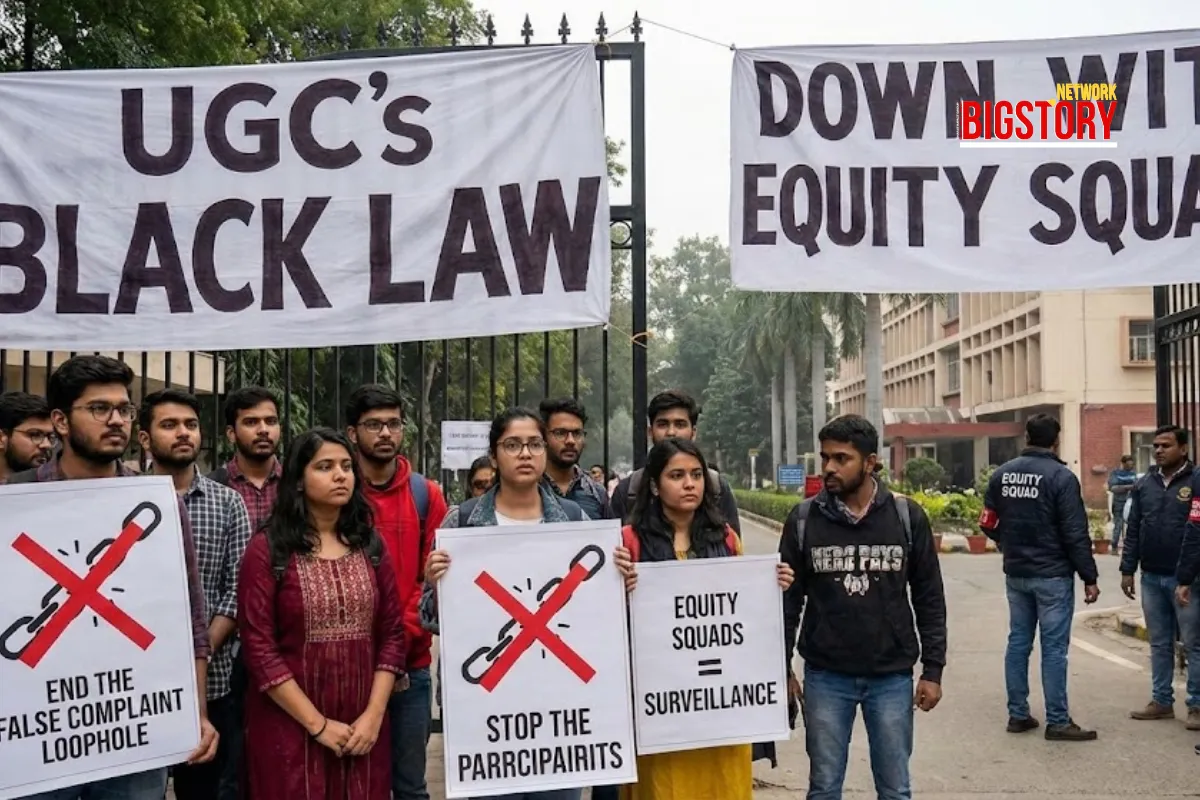
The University Grants Commission (UGC) headquarters in Delhi is currently under siege by protesting students. In Uttar Pradesh, government officials are resigning, calling the new rules a "Black Law." The internet is flooded with hashtags like #UGCRollBack.

But amidst the noise, what does the "Promotion of Equity in Higher Education Institutions Regulations, 2026" actually say? Is it a necessary shield for the marginalized, or a weapon for misuse?

Here is a point-by-point breakdown of the changes, the myths, and the critical loopholes that have triggered this crisis.

The Core Changes (What Actually Changed?)

The 2026 regulations replace the old 2012 guidelines. The shift is from "Advisory" (Suggestions) to "Mandatory" (Compliance). Here are the three massive shifts:

  1. The "Equity Squads": Colleges must now form mobile vigilance teams that actively patrol hostels, canteens, and common areas to prevent discrimination. They don't just wait for complaints; they look for trouble.
  2. The "Zero Risk" Clause: The most controversial change. The final draft removed the clause that penalized students for filing false or malicious complaints.
  3. The 24-Hour Clock: Once a complaint is filed, the Equity Committee must meet within 24 hours. A final report must be submitted within 15 days.

Debunking the Myths (Rumor vs. Reality)

Social media is rampant with exaggeration. Let’s separate the viral rumors from the legal text.

MYTH: "General Category students are banned from joining the Equity Committees."

  • TRUTH: False. The regulations do not ban General Category students. However, they mandate representation for SC, ST, OBC, Women, and PwD members. Because there is no mandatory seat reserved for a General Category member, universities can form a committee without one, but they are not legally forced to exclude them.

MYTH: "You can be expelled immediately just on an accusation."

  • TRUTH: Partially False. The regulations require an inquiry. However, the 24-hour meeting rule creates immense pressure on Principals. To avoid UGC penalties for "non-compliance," administrators might suspend an accused student pending inquiry just to show they are acting fast. So, while expulsion isn't automatic, immediate suspension is a very real risk.

MYTH: "This law applies only to caste."

  • TRUTH: False. The 2026 regulations explicitly expanded the net. It now covers discrimination based on Caste, Gender, Religion, Language, Region, and Disability. If you mock someone's accent or regional background, that is now a punishable offense under these rules.

The Real Loopholes (Why People Are Actually Agitated)

The protests aren't just "Upper Caste arrogance." There are genuine structural flaws in the regulations that legal experts and students are flagging.

1. The "False Complaint" Immunity (The Asymmetry Loophole)

In any justice system, there is a deterrent against lying. The 2012 guidelines had a clause to punish students filing malicious complaints. The 2026 regulations deleted this.

  • The Danger: This creates a "Zero Risk" environment. In a heated student election or a personal breakup, Student A can accuse Student B of caste discrimination. Even if the investigation proves Student A lied, Student A faces no punishment under this specific regulation. This asymmetry weaponizes the law.

2. The "Surveillance State" (The Privacy Loophole)

The mandate for "Equity Squads" to patrol "vulnerable areas" (hostels/canteens) is unprecedented.

  • The Danger: This fundamentally changes campus life. A heated debate between friends in a mess hall could be overheard by a "Squad Member" and flagged as a hate crime. It turns professors and student volunteers into "Moral Police," killing the concept of a free, open campus where students learn to resolve conflicts themselves.

3. The "Judge & Jury" Bias (The Composition Loophole)

The regulations mandate that the "Anti-Discrimination Officer" (ADO) and the Committee members must have representation from marginalized communities.

  • The Danger: While representation is good, the lack of a neutral observer clause is a flaw. If a General Category student is accused, and the entire committee judging them consists only of members from the opposing identity group (due to the mandatory quotas), the accused may feel the process is biased from the start.

4. The "Guilty Admin" Pressure (The Implementation Loophole)

The rules hold the Head of the Institution (Principal/VC) personally liable if discrimination is found.

  • The Danger: Self-preservation. If a Principal knows they will be punished by the UGC if a case drags on, their incentive is to convict quickly rather than investigate thoroughly. It encourages universities to sacrifice the accused student to save their own grant funding.

The Verdict

The Intent of the UGC Equity Regulations 2026 is undeniable: Indian campuses have a history of silent exclusion (e.g., the Rohith Vemula tragedy) that needs fixing.

However, the Mechanism is flawed. By removing the check on false complaints and introducing "patrolling squads," the UGC has replaced "Protection" with "Policing." Until these specific loopholes are plugged, the law risks creating more conflict than it resolves.


Brajesh Mishra
Brajesh Mishra Associate Editor

Brajesh Mishra is an Associate Editor at BIGSTORY NETWORK, specializing in daily news from India with a keen focus on AI, technology, and the automobile sector. He brings sharp editorial judgment and a passion for delivering accurate, engaging, and timely stories to a diverse audience.

BIGSTORY Trending News! Trending Now! in last 24hrs

Red Fort to CBSE Exams: What You Need to Know About Delhi's New Terror Alert
India
Red Fort to CBSE Exams: What You Need to Know About Delhi's New Terror Alert
The 74 Lakh Missing Voters: How AI Just Reshaped the 2026 Tamil Nadu Election
India
The 74 Lakh Missing Voters: How AI Just Reshaped the 2026 Tamil Nadu Election
Shame to Our Country": How the AI Summit Protest Just Fractured the INDIA Bloc
India
Shame to Our Country": How the AI Summit Protest Just Fractured the INDIA Bloc
The "Already Naked" Jibe: How PM Modi Turned the AI Summit Protest Against Congress
India
The "Already Naked" Jibe: How PM Modi Turned the AI Summit Protest Against Congress