
A rare winter storm paralyzes the UAE on Dec 19, 2025. Dubai mandates remote work and cancels flights as floods hit Karama. Get the latest updates
 Brajesh Mishra
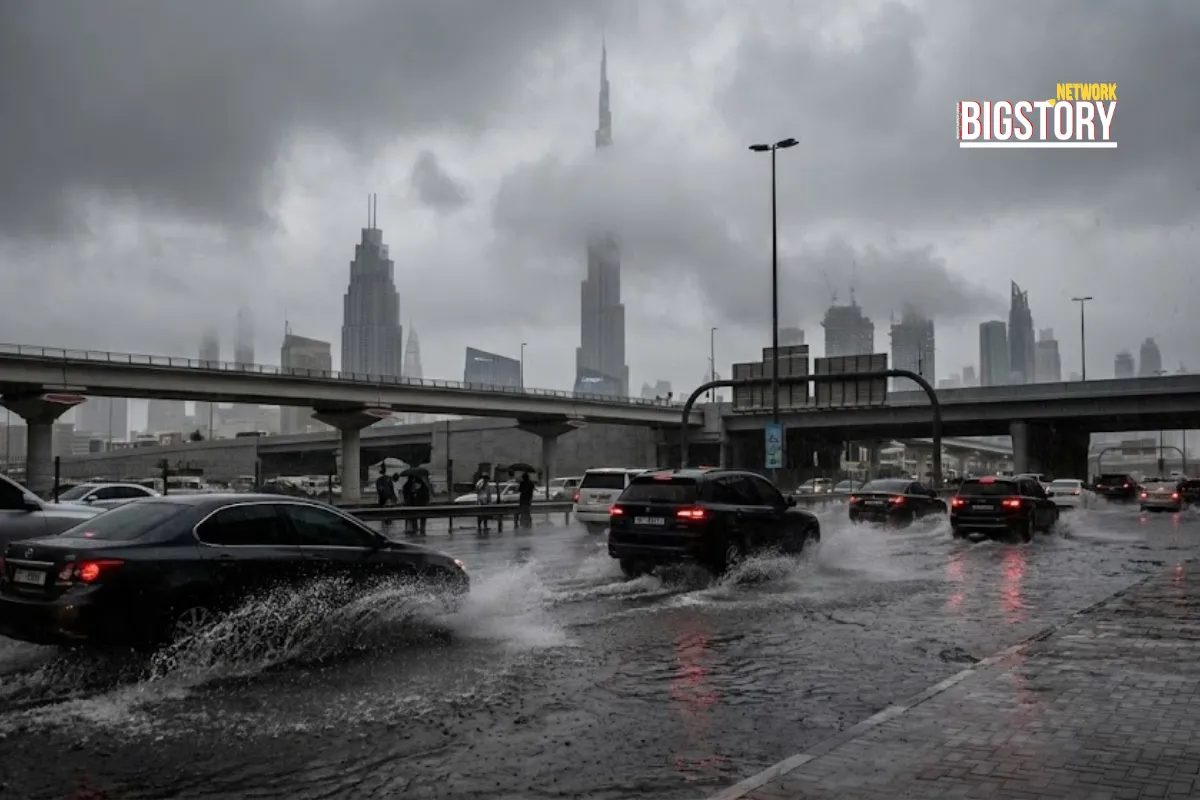
A powerful "deep low-pressure system" sweeping in from the Red Sea has brought the United Arab Emirates to a standstill. On December 19, 2025, Dubai Crown Prince Sheikh Hamdan bin Mohammed issued a mandatory remote work directive for all government entities as torrential rain, thunderstorms, and hail battered the country. The storm, which peaked overnight, has left major roads in neighborhoods like Karama impassable and forced the cancellation of dozens of flights at Dubai International Airport (DXB), turning one of the world's busiest travel hubs into a scene of operational chaos.
This was a forecasted crisis. On December 11, the National Centre of Meteorology (NCM) warned of unstable weather striking between December 16–19. The storm intensified on December 18, prompting Abu Dhabi to close parks and beaches. By the morning of the 19th, wind speeds whipped up to 50 km/h, reducing visibility and turning the morning commute into a hazard. The swift government response marks a pivot in strategy, prioritizing public safety over business-as-usual following criticism regarding the handling of previous flood events.
While social media focuses on the spectacle of hail in the desert, the deeper story is the "Infrastructure Gap." This is the third major flooding event in the UAE in less than two years. The recurring paralysis of districts like Karama suggests that the region's drainage infrastructure is failing to keep pace with the "new normal" of extreme weather, whether natural or influenced by climate change. The government's "Remote Work" mandate is less a perk and more a "Coping Mechanism"—a digital dam used to manage physical infrastructure failures. We are witnessing the birth of "Algorithmic Civil Defense," where data is used to shut down the city preemptively because the concrete can no longer handle the water.
The regularization of "Climate Lockdowns" in the UAE has significant economic implications. If rain automatically equals a remote work mandate, businesses must permanently adapt their operations for flexibility. Furthermore, the recurring flight disruptions at DXB challenge Dubai's reputation as a seamless global connector. The focus must now shift from emergency response to urban retrofitting.
If the desert can no longer handle the rain, is "remote work" the only dam the UAE has left?
Is it mandatory to work from home in Dubai on December 19, 2025? Yes, for government employees. Dubai Crown Prince Sheikh Hamdan issued a directive mandating remote work for all government entities. The Ministry of Human Resources and Emiratisation (MoHRE) has also strongly urged the private sector to adopt flexible work patterns to ensure safety.
Which airlines cancelled flights in Dubai due to rain? Major carriers including Emirates and Flydubai have cancelled or delayed multiple flights due to the severe weather conditions. Qatar Airways also reported disruptions. Passengers are advised to check their flight status directly on airline websites before traveling to DXB.
What areas in Dubai are flooded right now? Reports and social media footage confirm significant waterlogging in Karama, parts of Deira, and roads leading to the airport. Authorities have advised the public to avoid flood-prone areas and stay indoors if possible.
How long will the rain last in UAE? According to the National Centre of Meteorology (NCM), the unstable weather conditions, including scattered showers and thunder, are expected to persist through Saturday, December 20, before easing by Sunday.
News Coverage
Research & Analysis
 Exclusive Content


Sign up for the Daily newsletter to get your biggest stories, handpicked for you each day.


 Trending Now! in last 24hrs


