
NCP MP Supriya Sule has introduced the Right to Disconnect Bill 2025 in Lok Sabha, proposing the right for employees to refuse after-hours work communications.
 Brajesh Mishra
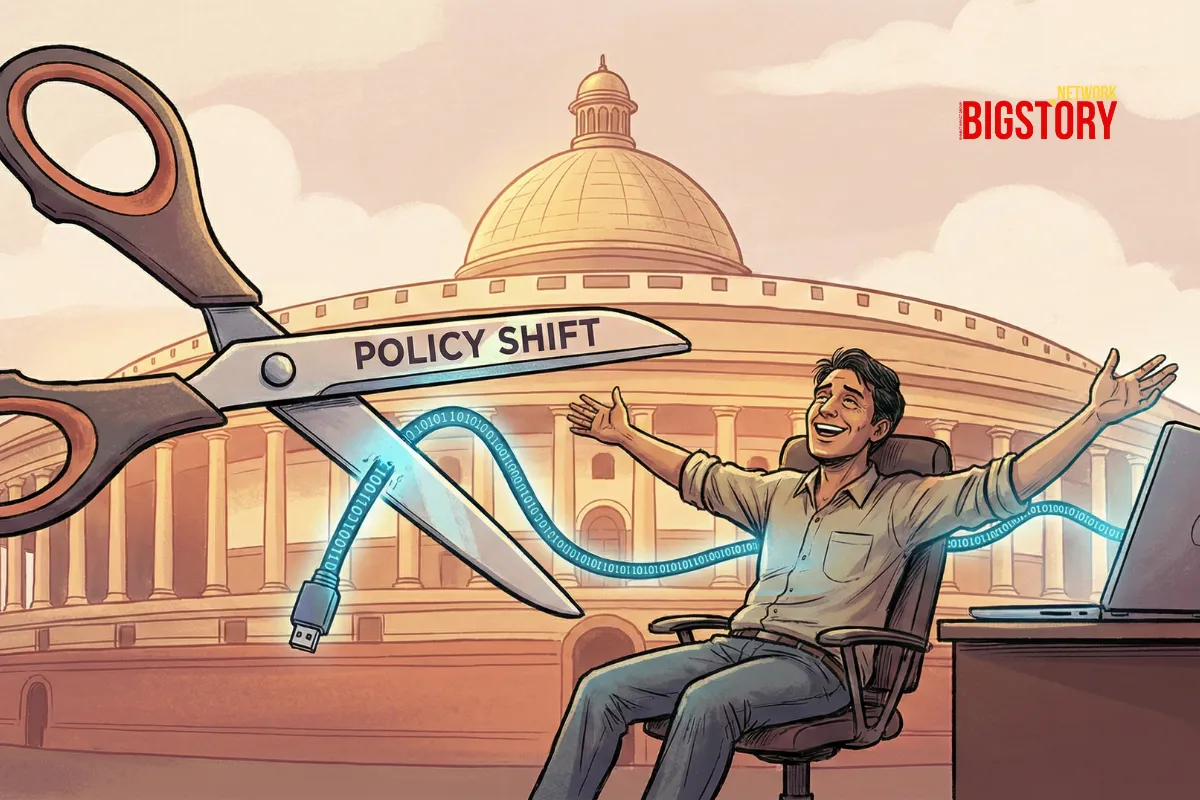
In a move that could fundamentally reshape India's corporate culture, Nationalist Congress Party (NCP) MP Supriya Sule introduced the Right to Disconnect Bill, 2025 in the Lok Sabha today. The legislation seeks to give employees the legal right to refuse work-related calls and emails outside office hours without fear of retaliation. It proposes establishing an Employees' Welfare Authority and mandates companies to negotiate specific "out-of-hours" terms with staff. The bill's revival comes amid a documented burnout crisis, with recent surveys showing 52% of Indian employees suffering from work-related stress.
This is Sule's second attempt to pass the law, having first introduced a private member's bill in 2019 that lapsed. However, the post-pandemic landscape has changed the conversation. The bill follows a pioneering move by Kerala, which introduced its own Right to Disconnect Bill in October 2025, aiming to protect private sector employees. Globally, countries like France, Spain, and Belgium have already enacted similar laws. In India, the debate has intensified after viral reports of toxic workplaces and tech leaders controversially advocating for 70-to-90 hour workweeks.
While the headlines focus on "ignoring boss's calls," the deeper story is the "Productivity Paradox." Corporate India opposes the bill citing productivity, yet data from the Vertex Group shows that in extended 89-hour work weeks, actual productive time drops to just 2.5-3.5 hours due to fatigue. The "Right to Disconnect" isn't just a wellness perk; it's an efficiency strategy. By forcing a hard stop, the law could inadvertently compel Indian companies to fix their broken workflows and staffing models, moving from "always-on" inefficiency to structured, high-output shifts—a shift that mature economies made decades ago.
If passed, the bill would force a rewrite of employment contracts across the service sector. Companies would need to invest in better project management tools and potentially hire more staff to cover shifts, rather than relying on unpaid overtime. However, the exclusion of the gig economy and informal sector workers—who make up the vast majority of India's workforce—means the law creates a "protection gap," shielding white-collar professionals while leaving delivery partners and contract laborers in the "always-on" cycle.
If your boss pays for 8 hours of your time but demands 24 hours of your attention, are you an employee, or are you on a subscription plan?
What is the Right to Disconnect Bill 2025? It is a private member's bill introduced by MP Supriya Sule that seeks to give employees the legal right to refuse work-related calls, emails, and messages outside of negotiated work hours without facing disciplinary action.
Does India have a Right to Disconnect law? Currently, there is no federal law. However, the bill introduced in the Lok Sabha and a similar state-level bill in Kerala aim to establish this right.
What are the penalties for employers under the proposed bill? The bill proposes that companies can be fined up to 1% of their total employee remuneration for non-compliance with the right to disconnect provisions.
Which other countries have a Right to Disconnect? Countries like France, Spain, Belgium, Italy, and Australia have already implemented various forms of "Right to Disconnect" legislation to protect workers' private time.
News Coverage
Research & Analysis
 Exclusive Content


Sign up for the Daily newsletter to get your biggest stories, handpicked for you each day.



 Trending Now! in last 24hrs


