
Supreme Court cites TCS passport outsourcing to validate Aadhaar credibility (Jan 29). Observation confirms PPP model reliability for sovereign documents.
 Brajesh Mishra
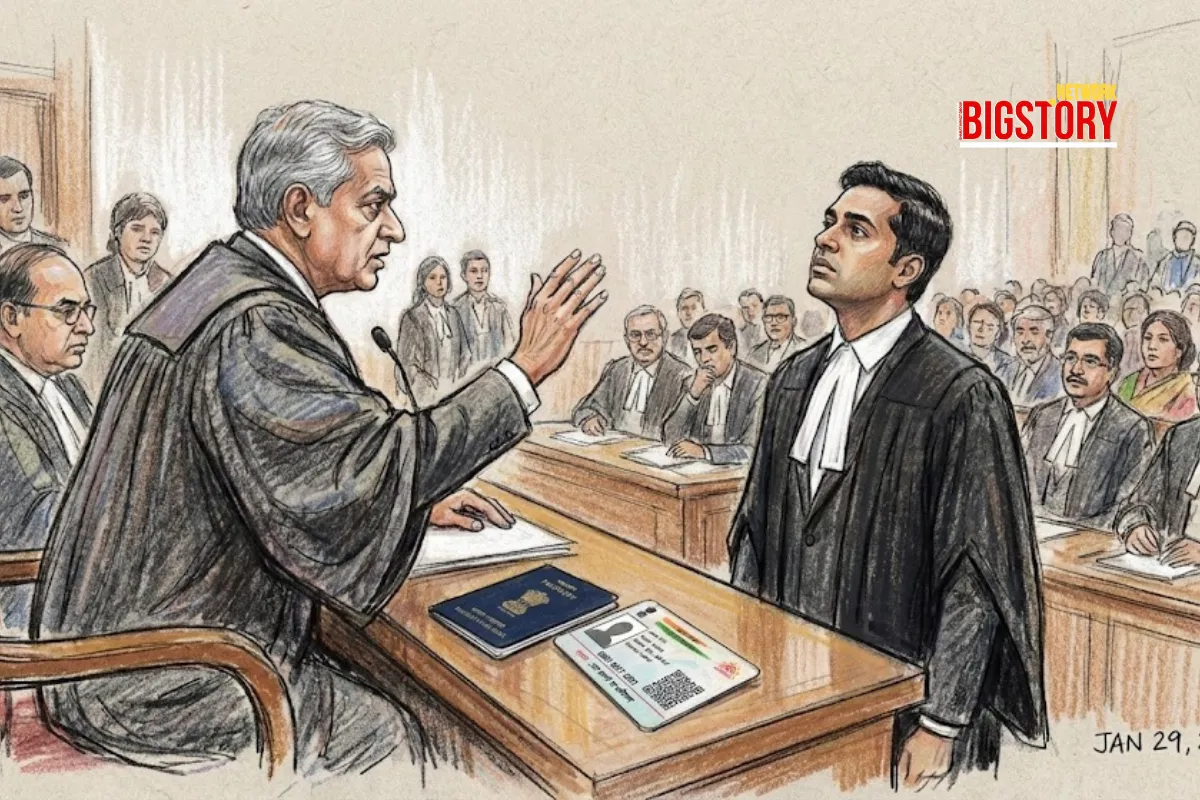
In a significant judicial observation on January 28, 2026, the Supreme Court effectively validated the reliability of Public-Private Partnerships (PPP) in sensitive government functions. While hearing a plea regarding the "Special Intensive Revision" (SIR) of electoral rolls, the bench remarked, "Do you know that even your passport issuance is outsourced to a private company?"
This observation was used to rebut arguments that documents generated by private entities (like Aadhaar centers) are inherently unreliable for voter verification. By drawing a parallel with the Passport Seva Programme—managed largely by Tata Consultancy Services (TCS)—the Court signaled that the "private" tag is no longer a disqualifier for credibility in the eyes of the law.
Mainstream media is framing this as "SC Backs Aadhaar." The deeper story is the Normalization of Outsourced Sovereignty.
If the Supreme Court trusts a private company to handle the identity document that lets you leave the country, is there any government function left that cannot be outsourced?
1. Did the Supreme Court say passport issuance is outsourced? Yes. The Court remarked that the passport issuance process is outsourced to a private company (TCS) to highlight that private involvement does not make a document fake or unreliable. However, the final authority to sign and grant the passport still lies with the Ministry of External Affairs.
2. Which private company handles Indian passports? Tata Consultancy Services (TCS) manages the Passport Seva Kendras (PSKs). They handle the application submission, biometrics, and photo clicking. The verification and granting are done by government officers.
3. Does this mean private companies decide who gets a passport? No. This is a common misconception. The "Granting Officer" (GO) is always a government official. TCS only handles the "front-end" processing and data entry. The Sovereign power of decision-making remains with the State.
4. Why was this mentioned in a Supreme Court hearing? It was mentioned during a hearing about Voter List Revisions (SIR). Petitioners argued Aadhaar was unreliable because private centers issue it. The Judge used the Passport example to prove that "private issuance" does not equal "invalid document."
5. Is Aadhaar valid for voter ID verification? Based on this observation, the Court seems inclined to accept it. The Bench rejected the argument that private sector involvement makes Aadhaar data inherently suspect.
News Coverage
Context & Analysis
 Exclusive Content


Sign up for the Daily newsletter to get your biggest stories, handpicked for you each day.



 Trending Now! in last 24hrs


