
Indore declares epidemic as water contamination causes 20 new cases. 1,400+ sick, 10+ dead. Experts deployed to contain the sewage-linked outbreak.
 Brajesh Mishra
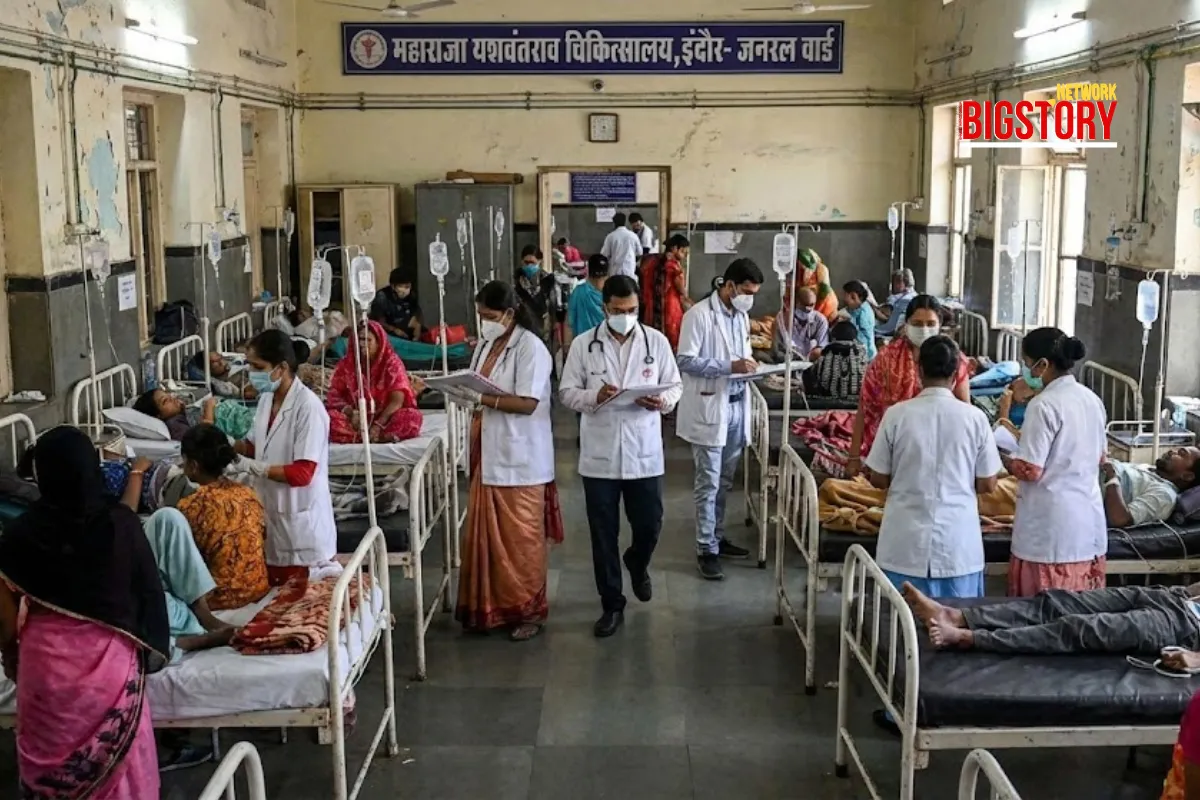
The crisis in India’s cleanest city has officially become an epidemic. On January 4, 2026, health teams in Indore detected 20 new cases of severe diarrhea after screening over 9,400 residents in the Bhagirathpura locality. The total number of people affected by the contaminated water outbreak has now crossed 1,400, with at least 142 patients currently hospitalized, including 11 in the ICU. The escalation forced the district administration to formally declare an epidemic and call in expert teams from the National Centre for Disease Control (NCDC) and ICMR-NIRBI, signaling that the situation is far from contained.
The tragedy began in late December 2025, when sewage from an improperly constructed toilet pit at a police check post leaked into the main Narmada drinking water pipeline. Residents reported foul-smelling, discolored water, followed rapidly by a wave of vomiting and diarrhea. What started as a local complaint has spiraled into a public health disaster. Lab tests confirmed the presence of E. coli and fecal coliform in the water supply. The administration has since suspended tap water supply to the affected zone and deployed over 200 tankers, but for many, the intervention came too late.
While mainstream media focuses on the "Epidemic Declaration," the deeper story is the "Infrastructure Anarchy." Investigations have revealed not just the faulty toilet pit, but approximately 60 illegal borewell connections tapped directly into the main pipeline. This suggests a systemic loss of control over the city's water distribution network. The contamination wasn't just a freak accident; it was the inevitable result of unregulated infrastructure tinkering in a city that prioritized surface cleanliness over underground integrity.
Furthermore, the "Death Count Discrepancy" reveals a political crisis. The confusion between state and local officials over the number of fatalities—ranging from 4 to 17—suggests an attempt to manage the optics of the tragedy rather than transparency. In a health crisis, accurate data is the first line of defense; in Indore, it seems to be the first casualty.
The epidemic declaration brings national scrutiny and resources, but it also shatters the "Indore Model" of urban governance. The city’s 8-year streak as India's cleanest is now juxtaposed with the image of residents dying from sewage-laced water. This tragedy will likely force a re-evaluation of how "cleanliness" is measured in the Swachh Bharat rankings, shifting focus from visible waste management to invisible but vital water safety.
If the "cleanest city in India" can’t keep sewage out of its drinking water, what does that say about the safety of the rest of urban India?
How many new cases of water contamination were detected in Indore on January 4, 2026? Health officials detected 20 new cases of severe diarrhea after screening over 9,400 residents in the affected Bhagirathpura area. This brings the total number of people reporting illness to over 1,400.
What caused the water contamination in Indore? The primary cause was identified as sewage leaking into the main drinking water pipeline from an improperly constructed toilet pit at a police check post. Additionally, authorities found about 60 illegal borewell connections that may have contributed to the contamination.
Has the Indore water outbreak been declared an epidemic? Yes. Due to the scale of the outbreak—with over 1,400 affected and at least 10 deaths—the district health administration formally declared the Bhagirathpura waterborne outbreak an epidemic on January 4, 2026, to mobilize national resources and expert teams.
Sources
News Coverage
Context & Updates
 Exclusive Content


Sign up for the Daily newsletter to get your biggest stories, handpicked for you each day.

 Trending Now! in last 24hrs


