
BJP and Congress form rare alliance in Ambernath to defeat Shiv Sena. CM Fadnavis condemns the move. Analysis of the Mahayuti coalition crisis.
 Brajesh Mishra
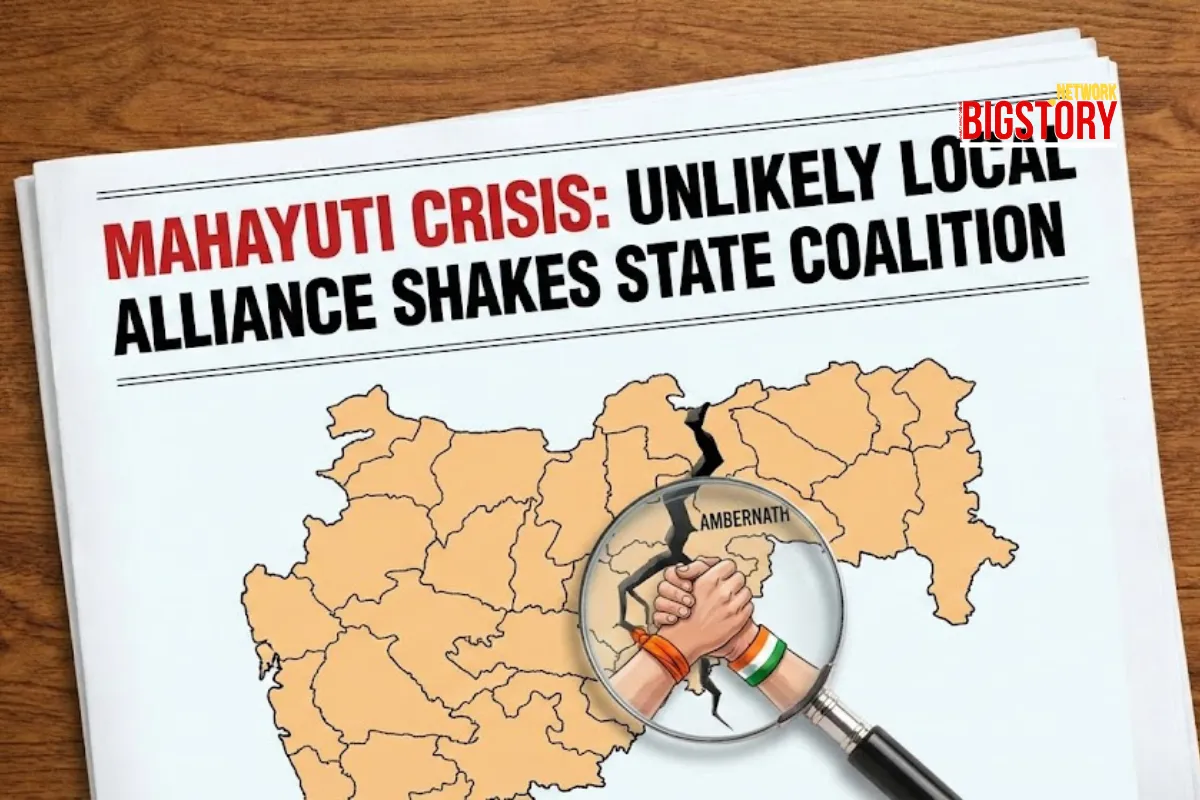
In Ambernath, Maharashtra, the impossible has happened. On January 6, 2026, the Bharatiya Janata Party (BJP) and the Indian National Congress—sworn national enemies—formalized a local alliance to seize control of the Ambernath Municipal Council. This unprecedented coalition, dubbed the "Ambernath Vikas Aghadi," successfully installed BJP’s Tejashree Karanjule Patil as the Municipal President, defeating the Eknath Shinde-led Shiv Sena candidate by over 6,000 votes. The move has sent shockwaves through the state's ruling Mahayuti coalition, with Chief Minister Devendra Fadnavis denouncing the pact as a "disciplinary violation" and the Congress state leadership suspending 12 of its own councillors.
The roots of this strange alliance lie in the fractured mandate of the December 2025 civic elections. The Shinde-led Shiv Sena emerged as the single-largest party with 27 seats in the 60-member council—just three short of a majority. However, instead of supporting their state-level ally, the local BJP unit (14 seats) reached across the aisle to the Congress (12 seats) and the Ajit Pawar faction of the NCP (4 seats). Their shared goal? To end what they described as 25 years of "corruption and fear" under Shiv Sena rule. The irony is stark: while Prime Minister Modi preaches a "Congress-mukt Bharat" (Congress-free India), his own party's local unit has handed the Congress a lifeline to keep a frenemy out of power.
While mainstream media focuses on the "Political Betrayal" narrative, the deeper story is the "Corruption Scorecard." The alliance wasn't just about power math; it was driven by specific, albeit under-reported, allegations of graft against the Shiv Sena's long reign in the municipality. By framing the alliance as a "moral necessity," local BJP leaders have flipped the script, arguing that allying with the Congress is a lesser evil than enabling a corrupt partner. This raises a critical question: is the Mahayuti alliance rotting from the bottom up?
Furthermore, the "Congress Paradox" is glaring. The state Congress suspended its councillors for the alliance, yet the move has given the party a slice of power it wouldn't have otherwise had. This disconnect between the "high command" and the "ground command" suggests that for grassroots workers, survival trumps the ideological purity demanded by Delhi.
The Implications (Why This Changes Things)
This alliance sets a dangerous precedent for the Mahayuti coalition. If BJP units can ditch the Shiv Sena in local bodies, the trust deficit at the state level will widen. For the Shiv Sena (Shinde faction), losing a stronghold in the Deputy CM’s family turf exposes the fragility of their grassroots network. The "Ambernath Model" might become a template for other disgruntled local units across Maharashtra, threatening to unravel the ruling coalition from within.
The Closing Question (Now, Think About This)
If the BJP and Congress can be friends in Ambernath, is ideology just a mask politicians wear for the cameras?
Sources
News Coverage
Context & Background
 Exclusive Content


Sign up for the Daily newsletter to get your biggest stories, handpicked for you each day.


 Trending Now! in last 24hrs


