
Supreme Court orders full forensic audit of 48-minute audio allegedly featuring ex-Manipur CM Biren Singh admitting to violence. Analysis of the "tampering" vs. "redaction" debate.
 Brajesh Mishra
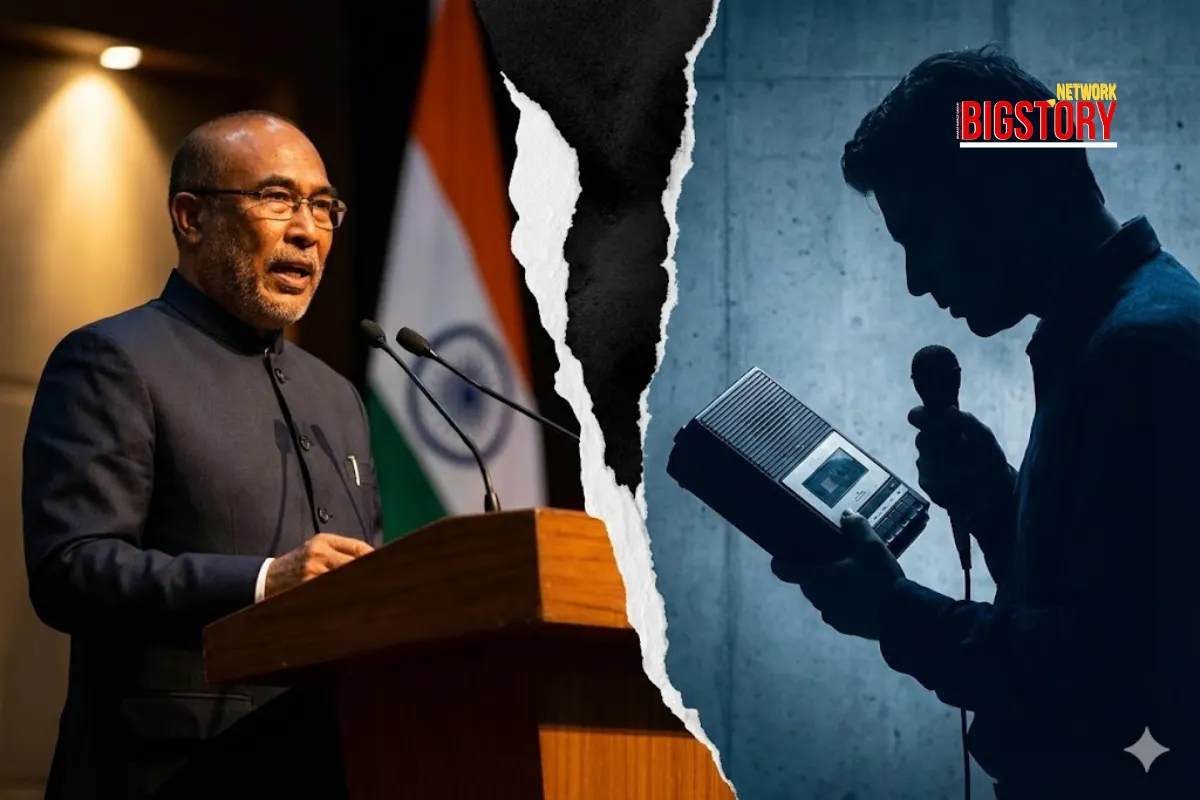
The mystery of the "Manipur Tapes" has moved from the court of public opinion to the forensic lab. On January 7, 2026, the Supreme Court of India ordered a fresh, comprehensive forensic examination of a complete 48-minute audio recording that allegedly features former Manipur Chief Minister N. Biren Singh admitting to instigating the 2023 ethnic violence. Rejecting previous submissions that were dismissed as "tampered" due to editing, the bench led by Justice Sanjay Kumar directed that the full recording, along with voice samples, be sent immediately to the National Forensic Sciences University (NFSU), Gandhinagar. The order potentially removes the state government’s "doctored audio" defense, setting the stage for a definitive verdict on the tapes' authenticity.
Since August 2024, a set of leaked audio clips has haunted the legacy of the N. Biren Singh administration. In the tapes, a voice resembling the former CM is heard boasting about "starting the war" against Kuki-Zo insurgents and defying central directives to stop using bombs. The state government immediately labeled them "doctored" and possibly AI-generated. The legal battle hit a wall in November 2025 when the NFSU refused to authenticate the clips, citing "tampering" because the submitted files were not continuous raw recordings. The petitioner, the Kuki Organisation for Human Rights Trust (KOHUR), argued that the cuts were necessary to protect a whistleblower present in the room.
While mainstream media reports focus on the "delay" in testing, the deeper story is the "Whistleblower's 8 Minutes." The discrepancy between the 56-minute raw file and the 48-minute submission is not just an editing error; it is a calculated omission to save a life. The "tampering" label applied by the forensic lab earlier failed to distinguish between malicious alteration (faking content) and protective redaction (hiding a source). This case will set a critical legal precedent: can evidence be authenticated even if parts are redacted for witness safety?
Furthermore, this is a litmus test for the "AI Defense." For two years, the "deepfake" narrative has been a convenient shield for politicians facing incriminating audio. If the NFSU confirms these tapes are human-generated despite the edits, it pierces the "it's AI" immunity shield. It would force Indian courts to establish a new standard for distinguishing between generative AI fakes and genuine, albeit edited, digital evidence.
If the tapes are authenticated, the political fallout in Manipur—already under a fragile peace since President's Rule was imposed—will be seismic. It would validate the Kuki-Zo community’s long-standing claim of state complicity and could trigger fresh demands for criminal prosecution against the former CM. Conversely, if the lab finds traces of AI synthesis, it could discredit the entire whistleblowing effort and embolden the narrative that the conflict was fueled by disinformation.
If a leader can be heard admitting to "starting a war" on tape, does "editing" the file to save the messenger make the message any less true?
What did the Supreme Court order regarding the Manipur audio clips on Jan 7, 2026? The Supreme Court ordered that the entire 48-minute audio recording, along with voice samples of former CM N. Biren Singh, be sent to the National Forensic Sciences University (NFSU) for a fresh examination. This supersedes previous tests on incomplete clips.
What is the content of the leaked audio clips allegedly featuring N. Biren Singh? The clips allegedly feature a voice resembling N. Biren Singh claiming credit for "starting the war" against Kuki-Zo insurgents, defying the Home Minister's orders against using bombs, and shielding groups that looted state armories.
Why did the forensic lab initially call the Manipur tapes "tampered"? In November 2025, the NFSU stated the clips were "tampered" because they were not a continuous recording. The petitioner, Prashant Bhushan, clarified that the clips were edited (portions removed) to protect the identity of a whistleblower present in the meeting, not to alter the voice or content.
News Coverage
Context & Background
 Exclusive Content


Sign up for the Daily newsletter to get your biggest stories, handpicked for you each day.


 Trending Now! in last 24hrs


