
Major protests erupt in Delhi after Hindu man Dipu Chandra Das is lynched in Bangladesh. VHP breaches barricades as diplomatic tensions soar over minority safety.
 Brajesh Mishra
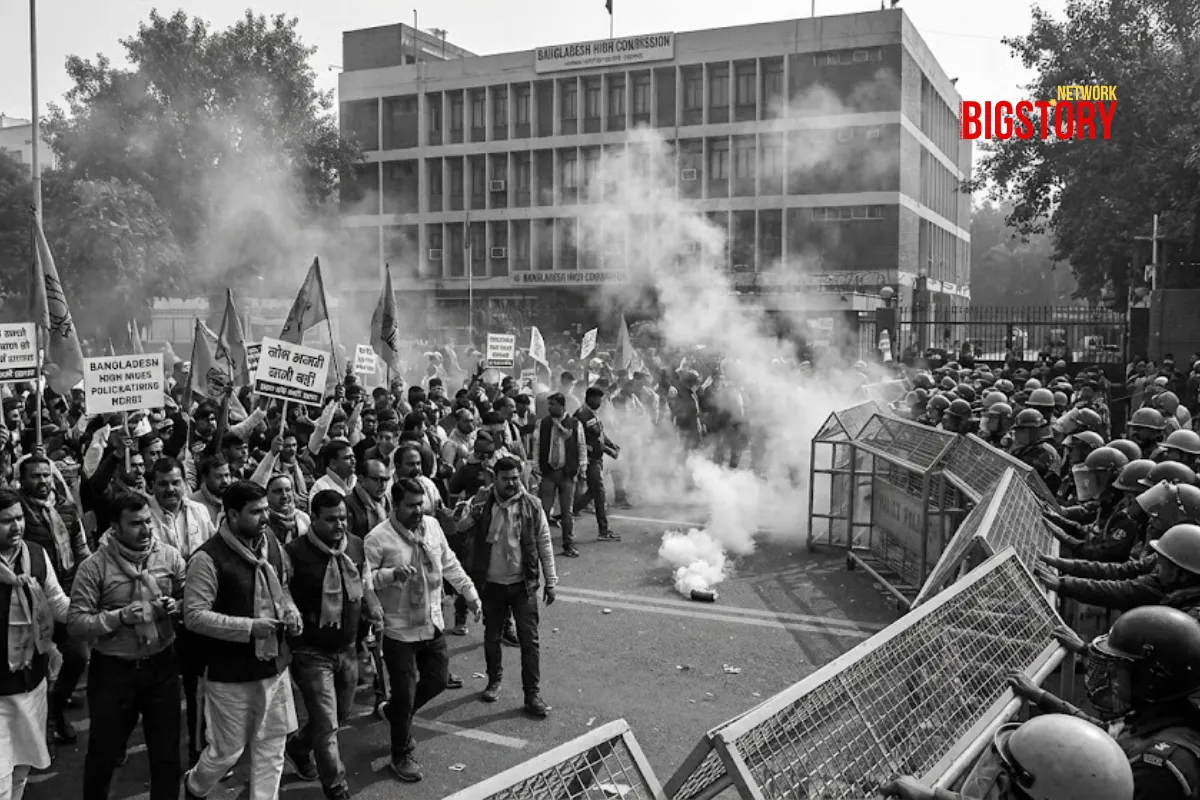
The diplomatic quarter of New Delhi transformed into a flashpoint of geopolitical tension on December 23, 2025, as hundreds of activists from the Vishva Hindu Parishad (VHP) and Bajrang Dal breached police barricades outside the Bangladesh High Commission. The massive show of force was a direct retaliation for the gruesome December 16 lynching of Dipu Chandra Das, a 27-year-old Hindu garment worker in Mymensingh, Bangladesh, who was beaten and burned to death over unsubstantiated blasphemy allegations. The protests mark a dangerous escalation in cross-border tensions, coinciding with the summoning of India’s High Commissioner in Dhaka, Pranay Verma, for the second time in ten days.
The current crisis is a spillover from the assassination of Sharif Osman Hadi, a prominent youth leader of the 2024 uprising, who was shot in Dhaka on December 12 and died in Singapore on December 18. His death vacuumed the political oxygen in Bangladesh, allowing radical groups to pivot the narrative toward anti-India hysteria. Groups like "July Oikya" have accused India of harboring Hadi's killers—claims New Delhi categorically rejects. Amidst this volatile atmosphere, Dipu Chandra Das became a target. According to the Bangladesh Hindu Buddhist Christian Unity Council, his death is part of a staggering pattern of 2,442 attacks on minorities documented between August 2024 and June 2025.
While mainstream coverage focuses on "religious persecution," the deeper story is "Nation-Building Through Opposition." Bangladesh’s emerging political identity under the interim regime is being constructed against India. Youth-led platforms like Inquilab Mancha are cementing their legitimacy not by governing, but by projecting India as the "hegemonic enemy." The lynching of Dipu Das isn't just a communal crime; it is a political signal.
Furthermore, this chaos masks a critical "Geopolitical Realignment." While New Delhi is distracted by the fires in Mymensingh and protests in Chanakyapuri, strategic competitors like China and Turkey are quietly deepening their influence in Dhaka. The Parliament’s External Affairs Committee has already flagged this as India’s "greatest strategic challenge since 1971"—a reality obscured by the emotional volatility of the street protests.
The escalation in Delhi forces the Modi government into a strategic dilemma. A "soft" approach validates the VHP’s criticism of inaction, while a "hard" approach risks pushing Dhaka entirely into Beijing’s orbit just months before the critical Ganga Water Treaty renewal. Domestically, the unrest serves as a rallying cry for Hindu consolidation in India, but internationally, it threatens to unravel India’s "Neighbourhood First" policy.
If the interim government in Dhaka cannot protect a factory worker from a mob, can it guarantee the safety of the ballot box in 2026?
Why did Dipu Chandra Das get lynched in Bangladesh? Dipu Chandra Das, a 27-year-old Hindu garment worker, was lynched by a mob in Mymensingh on December 16, 2025. The attack was triggered by unsubstantiated allegations of blasphemy, occurring amidst a volatile political climate following the death of youth leader Sharif Osman Hadi.
What happened to Sharif Osman Hadi? Sharif Osman Hadi, a prominent leader of the 2024 uprising and an aspiring election candidate, was shot in Dhaka on December 12, 2025. He was airlifted to Singapore for treatment but succumbed to his injuries on December 18. His death triggered widespread anti-India protests after rumors circulated that his attackers had fled across the border.
How many Hindus have been killed in Bangladesh since August 2024? According to the Bangladesh Hindu Buddhist Christian Unity Council (BHBCUC), there have been at least 96 deaths and over 2,442 incidents of violence against minorities between August 4, 2024, and June 30, 2025.
Why are India and Bangladesh having tensions in December 2025? Tensions have spiked due to reciprocal accusations. Bangladesh accuses India of harboring supporters of the ousted Sheikh Hasina regime and interfering in its internal politics. Conversely, India is alarmed by the rising violence against Hindus and the interim government's inability to curb anti-India militancy.
News Coverage
Strategic Analysis
 Exclusive Content


Sign up for the Daily newsletter to get your biggest stories, handpicked for you each day.

 Trending Now! in last 24hrs


