
Supreme Court denies bail to Umar Khalid and Sharjeel Imam in Delhi riots case, citing prima facie evidence. 5 others granted bail. Read the analysis.
 Brajesh Mishra
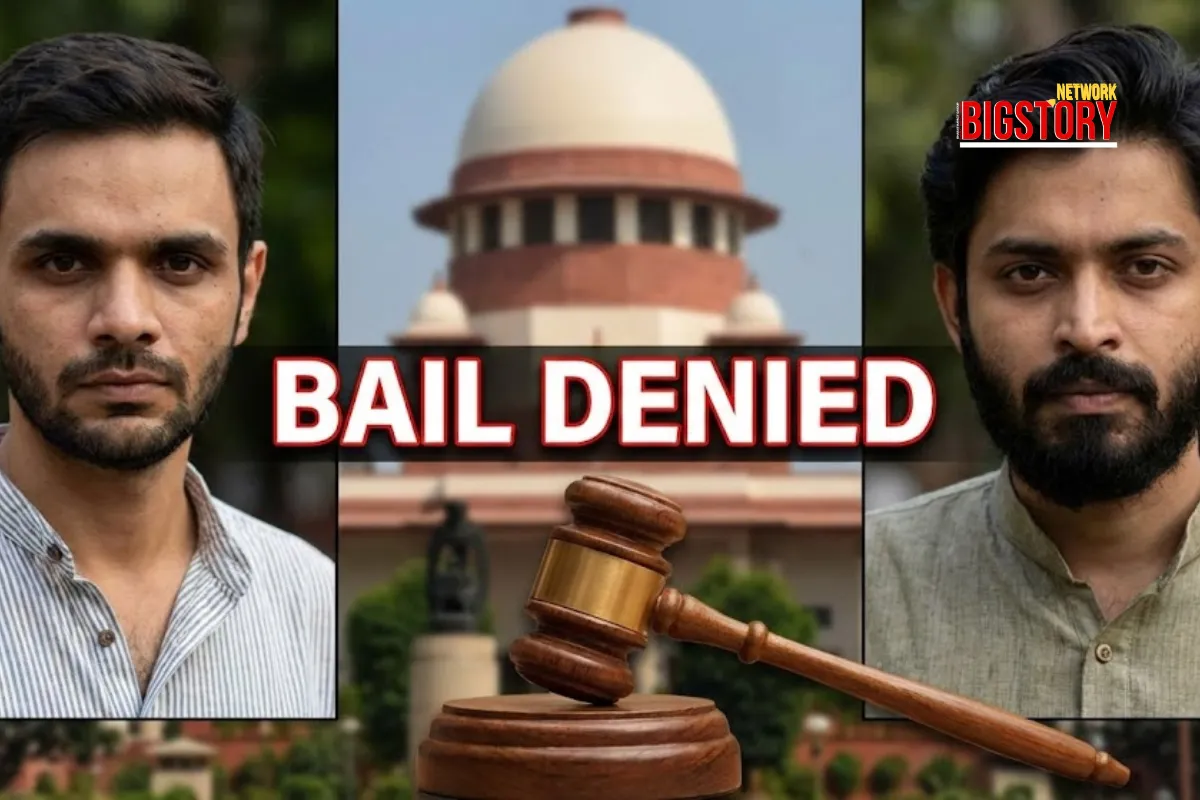
The legal marathon for Umar Khalid has hit another wall. On January 5, 2026, the Supreme Court of India rejected the bail pleas of Umar Khalid and Sharjeel Imam in the 2020 Delhi riots "larger conspiracy" case. While denying relief to the two high-profile activists, the bench of Justices Aravind Kumar and NV Anjaria granted bail to five other co-accused in the same FIR (59/2020). The ruling establishes a critical precedent: under the Unlawful Activities (Prevention) Act (UAPA), long incarceration without trial is not a "trump card" for bail if the court finds the accusations prima facie credible.
This verdict comes after nearly six years of legal limbo. Khalid was arrested in September 2020, and Imam in January 2020, accused of orchestrating the communal violence that killed 53 people in North-East Delhi. The prosecution framed the anti-CAA protests as a sinister plot to destabilize the government, relying heavily on WhatsApp chats and speeches. Despite multiple bail rejections by lower courts and the Delhi High Court, the defense argued that "process is the punishment," citing the Supreme Court’s own KA Najeeb judgment which grants bail if a trial is unduly delayed. Today, the court clarified that this relief is not automatic for those deemed central to a conspiracy.
While mainstream coverage focuses on the "Bail Denied" headline, the deeper story is the "UAPA Trap." The judgment reinforces Section 43D(5) of the UAPA, which effectively reverses the presumption of innocence. By ruling that a prima facie case is enough to keep an accused in jail indefinitely, the court has narrowed the window for liberty even further. The "trial delay" argument, once seen as a silver bullet for UAPA detainees after the Najeeb verdict, has now been severely blunted.
Furthermore, the "Parity Paradox" is glaring. The court granted bail to five others—likely recognizing their lesser roles or lack of direct evidence—yet kept Khalid and Imam incarcerated on largely similar types of evidence (chats and witness statements). This distinction suggests that the "mastermind" label, once applied by the state, creates a nearly insurmountable barrier to bail, regardless of the actual strength of the evidence which has yet to be tested in a trial.
This ruling will likely chill dissent even further. Activists now know that being labeled a "conspirator" under UAPA can mean half a decade (or more) in jail without a trial, with the Supreme Court offering no guarantee of relief based on delay. For the prosecution, it is a validation of the "larger conspiracy" theory, emboldening agencies to use the UAPA’s strict provisions to prolong detention during investigations.
If 5 years without a trial isn't "undue delay," how long must an accused wait to prove their innocence?
Why did the Supreme Court deny bail to Umar Khalid in 2026? The Supreme Court denied bail to Umar Khalid on January 5, 2026, stating that there is a prima facie case against him under the UAPA for orchestrating the 2020 Delhi riots. The court ruled that the delay in the trial (over 5 years) does not automatically entitle an accused to bail if the charges are serious and credible on the face of it.
Did anyone get bail in the Delhi riots conspiracy case on January 5? Yes. While rejecting bail for Khalid and Sharjeel Imam, the same Supreme Court bench granted bail to five other co-accused in FIR 59/2020. The court applied an "accused-specific" approach, distinguishing the alleged "masterminds" from other participants.
What is the "larger conspiracy" case in the Delhi riots? The "larger conspiracy" refers to FIR 59/2020, filed by the Delhi Police, which alleges that the 2020 communal riots were not spontaneous but a premeditated plot by activists to disrupt the government during Donald Trump's visit. The police claim the anti-CAA protests were used as a cover to organize violence.
News Coverage
Context & Analysis
 Exclusive Content


Sign up for the Daily newsletter to get your biggest stories, handpicked for you each day.


 Trending Now! in last 24hrs


