
Delhi's AQI hits 371 in Jan 2026. Stubble burning isn't the cause anymore. Analysis reveals why the capital's pollution is now a year-round crisis.
 Brajesh Mishra
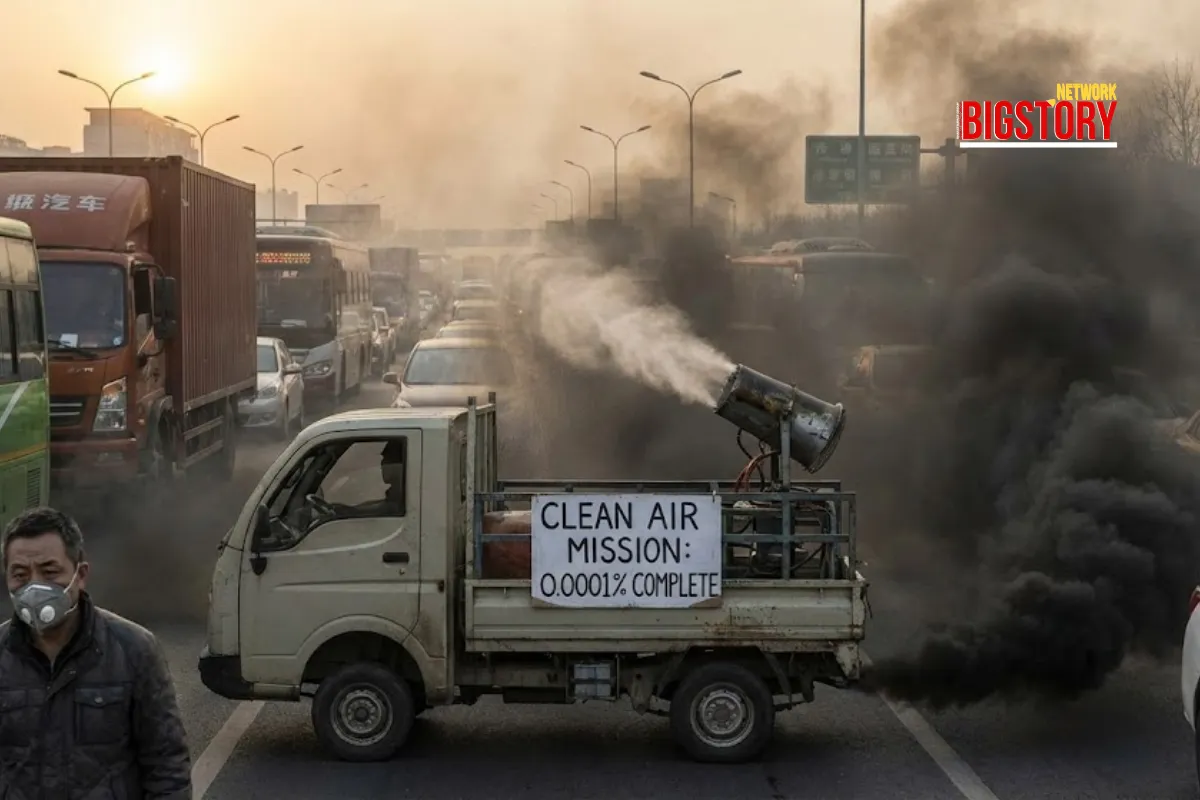
New Year’s resolutions in Delhi usually involve fitness, but in 2026, simply breathing is a challenge. As the capital woke up on January 1, the Air Quality Index (AQI) stood at a toxic 371, with several neighborhoods breaching the "severe" 400 mark. This isn't just a hangover from Diwali or farm fires; it’s a persistent crisis. Despite the Delhi government deploying 200 anti-smog guns and staggering office timings until mid-February, the smog has refused to lift. With PM2.5 levels hovering at 123 µg/m³—nearly eight times the WHO safe limit—the city is facing a grim reality: its pollution is no longer a winter guest, but a permanent resident.
The crisis began early this season. By November 7, 2025, AQI levels had already crossed 400. On November 23, the city recorded a catastrophic peak of 559 (private data), with PM2.5 levels hitting 331 µg/m³—22 times the WHO limit. While authorities habitually blame stubble burning in Punjab and Haryana, data from IITM Pune reveals that farm fires contribute only about 30% to the pollution load even during peak season. Now, in January, with stubble burning largely over, the toxic air remains. The culprits are closer to home: vehicular emissions, construction dust, and industrial waste, trapped by winter inversion.
While mainstream media focuses on the daily AQI ticker, the deeper story is the "Stubble Burning Myth." For years, political discourse has centered on rural farm fires, conveniently distracting from the urban transport crisis. With over 1 million registered vehicles and a growth rate of 3-5% annually, Delhi adds more cars than its roads—or air—can handle. The persistent January smog proves that even if every farm fire were extinguished, Delhi would still choke on its own tailpipe emissions. The solution isn't in Punjab's fields; it's in Delhi's public transit.
Furthermore, the "Anti-Smog Gun Theater" deserves scrutiny. Deploying water cannons to fight air pollution is like using a garden hose on a forest fire. Studies show these guns reduce AQI by a negligible 5-10 points in their immediate vicinity. The ₹58 crore spent on this "solution" could have funded a fleet of electric buses or improved last-mile connectivity, addressing the root cause rather than the symptom.
If pollution is structural, then seasonal emergency measures like GRAP (Graded Response Action Plan) are doomed to fail. Delhi needs a year-round strategy that tackles vehicle density and construction norms. Without a cap on vehicle registrations or a massive expansion of green public transport, the capital is locking itself into a future where "severe" air quality is the baseline, not the exception.
If we can't breathe in January when the farm fires are out, who do we blame next?
Why is Delhi's air pollution so bad in January 2026? While winter inversion traps pollutants, the primary cause in January is local emissions. Vehicular exhaust, construction dust, and industrial waste account for the majority of PM2.5 levels now that the stubble burning season (October-November) has ended.
What is the current AQI in Delhi? As of early January 2026, Delhi's Air Quality Index (AQI) is fluctuating between 371 and 424, categorizing it as "Very Poor" to "Severe." This indicates respiratory risks for healthy people and serious effects for those with existing conditions.
Are anti-smog guns effective in reducing Delhi's pollution? Experts argue their impact is limited and localized. While they settle dust temporarily in a small radius, they do not address the source of emissions like vehicle exhaust. Critics view the deployment of 200 such guns as a cosmetic measure rather than a structural solution.
News Coverage
Context & Analysis
 Exclusive Content


Sign up for the Daily newsletter to get your biggest stories, handpicked for you each day.



 Trending Now! in last 24hrs


