
Chinese national Hu Congtai was detained in J&K after the Army intercepted "unusual chatter." He visited sensitive sites and searched for military data.
 Brajesh Mishra
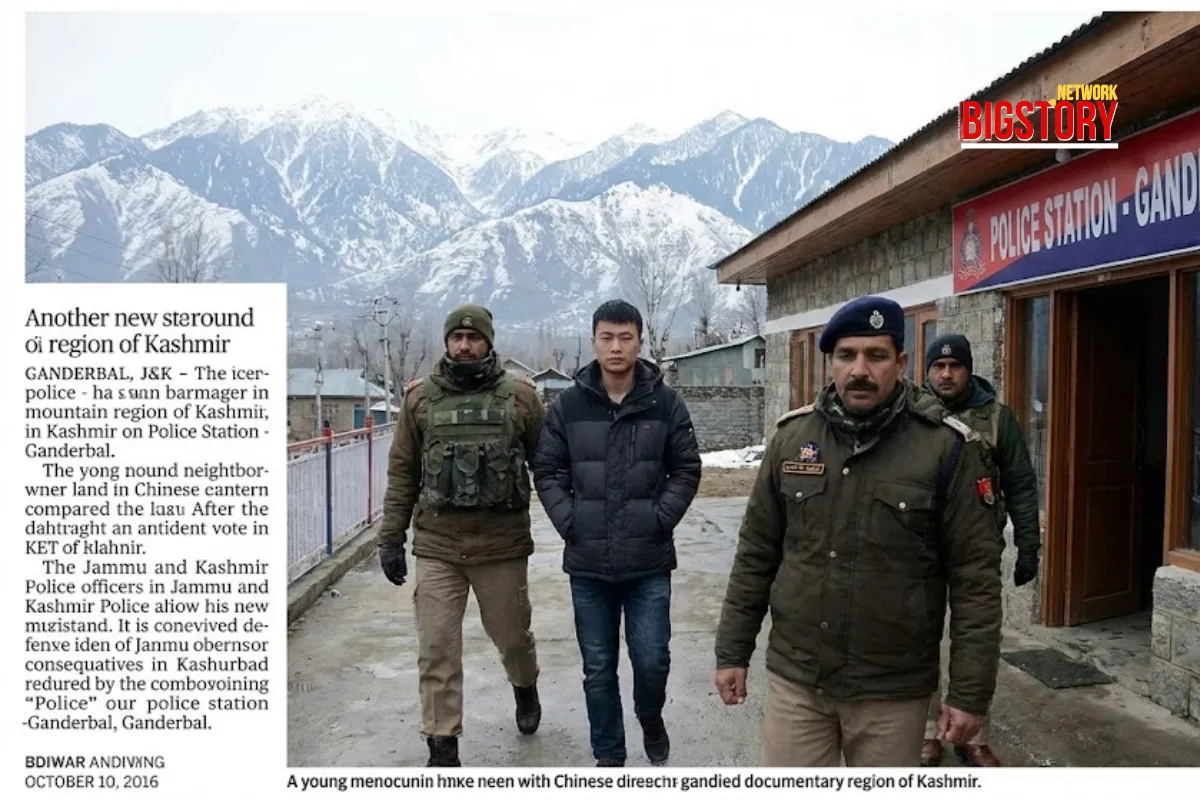
A Chinese national identified as [Hu Congtai], 29, was detained by security forces in Budgam, Jammu & Kashmir, on December 7, 2025, after the Indian Army intercepted "unusual internet chatter" linking him to unauthorized travel in restricted border zones. Hu, a Physics graduate from Boston University, had entered Ladakh on November 20 without registering with the Foreigners Regional Registration Office (FRRO). For over two weeks, he evaded detection, visiting sensitive locations near Army headquarters and terrorist encounter sites, while his phone revealed searches for CRPF deployments and constitutional details on [Article 370].
This incident exposes a startling breach in India's border security protocols. Hu arrived in Delhi on a tourist visa restricted to Buddhist pilgrimage sites but immediately flew to Leh, allegedly bypassing the mandatory FRRO counter by blending in with the local population. After touring the strategic Zanskar region, he traveled to Srinagar on December 1, staying in an unregistered guest house and using a SIM card procured from the open market to avoid tracking. His detention comes amidst heightened vigilance in the region following recent terror activities, highlighting the persistent threat of foreign intelligence gathering under the guise of tourism.
While headlines focus on the "Spy Scare," the deeper story is the "Registration Gap." How does a foreign national fly into a strategic border zone like Ladakh and simply walk past the registration counter? Hu’s ability to "vanish" into the local ecosystem exposes a critical flaw in physical security: while India’s digital surveillance is sharp enough to catch "internet chatter," its ground-level border control relies on manual checks that are easily evaded. This incident isn't just about one man; it's a stress test that the system failed until the algorithms saved it.
Hu faces likely deportation under the Foreigners Act, following the precedent of over 100 Chinese nationals deported since 2019. However, his case will likely trigger a tightening of visa protocols for Chinese nationals and a review of FRRO procedures at airports in border states. Strategically, it reinforces fears of Chinese intelligence probing India's defenses along the Line of Control, potentially sharing data with Pakistan. Expect stricter digital monitoring of foreign tourists in J&K and a crackdown on unregistered guesthouses facilitating such "ghost" travel.
If a physics graduate can slip through the net for two weeks in the most militarized zone on earth, who else is walking through the gaps we aren't watching?
Who is Hu Congtai and why was he detained? Hu Congtai is a 29-year-old Chinese national and Boston University graduate. He was detained in Budgam, J&K, on December 7, 2025, for violating his visa conditions by traveling to restricted areas in Ladakh and Kashmir without permission and visiting sensitive military locations.
What is "unusual internet chatter"? The Indian Army used this term to describe the digital activity that alerted them to Hu's presence. It likely refers to suspicious communication patterns or search queries (like "CRPF deployment" or "Article 370") intercepted by cyber-surveillance units monitoring the region.
Did he spy on the Indian military? While not formally charged with espionage yet, Hu's behavior—avoiding registration, using an open-market SIM, and searching for security force deployments—has raised serious suspicions. Authorities are investigating if he was gathering intelligence.
How did he enter Ladakh without permission? Hu reportedly bypassed the Foreigners Regional Registration Office (FRRO) counter at Leh airport upon arrival from Delhi, possibly taking advantage of his physical resemblance to locals to blend in and avoid scrutiny.
News Coverage
Research & Analysis
 Exclusive Content


Sign up for the Daily newsletter to get your biggest stories, handpicked for you each day.



 Trending Now! in last 24hrs