
India's first bullet train will launch on Aug 15, 2027, says Railway Minister. But with 45% work remaining, experts warn of safety risks. Read the investigation.
 Brajesh Mishra
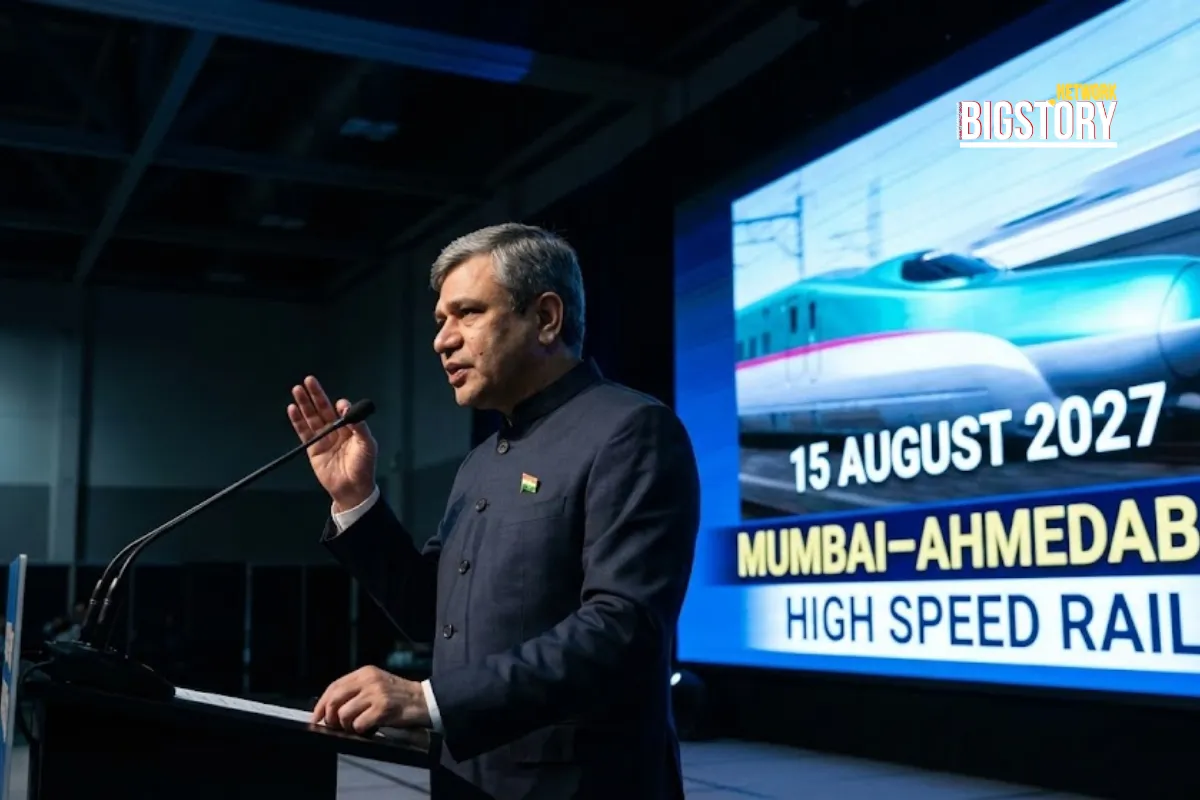
After a decade of delays, land disputes, and political wrangling, India finally has a date for its high-speed rail dream. On January 1, 2026, Railway Minister Ashwini Vaishnaw announced that the country’s first Bullet Train will begin operations on August 15, 2027, starting with a 100-kilometer stretch between Surat and Vapi. The choice of Independence Day is unmistakably symbolic, transforming a complex engineering project into a patriotic milestone. However, the announcement comes with a caveat: the full 508-km Mumbai-Ahmedabad corridor won't be ready until 2029, and the clock is now ticking on a 20-month deadline to finish nearly half the work on the inaugural section.
The project has been a rollercoaster since Prime Minister Narendra Modi and Japan’s Shinzo Abe laid the foundation stone in 2017. Originally slated for a 2023 launch, the timeline slipped due to the COVID-19 pandemic and fierce political opposition in Maharashtra under the Uddhav Thackeray government, which delayed land acquisition by 30 months. The project finally gained momentum in 2024 with 100% land acquisition secured. On January 2, 2026, the National High-Speed Rail Corporation Limited (NHSRCL) announced a major breakthrough—the completion of "Mountain Tunnel-5"—to reinforce the feasibility of the 2027 target. But the history of missed deadlines (2023, 2022, now 2027) hangs heavy over the minister’s promise.
While mainstream media celebrates the "Independence Day Launch," the deeper story is the "Safety Shortcut Risk." International precedents—like the French TGV or German ICE—typically require 3 to 5 years of testing after construction is complete before passenger service begins. India is attempting to compress this critical phase into less than 20 months while simultaneously finishing construction. The political pressure to cut ribbons on August 15 could force engineers to bypass exhaustive safety certifications, a risk that has catastrophic potential in high-speed rail.
Furthermore, the "Cost Overrun Black Box" is alarming. The original 2015 estimate was ₹1.08 lakh crore. By June 2025, 42% of the budget was spent to achieve just 55% progress. With global inflation and the plummeting rupee, the final price tag could surge well beyond ₹1.5 lakh crore, raising serious questions about ticket affordability and the project's economic viability.
The August 15 deadline fundamentally changes the project's nature from an engineering endeavor to a political deliverable. It likely means resources will be diverted to the Gujarat section (Surat-Vapi) to ensure a photo-op, potentially delaying the complex underground section in Mumbai even further. For the commuter, it means the dream of a 2-hour journey between Mumbai and Ahmedabad is still years away, even if a short joyride in Gujarat opens in 2027.
The Closing Question (Now, Think About This)
If the Bullet Train launches on August 15, 2027, will it be a triumph of Indian engineering, or a victory of political optics over passenger safety?
When will India's bullet train start operating? Railway Minister Ashwini Vaishnaw announced on January 1, 2026, that the first section of the bullet train (Surat to Vapi) will begin operations on August 15, 2027. The full Mumbai-Ahmedabad corridor is expected to be operational by 2029.
How much of the bullet train project is complete as of 2026? As of December 2025, the physical progress of the project stands at approximately 55%. While land acquisition is 100% complete, significant civil work, including track laying and electrical systems, remains to be finished in the next 20 months to meet the 2027 deadline.
Why is the bullet train project delayed? The project, originally targeting a 2023 launch, faced major delays due to land acquisition issues in Maharashtra (delayed by 30 months under the previous state government) and the global disruptions caused by the COVID-19 pandemic.
News Coverage
Context & Timeline
 Exclusive Content


Sign up for the Daily newsletter to get your biggest stories, handpicked for you each day.

 Trending Now! in last 24hrs


