
Rajnath Singh inaugurated 22 BRO projects in J&K as part of a historic 125-project rollout. The ₹5,000 crore initiative boosts border security and connectivity.
 Brajesh Mishra
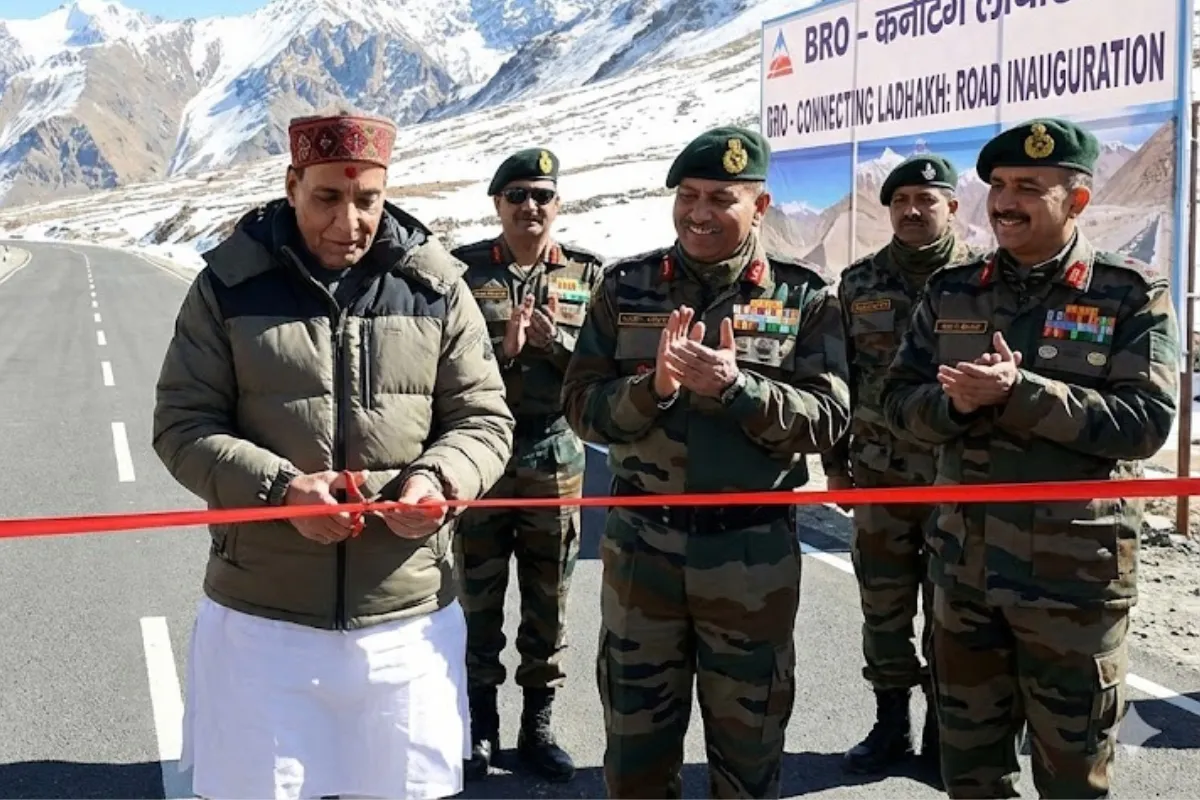
Defence Minister Rajnath Singh inaugurated 125 strategic infrastructure projects constructed by the Border Roads Organisation (BRO) on December 7, 2025, in a historic ceremony in Ladakh. Among these, 22 key projects are located in the Union Territory of Jammu & Kashmir. The ₹5,000 crore rollout, the largest in BRO's history, aims to bolster military mobility along the Line of Control (LoC) and Line of Actual Control (LAC). Lieutenant Governor Manoj Sinha hailed the projects as a "major boost" to both national security and local development in remote border districts.
This massive infrastructure push is the culmination of a strategy accelerated after the 2020 Galwan clashes. The BRO has shifted from building roads to creating a comprehensive "defense architecture." The 22 projects in J&K fall under Project BEACON and Project SAMPARK, initiatives designed to ensure year-round access to forward posts that were previously isolated during winter. The timing is critical: these roads provided the logistical backbone for the successful "Operation Sindoor" counter-terror strike in May 2025, validating the government's investment in border connectivity.
While headlines focus on the number of projects, the deeper story is the "Tech-Enabled Border." These aren't just roads; they are the result of a technological leap. The BRO is now using AI-powered drones for geological surveys, satellite monitoring for real-time progress tracking, and 3D modeling for bridge construction. This "smart infrastructure" allows India to build faster than ever before, narrowing the logistical gap with China. The story isn't just about concrete and tarmac; it's about how algorithms and aerospace tech are redefining the speed of Indian defense preparedness.
Strategically, these projects act as a counter-weight to the China-Pakistan Economic Corridor (CPEC). By hardening its own border infrastructure, India is reducing the tactical advantage of its adversaries. Locally, the roads promise to transform the economy of border districts like Rajouri and Poonch, opening them to trade and tourism. However, the militarization of the region brings its own challenges, as improved access for troops also means increased exposure for local populations in the event of conflict.
If roads are the veins of a nation, does strengthening them on the border mean we are preparing for trade, or preparing for war?
What are the 22 BRO projects inaugurated for Jammu & Kashmir? The 22 projects are part of a larger 125-project national rollout by Defence Minister Rajnath Singh. They include strategic roads and bridges constructed under Project BEACON and Project SAMPARK to improve connectivity in border districts like Rajouri, Poonch, and Kupwara.
How do these projects help India's security? The new infrastructure ensures year-round access to forward military posts, enabling faster troop deployment and logistics supply. This was cited as a key factor in the success of "Operation Sindoor," a recent counter-terror operation.
What is the total value of the projects inaugurated? The 125 projects inaugurated across India are valued at approximately ₹5,000 crore. The 22 projects in J&K are estimated to be worth around ₹880 crore.
What is Project SAMPARK? Project SAMPARK is a BRO initiative focused on developing and maintaining road networks in the Jammu region, specifically in border districts south of the Pir Panjal range. It plays a crucial role in connecting military units and civilian populations.
News Coverage
Research & Analysis
 Exclusive Content


Sign up for the Daily newsletter to get your biggest stories, handpicked for you each day.



 Trending Now! in last 24hrs


