
The US has indefinitely paused all Afghan visas, including SIVs, after a shooting in DC. Trump has ordered a rigorous review of 85,000 arrivals from the 2021 withdrawal.
 Sseema Giill
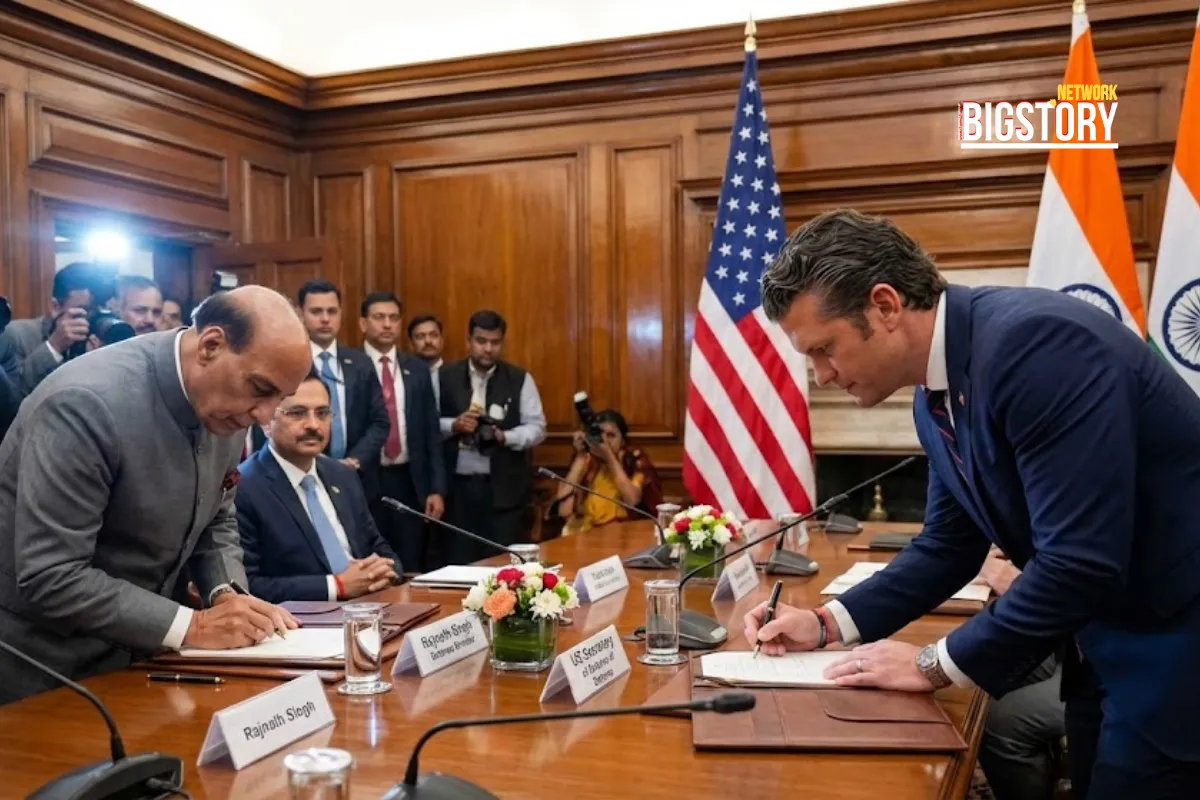
In a significant diplomatic acceleration, India and the US held high-level Foreign Office Consultations in New Delhi on December 9, 2025, co-chaired by Foreign Secretary [Vikram Misri] and US Under Secretary of State [Allison Hooker]. Moving beyond the broad 10-year defense framework signed in October, these talks focused on operationalizing the "COMPACT" agenda, with specific discussions on expanding military platforms—including the potential acquisition of F-35 fighter jets—and resolving long-standing civil nuclear liability issues to unlock US reactor technology for India.
While the October agreement set the roadmap, this December dialogue is about removing roadblocks. The US Congress has just released the fiscal 2026 National Defence Authorisation Act (NDAA), which explicitly mandates a mechanism to align India's nuclear liability rules with international norms—a key hurdle that has stalled US nuclear projects in India for over a decade. This legislative push, combined with Hooker's scheduled visit to ISRO in Bengaluru tomorrow, signals a decisive shift toward high-tech collaboration in space and clean energy, insulating the strategic partnership from the ongoing tariff trade war.
The headlines say "talks," but the real story is "The Nuclear Unlock." For years, the India-US nuclear deal has been a "dead letter" due to liability laws. The specific language in the new US defense bill (NDAA 2026) directing a "joint consultative mechanism" to fix this suggests a renewed, serious effort to build US reactors in India. If successful, this—not just drones or jet engines—would be the true "strategic glue" of the 21st century, binding India's energy security to US technology for decades.
If the nuclear liability issue is resolved, it opens the door for Westinghouse and other US firms to finally break ground in India, challenging Russia's dominance in India's nuclear sector (e.g., Kudankulam). Furthermore, the explicit inclusion of space collaboration (Hooker's ISRO visit) suggests the US wants India as a primary partner in the new space race against China. This creates a "tech-defense-energy" triad that is far stickier than simple arms sales.
If the US is rewriting its own defense laws to accommodate India's nuclear rules, has New Delhi finally become indispensable to Washington?
Why did the US pause Afghan visas in November 2025? The administration cited national security concerns following a shooting in Washington, D.C. on November 26, where an Afghan national, Rahmanullah Lakanwal, wounded two National Guard members.
Does the Afghan visa pause include SIV holders? Yes. Unlike previous restrictions, the November 27 directive explicitly halts the processing and issuance of all visa categories for Afghan nationals, including the Special Immigrant Visas (SIVs) designated for interpreters and allies who served with U.S. forces.
What happens to Afghans with pending SIV applications? Processing is frozen indefinitely. Applicants outside the U.S. cannot travel, and those within the U.S. processing pipeline are stuck. Advocacy groups warn that this delay will cause medical and security clearances to expire, forcing applicants to restart the lengthy vetting process.
Who is Rahmanullah Lakanwal? Rahmanullah Lakanwal is the Afghan national accused of the November 26 shooting. He entered the U.S. in September 2021 under humanitarian parole during the evacuation efforts, not through the SIV program.
News Coverage
Research & Analysis
 Exclusive Content


Sign up for the Daily newsletter to get your biggest stories, handpicked for you each day.



 Trending Now! in last 24hrs


