
PM Modi’s historic visit to Jordan aims for $5B trade and secures vital fertilizer supplies. It marks a strategic shift in India’s West Asia policy and IMEC goals.
 Sseema Giill
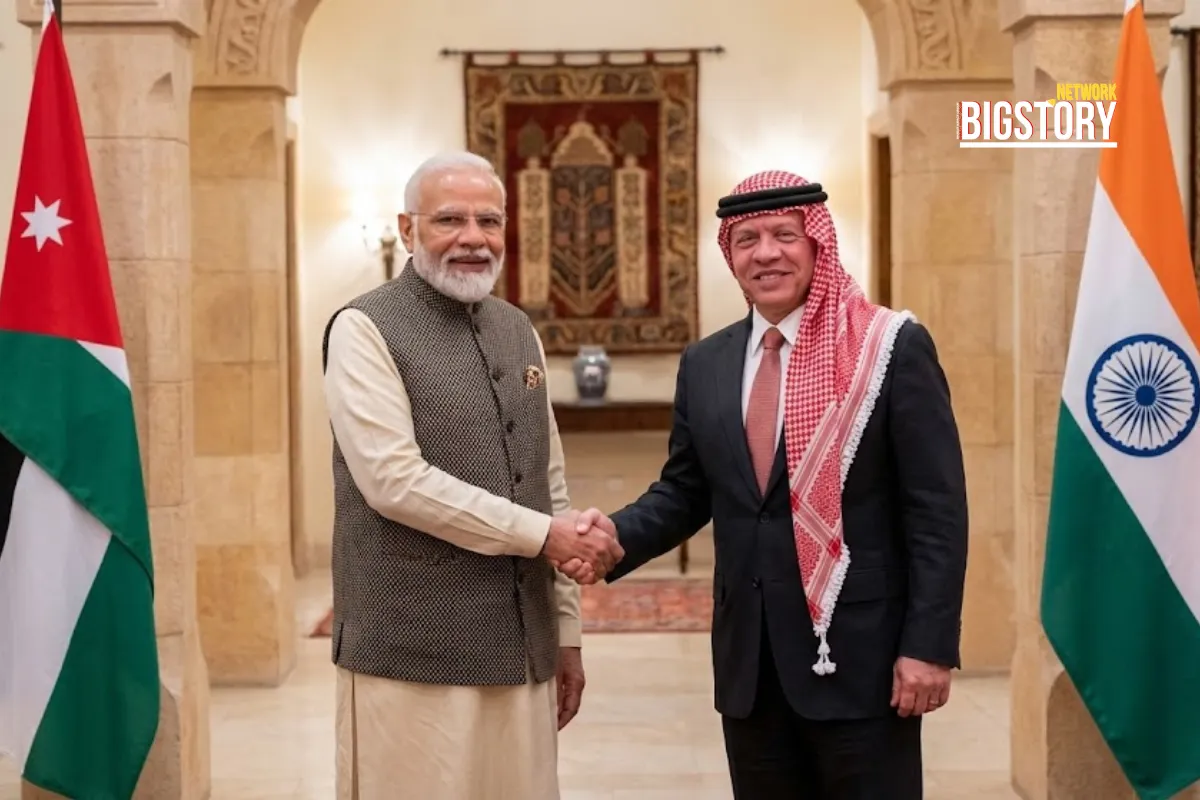
Prime Minister Narendra Modi's arrival in Amman on December 15, 2025, marks a watershed moment in India's West Asia strategy. As the first Indian Prime Minister to make a full bilateral visit to Jordan in nearly four decades, Modi’s presence signals more than a celebration of 75 years of diplomatic ties. It represents a definitive step toward operationalizing the India-Middle East-Europe Economic Corridor (IMEC), positioning Jordan as the critical "land bridge" connecting South Asia to Europe in a post-Gaza geopolitical order.
For years, Jordan was a quiet partner, visited by Modi only in transit to Palestine in 2018. But the tectonic shifts of 2024-25—supply chain disruptions from the Red Sea crisis and the West’s "China-Plus-One" diversification—have thrust the Hashemite Kingdom into the spotlight. With bilateral trade crossing USD 2.8 billion in 2024, India sees Jordan not just as a friend, but as a logistics hub and a trusted source of phosphate fertilizers, essential for India’s food security.
While headlines celebrate "friendship," the deeper story is "The Fertilizer Security Play." India is the world's largest importer of phosphates, a critical fertilizer component heavily controlled by China. The JIFCO joint venture in Jordan is India's insurance policy. By doubling down on this relationship, Modi is quietly securing the "rocks" that feed India, reducing vulnerability to Beijing's export curbs. This visit isn't just about history; it's about the future of Indian agriculture and the resilience of its food supply chain in a volatile world.
The visit sets the stage for a new economic architecture in West Asia. By setting a USD 5 billion trade target by 2030 and signing the Petra-Ellora twinning agreement, India is weaving Jordan into its economic and cultural fabric. For the region, it validates India as a "development partner" capable of delivering digital infrastructure (DPI) and trade connectivity without the debt-trap diplomacy associated with other powers.
If Jordan is the key to bypassing the Suez Canal and breaking reliance on Chinese fertilizers, is Amman now India’s most underrated strategic partner?
Why is PM Modi's visit to Jordan significant? It is the first bilateral visit by an Indian Prime Minister to Jordan in 37 years, signaling a major strategic reset. It aims to operationalize the India-Middle East-Europe Economic Corridor (IMEC) and secure critical fertilizer supplies, positioning Jordan as a key partner in India's West Asia strategy.
What is the trade target set during Modi's Jordan visit? Prime Minister Modi and King Abdullah II have set a target to double bilateral trade from the current USD 2.3-2.8 billion to USD 5 billion by 2030.
How does Jordan help India's food security? Jordan is a major supplier of rock phosphate and phosphoric acid, which are essential for manufacturing fertilizers. The JIFCO joint venture in Jordan is a key asset that helps India reduce its dependence on other suppliers like China, ensuring a stable supply for its agricultural sector.
What is the Petra-Ellora twinning agreement? It is a cultural agreement signed during the visit to link the historic city of Petra in Jordan with the Ellora Caves in India. The pact aims to boost heritage tourism and cultural exchange between the two nations.
News Coverage
Research & Analysis
 Exclusive Content


Sign up for the Daily newsletter to get your biggest stories, handpicked for you each day.

 Trending Now! in last 24hrs


