
EAM Jaishankar asserts India's "right to defend" against terror, formalizing the aggressive doctrine used in 2025's Operation Sindoor. Water treaty remains suspended.
 Sseema Giill
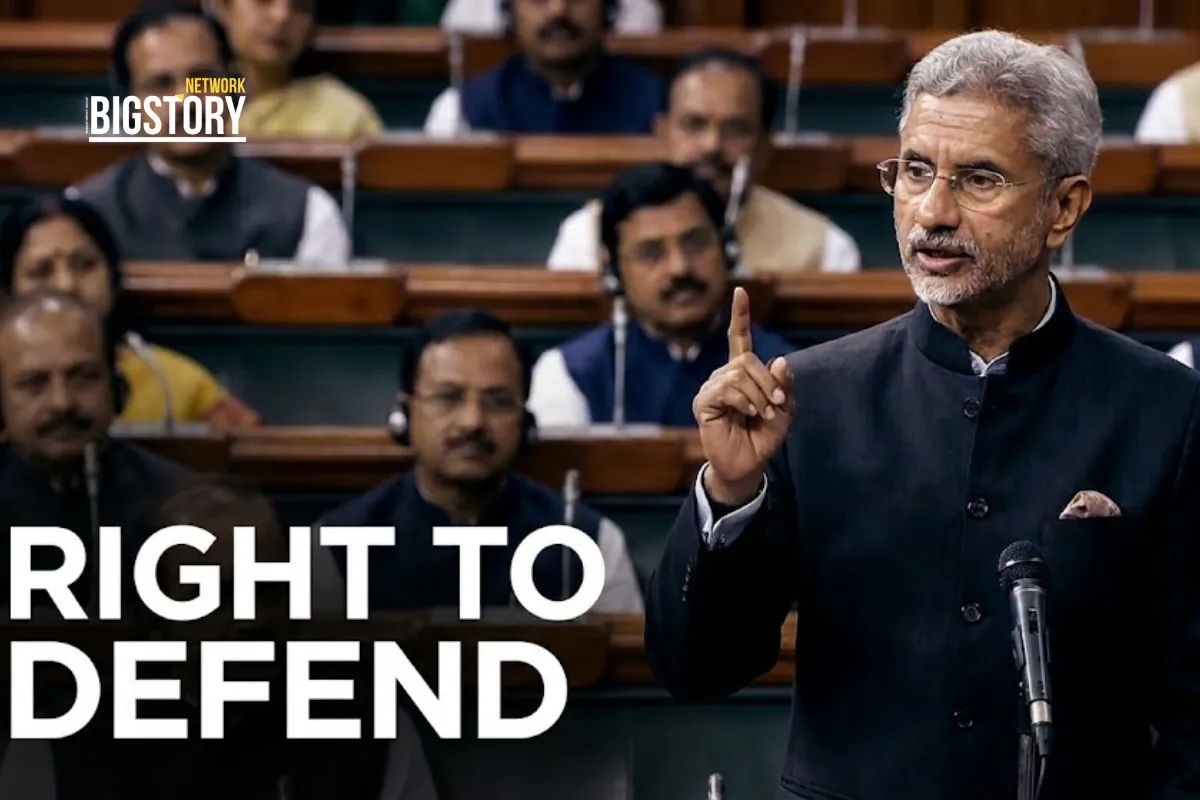
The unspoken rules of South Asian engagement have officially changed. On January 2, 2026, External Affairs Minister Dr. S. Jaishankar codified what military analysts have suspected for months: India has abandoned "strategic restraint." Speaking in the Lok Sabha, Jaishankar declared that India possesses the "inherent right to defend itself" against "bad neighbours" who sponsor terrorism. His blunt assertion—"No one can dictate how India will exercise its right"—is not just rhetoric; it is a retroactive policy seal on Operation Sindoor, the massive retaliatory strikes India launched in May 2025, and a forward-looking warning as intelligence reports predict renewed friction in 2026.
This doctrine was forged in fire seven months ago. The trigger was the April 22, 2025 Pahalgam Massacre, where terrorists ambushed a tourist bus, killing 26 civilians. Unlike previous crises that saw weeks of diplomatic posturing, India responded on May 7 with Operation Sindoor—a coordinated air and missile campaign dismantling LeT and TRF infrastructure deep inside Pakistan-occupied Kashmir (PoK). Pakistan retaliated with Operation Bunyan-un-Marsoos, leading to a 72-hour kinetic standoff described as the heaviest shelling since 1971. While a ceasefire was brokered on May 10, Jaishankar’s speech today confirms that the military response was not an exception, but the new standard operating procedure.
While mainstream media focuses on the "Bad Neighbour" soundbite, the deeper story is the "Water Weaponization." Buried in the post-conflict fallout is the continued suspension of the Indus Waters Treaty. Unlike previous wars where water flowed uninterrupted, the 2025 escalation saw India effectively pause cooperation. Jaishankar’s doctrine implies that future conflicts will be total—spanning not just land and air, but resources. The era of compartmentalizing water sharing from terror disputes appears to be over.
Furthermore, this represents the "Doctrine of Offensive Defense." India is no longer waiting for an attack to be "terrorist-initiated." The messaging suggests that hosting terror infrastructure is now sufficient provocation for preemptive strikes. This erases the traditional "Line of Control" constraints that defined the Kargil and post-Mumbai eras.
The timing is critical. A US Council on Foreign Relations report recently warned that conflict is "highly likely" to reignite in 2026. By drawing a red line now, India is pre-positioning itself. If another attack occurs, the response will likely be faster, automated (involving drone swarms), and less concerned with international de-escalation calls. The "Bad Neighbour" speech effectively tells the world: Don't call us for restraint when the next strike happens.
If India has officially decided that borders are no barrier to defense, and water treaties are conditional on good behavior, is South Asia heading for deterrence or total war?
What is Operation Sindoor? Operation Sindoor was a large-scale retaliatory military campaign launched by India on May 7, 2025, targeting terrorist infrastructure (LeT/TRF) in Pakistan-occupied Kashmir and Pakistan. It was a direct response to the Pahalgam terror attack that killed 26 civilians in April 2025.
What did Jaishankar say about Pakistan in 2026? On January 2, 2026, External Affairs Minister S. Jaishankar stated that India has an "inherent right to defend itself" against "bad neighbours" who sponsor terrorism. He emphasized that India will not be dictated to by other nations regarding its security, signaling a permanent shift to a more offensive defense posture.
Is the Indus Waters Treaty suspended? Yes. Reports indicate that cooperation under the Indus Waters Treaty has remained effectively suspended or "paused" since the military escalation in May 2025, marking a significant strategic shift where India is leveraging water resources against cross-border terrorism.
News Coverage
 Exclusive Content


Sign up for the Daily newsletter to get your biggest stories, handpicked for you each day.


 Trending Now! in last 24hrs


