
Delhi's AQI hit 491, triggering Stage IV GRAP. Despite low farm fires, pollution is severe, sparking allegations of data fraud against the government.
 Brajesh Mishra
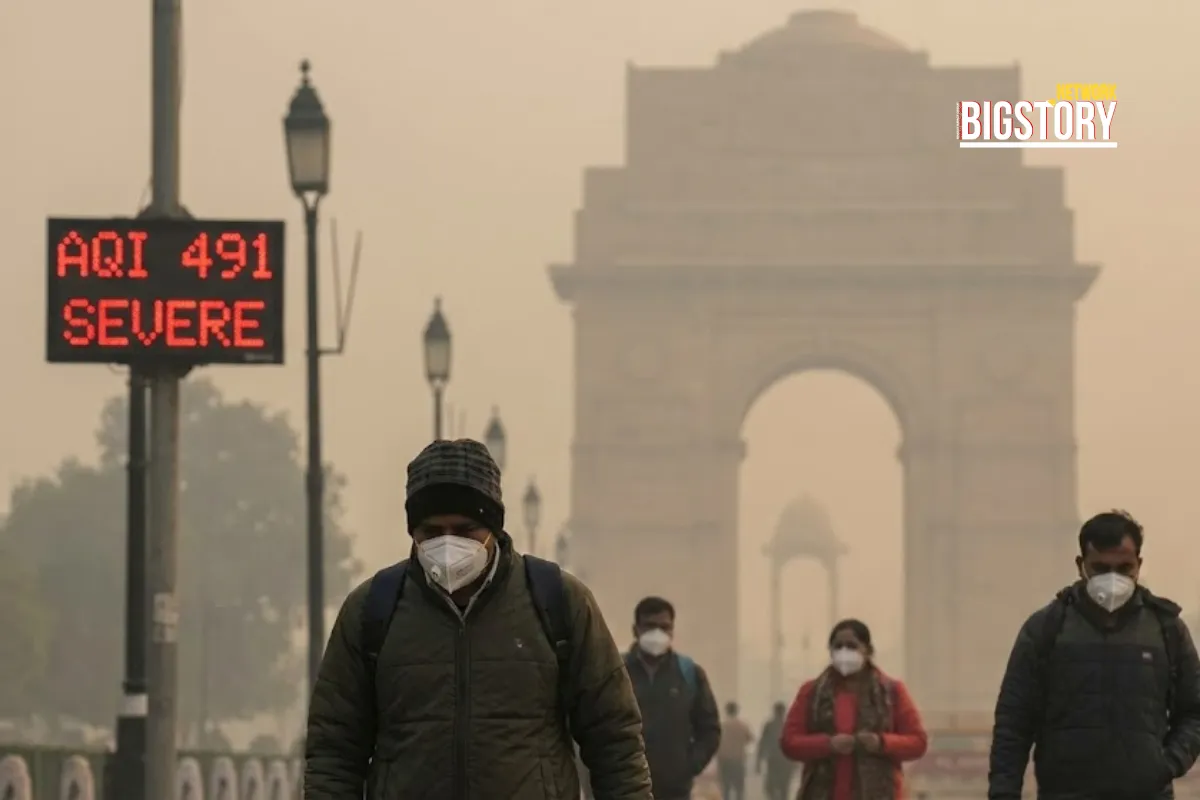
Delhi is gasping for breath. The national capital's Air Quality Index (AQI) surged to a catastrophic 491 on December 13, 2025, triggering Stage IV of the Graded Response Action Plan (GRAP)—the strictest anti-pollution protocol. This crisis, the worst of the winter season, has exposed a glaring contradiction: while stubble burning in neighboring states has plummeted by 90%, Delhi’s air is more toxic than ever. The disconnect has fueled explosive allegations that the city’s pollution data is being rigged to hide the failure of Chief Minister Rekha Gupta’s six-month-old "Air Pollution Mitigation Plan 2025."
In June 2025, CM Gupta launched an ambitious roadmap promising "Shuddh Hawa" (Clean Air) through electric buses and BS-VI vehicle curbs. By November, despite a record drop in farm fires from Punjab and Haryana due to successful incentives, Delhi’s air quality began to nosedive. The crisis deepened in October when the AAP opposition accused the government of artificially lowering AQI readings by shutting down monitoring stations and spraying water directly on sensors. Now, with 29 out of 39 stations in the "severe" zone, the Supreme Court has stepped in, slamming the lack of enforcement on the ground.
While headlines focus on the "smog," the deeper story is the "Data Integrity Crisis." If the government is indeed manipulating sensors to report lower AQI numbers, it’s not just a political scandal; it’s a public health crime. By masking the true extent of the toxicity, authorities may be preventing citizens from taking necessary life-saving precautions. This suggests a shift from "pollution management" to "perception management," where the goal isn't to clean the air, but to sanitize the data. The collapse of the farm-fire excuse forces a reckoning: Delhi is poisoning itself, and no amount of sensor-spraying can hide that.
The crisis has economic consequences beyond health. With an estimated annual loss of ₹58,895 crore, the pollution is eating into 13% of Delhi’s GDP. The immediate impact is visible in the panic buying of air purifiers and the closure of schools, but the long-term damage is structural—driving talent and investment away from a capital city that is becoming unlivable for three months a year.
If the government is cleaning the sensors instead of the air, how can we trust the air we breathe?
Why is Delhi's AQI so high in December 2025 despite the new pollution mitigation plan? The high AQI is attributed to local sources, primarily vehicular emissions which account for over 50% of the pollution, combined with winter weather conditions that trap pollutants. Critics argue that the government's mitigation plan suffered from poor implementation and lack of enforcement on the ground.
Is Delhi's air quality data being manipulated? There are serious allegations, primarily from opposition parties like AAP, that the government is manipulating data by shutting down monitoring stations during peak pollution times and spraying water directly on sensors to artificially lower AQI readings. However, these claims are subjects of political debate and have not been independently verified by a judicial body.
How much of Delhi's pollution comes from vehicles vs. crop burning? According to the Centre for Science and Environment (CSE), local sources, particularly vehicles, contribute more than 50% to Delhi's pollution. This contradicts the popular narrative that seasonal crop burning in neighboring states is the primary cause, especially given that farm fires have reduced by 90% this year.
What is Stage 4 GRAP? Stage IV of the Graded Response Action Plan (GRAP) is the most severe set of anti-pollution measures. It is invoked when the AQI exceeds 450. Measures include a ban on construction and demolition activities, restrictions on diesel vehicles, and often the closure of schools and a shift to work-from-home for offices.
News Coverage
Research & Analysis
 Exclusive Content


Sign up for the Daily newsletter to get your biggest stories, handpicked for you each day.


 Trending Now! in last 24hrs


