
DMK MP A. Raja cited a Nehru-Bose letter to counter PM Modi's claim that Vande Mataram's truncation caused Partition, arguing Muslim concerns were legitimate.
 Brajesh Mishra
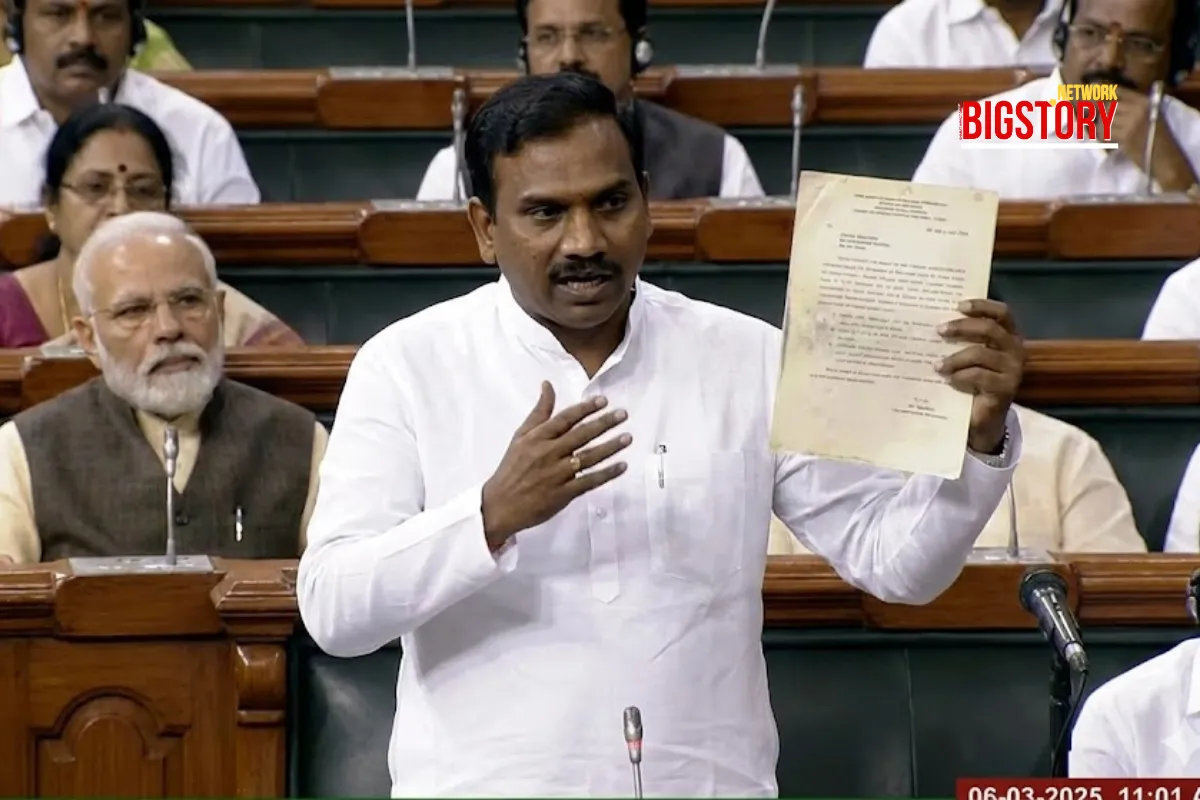
During a special parliamentary session marking the 150th anniversary of Vande Mataram today, DMK MP A. Raja delivered a sharp rebuttal to Prime Minister Narendra Modi's claim that the song's "truncation" in 1937 sowed the seeds of Partition. Citing a historical letter from Jawaharlal Nehru to Subhas Chandra Bose, Raja argued that opposition to the song predated Partition politics and was based on legitimate religious concerns acknowledged by freedom fighters, not just "communal appeasement." The intervention challenges the BJP's revisionist narrative just months before crucial state elections.
The debate was triggered by PM Modi's November 7 speech, where he blamed the Congress for "cutting" Vande Mataram to appease the Muslim League, a move he linked to India's eventual division. Historically, the Indian National Congress adopted only the first two stanzas of Bankim Chandra Chatterjee's poem as the National Song in 1937, following advice from Rabindranath Tagore, who noted that later verses contained explicitly Hindu imagery that might alienate non-Hindus. The BJP has long framed this decision as a betrayal of nationalism, while historians view it as a pluralist compromise to maintain unity against the British.
While the headlines focus on the "clash," the deeper story is the "Weaponization of Memory." The debate over Vande Mataram isn't about a song; it's about defining the legitimacy of minority citizenship. By framing the 1937 compromise as the "seed of Partition," the ruling party is effectively arguing that accommodation of minority sentiments is treasonous. Raja's intervention is significant because it uses the archives to show that the founders—Nehru, Bose, and Tagore—saw inclusion not as weakness, but as the only viable foundation for a diverse nation. The fight is over whether India's history is a story of pluralism or a story of "appeasement."
This debate sets the ideological tone for the 2026 West Bengal elections, where "Bengali identity" and "nationalism" will be key battlegrounds. By reclaiming Bengali icon Bankim Chandra Chatterjee's legacy, the BJP aims to corner the TMC. However, Raja's defense of the pluralist consensus offers the opposition a counter-narrative: that true nationalism lies in the wisdom of the founders, not the rewriting of their decisions.
If acknowledging the diversity of a nation is "appeasement," can a monolithic nationalism ever truly unite a country like India?
What did A. Raja say about Vande Mataram in Parliament? A. Raja refuted PM Modi's claim that the song's truncation led to Partition. Citing a letter from Jawaharlal Nehru to Subhas Chandra Bose, Raja argued that Muslim concerns about the song were theological and substantive, not merely political "manufactured" dissent, and that the division was created by Hindu majoritarianism, not Muslims.
What is the Nehru-Bose letter on Vande Mataram? It is a historical correspondence where Nehru discussed the Vande Mataram controversy with Bose. Nehru acknowledged that while some opposition was political, there was "some substance" in the grievances of Muslims regarding the song's religious imagery (specifically idol worship), leading to the consensus to adopt only the first two stanzas.
Why was Vande Mataram truncated in 1937? The Indian National Congress, guided by Rabindranath Tagore, adopted only the first two stanzas as the National Song. This was because the later stanzas contained explicit references to Hindu goddesses (Durga), which conflicted with the monotheistic beliefs of Muslims and other minorities. The truncation was a move to ensure the song could be a unifying anthem for all Indians.
Did Vande Mataram cause the Partition of India? Mainstream historians reject the claim that the song's modification caused Partition. Partition was the result of complex political, social, and colonial factors over decades. The 1937 decision on the song was an attempt to prevent communal division by making the anthem more inclusive.
News Coverage
Research & Analysis
 Exclusive Content


Sign up for the Daily newsletter to get your biggest stories, handpicked for you each day.


 Trending Now! in last 24hrs


