
Ajay Maken told Rajya Sabha that BJP's funds rose 115-fold to ₹10,107 crore, while Congress has only ₹133 crore. He blamed "weaponized" agencies.
 Brajesh Mishra
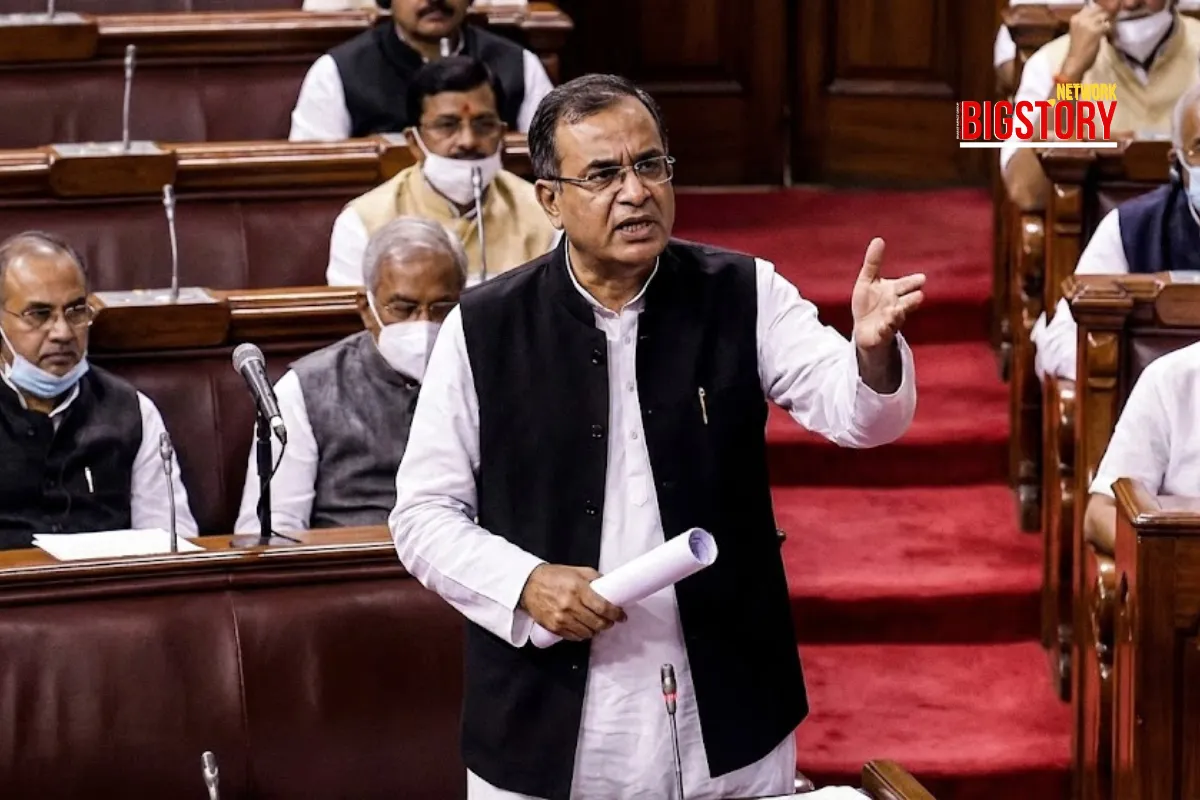
In a scathing address to the Rajya Sabha on December 12, 2025, Congress treasurer Ajay Maken revealed that the BJP's bank balance has exploded by 115-fold over the last two decades, rising from ₹88 crore in 2004 to a staggering ₹10,107.2 crore in 2024. In contrast, the Congress's funds grew a mere 3.5-fold to ₹133.97 crore. This creates a funding disparity where the ruling party commands 75 times more resources than the primary opposition. Maken termed this a "structural imbalance" engineered by the weaponization of central agencies like the Enforcement Directorate (ED) and Income Tax (IT) department to choke opposition funding.
The data presented by Maken, sourced from Election Commission filings, shows a dramatic inflection point after 2014. Before the Modi government took power, the funding ratio between the two parties was roughly competitive (2:1). However, the gap widened exponentially following the introduction of the now-scrapped Electoral Bond Scheme in 2018, which the Supreme Court later found had funneled 85% of corporate donations to the BJP. The Congress also alleges that its financial paralysis was exacerbated by the freezing of its bank accounts during the 2024 general election campaign.
While headlines focus on the ₹10,000 crore figure, the deeper story is the "Single-Party Financial Ecosystem." This isn't just about one party being richer; it's about the creation of a financial monopoly in politics. The exponential growth of BJP's funds post-2014, correlating with policy changes like Electoral Bonds, suggests a structural redesign of Indian political finance to permanently advantage the incumbent. If the opposition is financially starved, democracy becomes a theoretical exercise where one player has a megaphone and the other is silenced by bankruptcy. This disparity threatens to turn the 2026 and 2029 elections into non-contests before the first vote is cast.
If the 75:1 funding gap persists, the Congress and regional parties may be forced to push for state funding of elections as a survival mechanism. It also raises the stakes for the Supreme Court to intervene not just on "bonds" but on the broader issue of "institutional weaponization." For the voter, it means election campaigns will be increasingly one-sided, with the opposition unable to match the ruling party's advertising blitz, digital reach, or ground mobilization.
In a democracy, if one side can buy 75 microphones for every one the other side has, can we really hear both voices?
Why does the BJP have 75 times more money than Congress? According to Congress treasurer Ajay Maken, the disparity is due to the "weaponization" of central agencies like the ED and IT department, which he alleges intimidate potential opposition donors. Additionally, the now-scrapped Electoral Bond Scheme heavily favored the ruling party, channeling 85% of corporate donations to the BJP.
How much money does the BJP have compared to Congress in 2024? As per data presented in Parliament, the BJP's bank balance stands at approximately ₹10,107.2 crore, while the Congress has ₹133.97 crore.
What is the "level playing field" argument raised by Ajay Maken? Maken argued that a democracy requires a level playing field where all parties have a fair chance to compete. He stated that a financial disparity of 99:1 makes it impossible for the opposition to effectively challenge the ruling party, undermining the democratic process.
Did the Electoral Bond Scheme contribute to this gap? Yes. Supreme Court data and independent analysis indicate that the Electoral Bond Scheme, active from 2018 to 2024, disproportionately benefited the BJP, which received the vast majority of anonymous corporate funding before the scheme was declared unconstitutional.
News Coverage
Research & Analysis
 Exclusive Content


Sign up for the Daily newsletter to get your biggest stories, handpicked for you each day.



 Trending Now! in last 24hrs


