
Trump approves bill for 500% tariffs on India over Russian oil. But the US still buys Russian uranium. Inside the hypocrisy and the economic threat.
 Sseema Giill
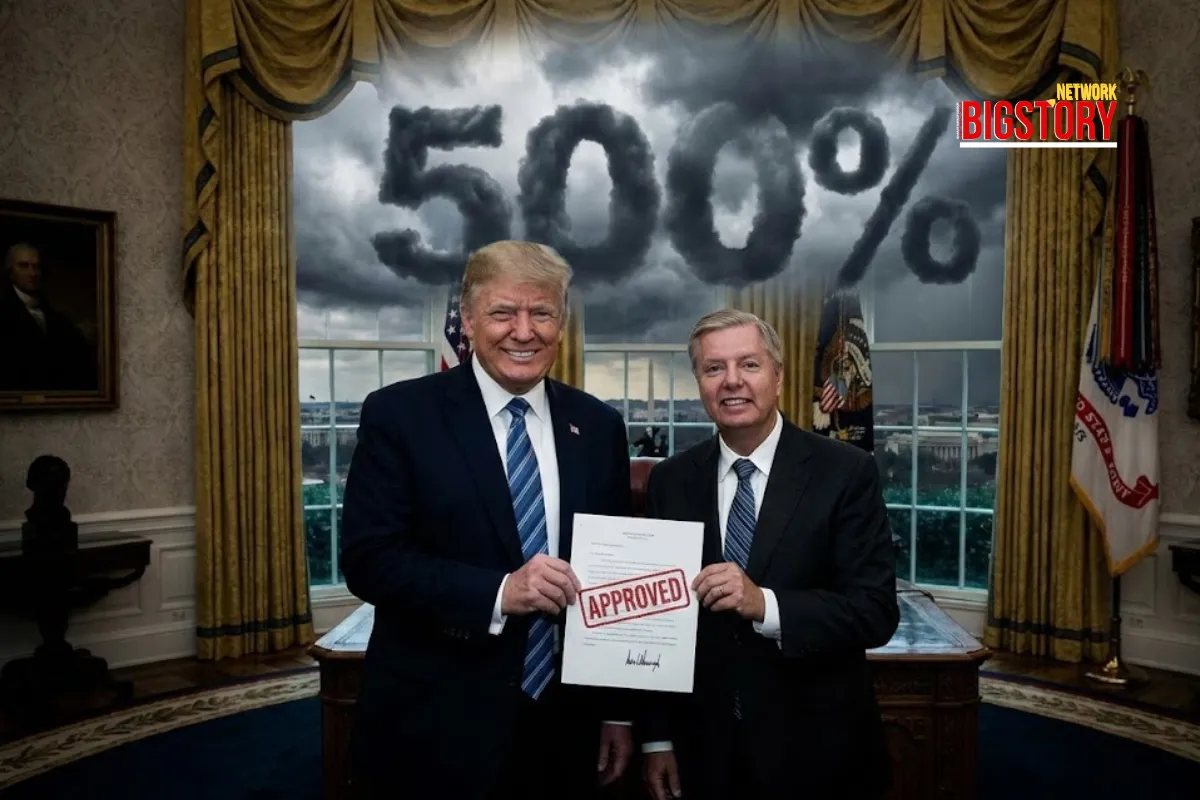
The threat is no longer theoretical. On January 6, 2026, President Donald Trump formally "greenlit" the bipartisan Sanctioning Russia Act of 2025, clearing the way for tariffs of up to 500% on nations purchasing Russian oil, gas, or uranium. Senator Lindsey Graham confirmed the move after a White House meeting, signaling that a Senate vote could happen within days. For India, this is an economic missile aimed directly at its trade surplus. Currently facing a 50% tariff regime (the highest globally), New Delhi now risks being shut out of its largest export market entirely if it doesn't sever energy ties with Moscow.
Since the Ukraine war began in 2022, India has walked a tightrope, importing €144 billion worth of discounted Russian oil to fuel its economy while cultivating a strategic partnership with Washington. The Trump administration initially responded in August 2025 with a 25% punitive tariff. When that failed to halt imports completely, the rhetoric escalated.
The timing is critical. Negotiations for the "Mission 500" trade deal—aiming for $500 billion in bilateral trade by 2030—are at a delicate stage. Trump’s "greenlight" transforms the 500% tariff from a legislative proposal into a loaded gun on the negotiating table. With Reliance Industries reportedly expecting zero Russian shipments in January 2026, the pressure is already reshaping corporate behavior, even before the law passes.
While mainstream media focuses on the "Trade War Escalation," the deeper story is the "US Hypocrisy." The Sanctioning Russia Act conveniently targets oil and gas—India's primary imports—while leaving loopholes for commodities the US needs. In 2024 alone, the US imported $624 million worth of Russian enriched uranium and $1.27 billion in fertilizer, largely duty-free. The Trump administration’s tariff decrees have historically exempted these sectors to protect American farmers and nuclear plants. By threatening India with 500% tariffs for doing exactly what the US does—buying essential Russian commodities—Washington is weaponizing trade policy for geopolitical leverage, not moral principle.
Furthermore, the "Mission 500 Contradiction" is glaring. The US State Department is pushing to double trade with India to $500 billion by 2030 ("Mission 500"), while the White House backs a bill that would make that mathematically impossible. You cannot build a half-trillion-dollar partnership with a country you are taxing at 500%. This policy incoherence suggests a dangerous disconnect between the US's economic goals and its geopolitical arm-twisting.
If passed, this act forces India into a corner. Diversifying away from Russian oil is possible but expensive—Russian crude is still ~$6/barrel cheaper than alternatives. Losing that discount widens India's trade deficit. More broadly, it signals to the Global South that US strategic partnerships come with a "compliance clause": align with Washington's foreign policy, or pay the price.
If buying Russian energy funds the "war machine," why is the US dollar still paying for Russian uranium?
Has Trump approved the 500% tariff on India? Yes. On January 6, 2026, President Trump gave his formal approval or "greenlight" to the Sanctioning Russia Act of 2025, sponsored by Senator Lindsey Graham. This bill authorizes tariffs of up to 500% on countries, including India, that purchase Russian energy.
Why is the US threatening India with 500% tariffs? The US argues that India's purchase of discounted Russian oil funds President Putin's war efforts in Ukraine. The tariffs are framed as "leverage" to force countries to stop these purchases and cut off Russia's revenue stream.
Does the US still import goods from Russia? Yes. Despite the sanctions rhetoric, the US continues to import Russian goods essential to its economy, such as enriched uranium and fertilizer. In 2024, these imports totaled nearly $1.9 billion, largely entering the US duty-free, leading to accusations of hypocrisy in its stance towards India.
News Coverage
Context & Data
 Exclusive Content


Sign up for the Daily newsletter to get your biggest stories, handpicked for you each day.

 Trending Now! in last 24hrs


