
3 lakh gig workers struck on New Year's Eve against wage cuts and unsafe 10-min deliveries. Platforms offered high incentives to keep running.
 Brajesh Mishra
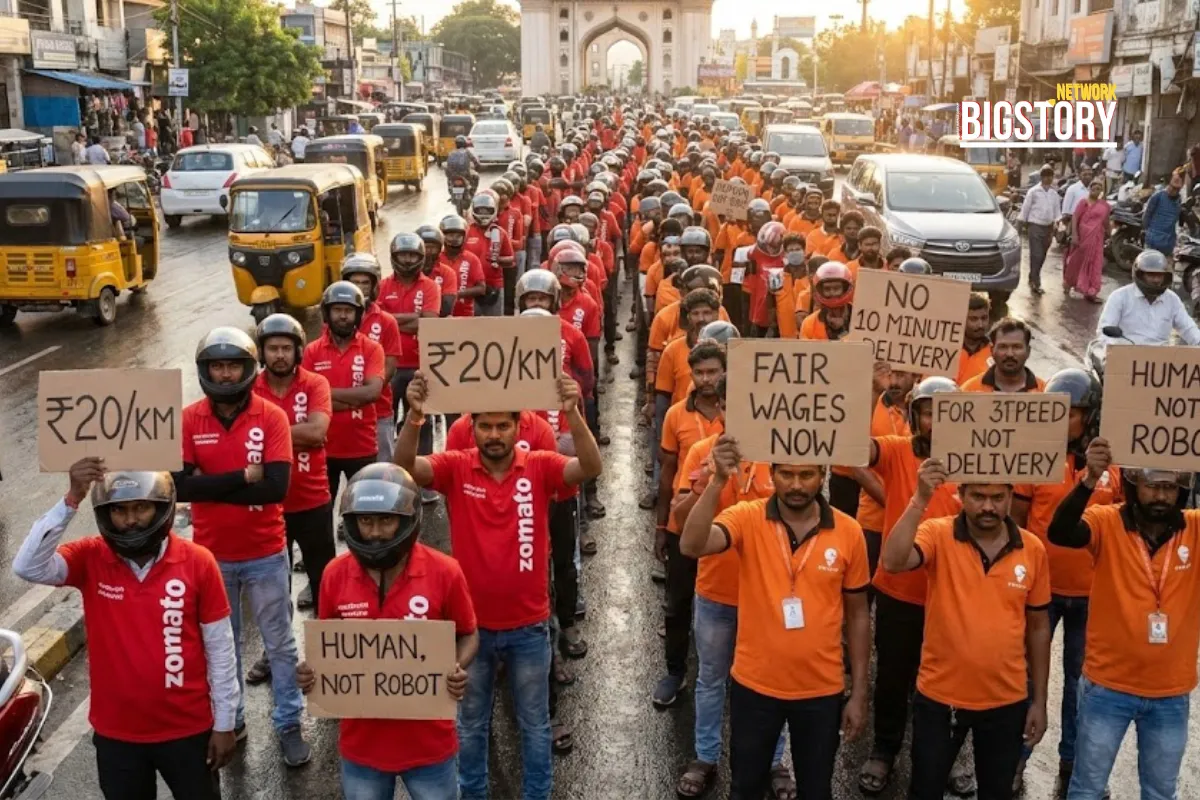
As India has rung in 2026, the engines of its gig economy sputtered. On December 31, 2025, an estimated 3,00,000 gig workers across Swiggy, Zomato, Blinkit, and Zepto launched a nationwide strike, demanding a hike in minimum wages to ₹20/km (up from the current ₹6-₹10/km) and the abolition of "unsafe" 10-minute delivery mandates. The strike, organized by three major unions including the Telangana Gig and Platform Workers Union (TGPWU), marks the most coordinated labor action in the sector's history. While platforms claimed "minimal impact" on operations, reports of undelivered food packets in Bengaluru and service delays in Hyderabad tell a story of a workforce pushed to the brink.
The strike is a direct response to a silent wage collapse. Three months ago, platforms reportedly slashed base pay from ₹10/km to ₹6/km, forcing workers to log longer hours to earn the same income. This economic squeeze, combined with the physical danger of rushing 10-minute deliveries, galvanized a fragmented workforce. Unions chose New Year's Eve—the single busiest day for food delivery—to maximize leverage. In response, platforms like Zomato and Swiggy rolled out desperate peak-hour incentives (up to ₹150 per order in some zones) to break the strike, effectively admitting that their standard pay model is insufficient to retain workers during high demand.
While mainstream coverage focuses on "Will my pizza arrive?", the deeper story is "Algorithmic Wage Suppression." The wage cut from ₹10 to ₹6 wasn't just a memo; it was likely an algorithmic adjustment designed to optimize platform margins at the worker's expense. Workers are fighting a boss they cannot see—an AI that predicts demand and sets the lowest possible price a desperate worker will accept. The strike is less about a specific rupee amount and more about demanding transparency in the "Black Box" that decides their livelihood.
Furthermore, the "Safety vs. Speed" conflict has reached a breaking point. The demand to ban 10-minute deliveries highlights a critical failure in the business model: speed is being subsidized by the physical risk of the rider. Platforms market speed as a technological innovation, but workers experience it as a safety hazard.
If the strike forces even a partial concession, it sets a precedent for collective bargaining in the algorithm age. However, the government's silence—despite a memorandum submitted to the Labour Minister—suggests that the Code on Social Security 2020 remains a paper tiger. Without regulatory enforcement, platforms will likely revert to standard low wages once the New Year demand spike subsides.
If platforms can afford to pay ₹150 per order to break a strike, why do they claim they can only afford ₹6 per km on a normal Tuesday?
Why are gig workers striking on December 31, 2025? Gig workers across platforms like Swiggy, Zomato, and Blinkit went on strike to protest a recent reduction in base pay (from ₹10/km to ₹6/km), unsafe 10-minute delivery deadlines, and arbitrary ID blocking. They demanded a minimum wage of ₹20/km and social security benefits.
How many workers participated in the gig workers strike? Unions claimed that approximately 3,00,000 workers participated nationwide on December 31, 2025. Significant participation was reported in Telangana and Karnataka (60,000 workers), though platforms stated the operational impact was "minimal" due to high incentives offered to non-striking riders.
What are gig workers demanding? The workers' 15-point charter of demands includes a minimum wage of ₹20 per km, a guaranteed monthly income of ₹24,000-₹40,000, the abolition of 10-minute delivery services due to safety risks, and legal recognition as "workers" to access social security benefits.
News Coverage
Context & Development
 Exclusive Content


Sign up for the Daily newsletter to get your biggest stories, handpicked for you each day.



 Trending Now! in last 24hrs


