
Khokon Das, a Hindu businessman set on fire in Bangladesh, has died. His murder, the 3rd in weeks, exposes a pre-election crackdown on minorities.
 Sseema Giill
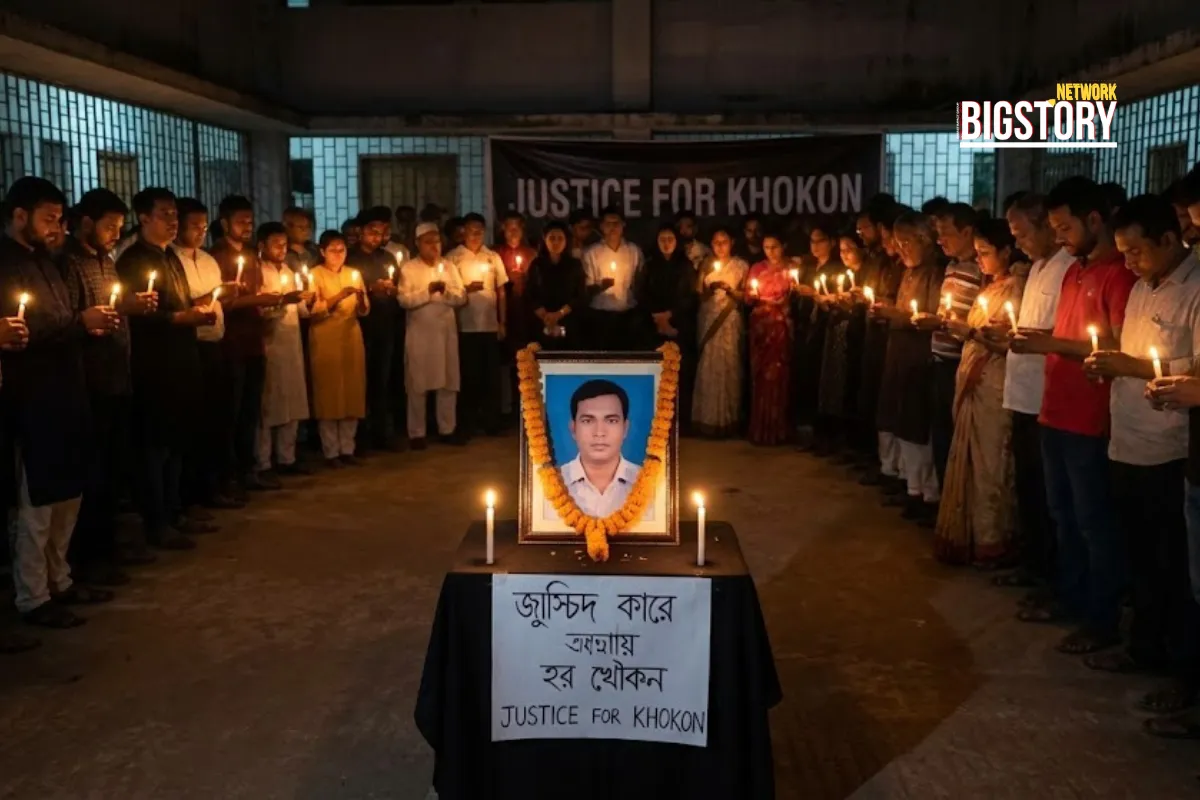
In the early hours of January 3, 2026, Khokon Chandra Das took his last breath at the National Burn Institute in Dhaka. The 50-year-old Hindu businessman had spent three days battling horrific burns after a mob stabbed him, doused him in petrol, and set him on fire near his pharmacy in Shariatpur on New Year's Eve. His death marks the third killing of a Hindu in just three weeks, confirming a terrifying escalation of sectarian violence in post-Hasina Bangladesh. But this isn't just about one man; it's a systemic unraveling. As the interim government led by Muhammad Yunus prepares for the critical February 2026 elections, the state’s failure to protect minorities—or arrest known attackers—has turned open season on Hindus from a fear into a reality.
The murder of Khokon Das didn't happen in a vacuum. It follows the lynching of Dipu Chandra Das in Mymensingh on December 18 and Amrit Mondal in Rajbari on December 24. This wave of violence surged after the arrest of ISKCON monk Chinmoy Krishna Das in late November 2024 on sedition charges. By criminalizing Hindu advocacy and imprisoning spiritual leaders, the state inadvertently signaled that Hindu targets were fair game. With the leadership vacuumed up by the courts, local mobs have filled the space with impunity.
While mainstream media reports "another death," the deeper story is the "Electoral Cleansing." With elections just five weeks away (Feb 12, 2026), this violence serves a political function: terrorizing the Hindu vote bank, historically aligned with the secular Awami League. The resurgence of Jamaat-e-Islami under the interim administration has coincided with this spike in attacks. If Hindus are too scared to vote—or leave the country entirely—the electoral map shifts permanently in favor of Islamist-aligned parties.
Furthermore, the "Law Enforcement Collapse" is a feature, not a bug. The police identified Khokon’s attackers within hours but failed to arrest them for days. This pattern of "identification without apprehension" suggests a directive from above—or a police force thoroughly infiltrated by radical elements that view minority protection as optional.
Khokon Das’s death will likely trigger a new wave of distress migration into India, inflaming cross-border tensions just as New Delhi and Dhaka attempt to stabilize relations. Domestically, it sends a chilling message to every Hindu family in Bangladesh: your businesses, your leaders, and your lives are leverage in a political game you cannot win.
The Closing Question (Now, Think About This)
If the state imprisons the monks who speak for peace, who is left to stop the mobs who scream for blood?
Why was Khokon Das attacked in Bangladesh? Khokon Das, a Hindu businessman, was attacked on December 31, 2025, in a targeted hate crime. His wife stated he recognized two of the attackers, suggesting premeditation. The incident fits a broader pattern of sectarian violence aimed at terrorizing Hindu minorities ahead of the February 2026 elections.
How many Hindu people have died in Bangladesh since 2024? While official figures vary, rights groups and the Indian Ministry of External Affairs report at least 23 documented deaths of Hindus in violence since August 2024. This includes the recent killings of Dipu Chandra Das, Amrit Mondal, and Khokon Das in December 2025-January 2026.
What is the connection between Chinmoy Krishna Das and the recent violence? The arrest of ISKCON monk Chinmoy Krishna Das in November 2024 on sedition charges created a leadership vacuum and criminalized Hindu advocacy. Analysts argue this state-led suppression emboldened extremist mobs, leading to the surge in fatal attacks like the one on Khokon Das.
News Coverage
Context & Analysis
 Exclusive Content


Sign up for the Daily newsletter to get your biggest stories, handpicked for you each day.


 Trending Now! in last 24hrs


