
Massive gas blowout at ONGC's Mori-5 well in Andhra Pradesh. 100-foot flames force evacuation of 600. Analysis of the contractor failure and methane risks.
 Brajesh Mishra
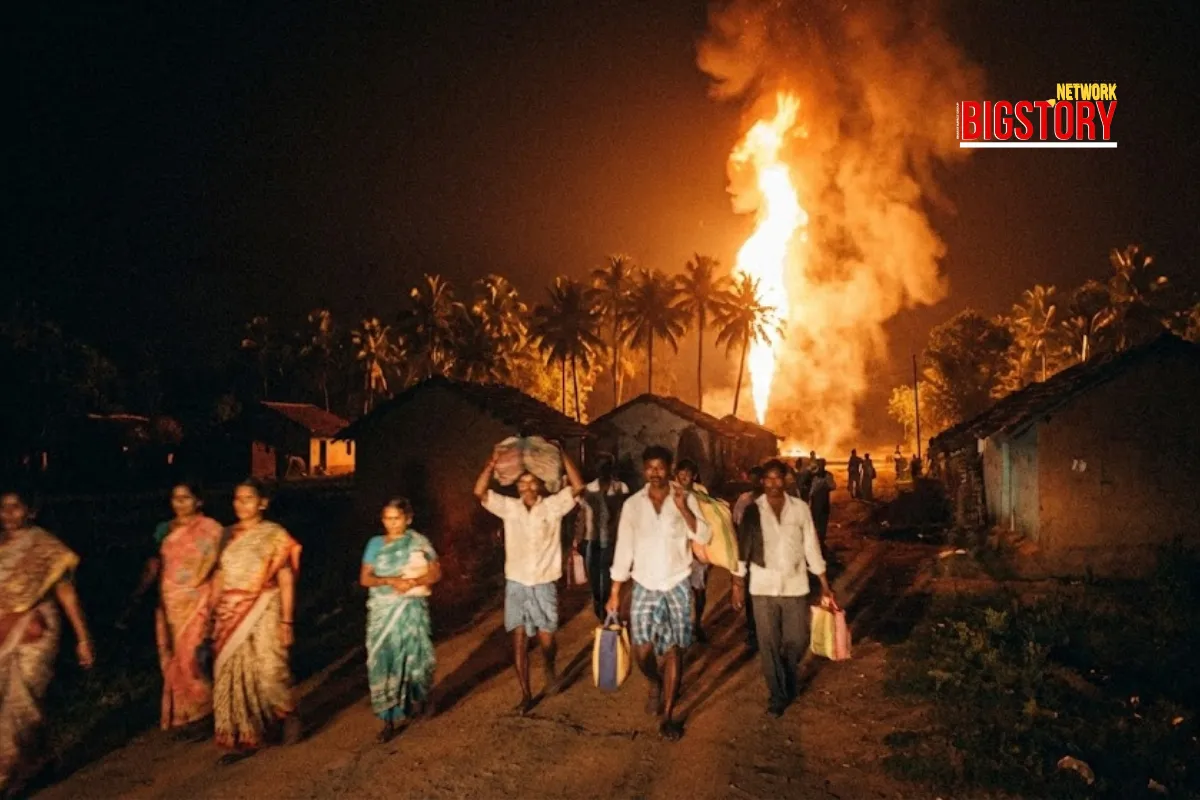
The nightmare has returned to Konaseema. On January 5, 2026, a routine operation at ONGC's Mori-5 well turned catastrophic when a high-pressure gas surge triggered a massive blowout. Within minutes, a 100-foot tower of fire erupted, visible from five kilometers away, forcing the evacuation of 600 residents from three nearby villages. As of January 6, the fire continues to rage, marking the first major blowout in this gas-rich district since the infamous Pasarlapudi disaster of 1995. While ONGC has mobilized international experts and crisis teams, the incident has reignited fears in a region that views its hydrocarbon wealth as a "curse."
The disaster struck during "production enhancement operations" being carried out by a private contractor, Deep Industries Ltd, on a well that had been previously abandoned and was being reactivated. At 12:40 PM on January 5, while drilling at a depth of 2.7 kilometers, the team encountered an unexpected pressure kick. The well's safety barriers failed, releasing a mixture of gas and crude oil that instantly ignited. This is not an isolated incident; Konaseema has seen over eight gas leaks and blowouts in the last three decades, including the 2014 Nagaram blast that killed 23 people. The recurring pattern points to a systemic failure in managing aging infrastructure and contractor oversight.
The Key Players (Who & So What)
While mainstream media focuses on the "Evacuation," the deeper story is the "Reactivation Risk." ONGC is aggressively reviving old, abandoned wells to boost domestic production. Mori-5 was one such dormant asset. Reactivating these "zombie wells" is geologically perilous because pressure zones shift over decades, making historical data unreliable. The blowout suggests that the risk assessment for this reactivation campaign was dangerously flawed.
Furthermore, the "Methane Black Hole" is alarming. A blowout of this magnitude releases massive amounts of methane—a potent greenhouse gas—directly into the atmosphere. Based on similar incidents like Aliso Canyon, the Mori-5 well could be spewing 60-120 metric tons of methane per hour. Yet, unlike in the US or Europe, India lacks a mandatory satellite monitoring framework to quantify this climate damage. The fire is visible, but the invisible climate cost remains uncounted.
If the fire is not capped quickly, it could burn for weeks—the 1995 Pasarlapudi fire lasted 65 days. Prolonged burning would devastate the local rabi crop season, destroying livelihoods in Andhra's "rice bowl." For ONGC, this could force a regulatory freeze on its entire well-revival program, stalling India's push for energy self-reliance.
If we are reopening old wells to secure our energy future, are we also reopening the door to past disasters?
What happened at the ONGC well in Konaseema on January 5, 2026? A massive gas blowout occurred at ONGC's Mori-5 well in Dr. B.R. Ambedkar Konaseema district during production enhancement operations. The gas ignited, creating a 100-foot fireball and forcing the evacuation of 600 residents from nearby villages.
Who was the contractor operating the Mori-5 well? The operations were being conducted by Deep Industries Ltd, a private contractor awarded a ₹1,402 crore contract by ONGC in 2024 to revive and enhance production from aging wells.
Has a blowout happened in Konaseema before? Yes. This is the first major blowout in the region in 30 years. The most famous precedent is the Pasarlapudi blowout of 1995, where a massive gas fire burned for 65 days before it could be capped.
News Coverage
Context & History
 Exclusive Content


Sign up for the Daily newsletter to get your biggest stories, handpicked for you each day.

 Trending Now! in last 24hrs


