
Budget 2026 keeps income tax slabs unchanged. STT on F&O hiked to 0.15%. Middle class disappointed but TCS on foreign travel reduced to 2%.
 Brajesh Mishra
For the Indian middle class, Budget 2026 was less about what was announced and more about what was ignored. Despite rampant inflation eating into disposable income, Finance Minister Nirmala Sitharaman kept the income tax slabs unchanged for both the Old and New Regimes in her record-breaking ninth budget presented on Sunday.
The much-hyped "Income Tax Act 2025," set to officially debut on April 1, 2026, promises simpler language—but taxpayers argue that "simpler words don’t pay EMI bills." The silence on raising the standard deduction (stuck at ₹75,000) or the ₹12 Lakh tax-free threshold (under rebate) was deafening. It signals a harsh reality: the government believes the middle class has "enough" and that the burden of nation-building—funding the record ₹12.2 lakh crore capex—must continue to be borne by the salaried taxpayer.
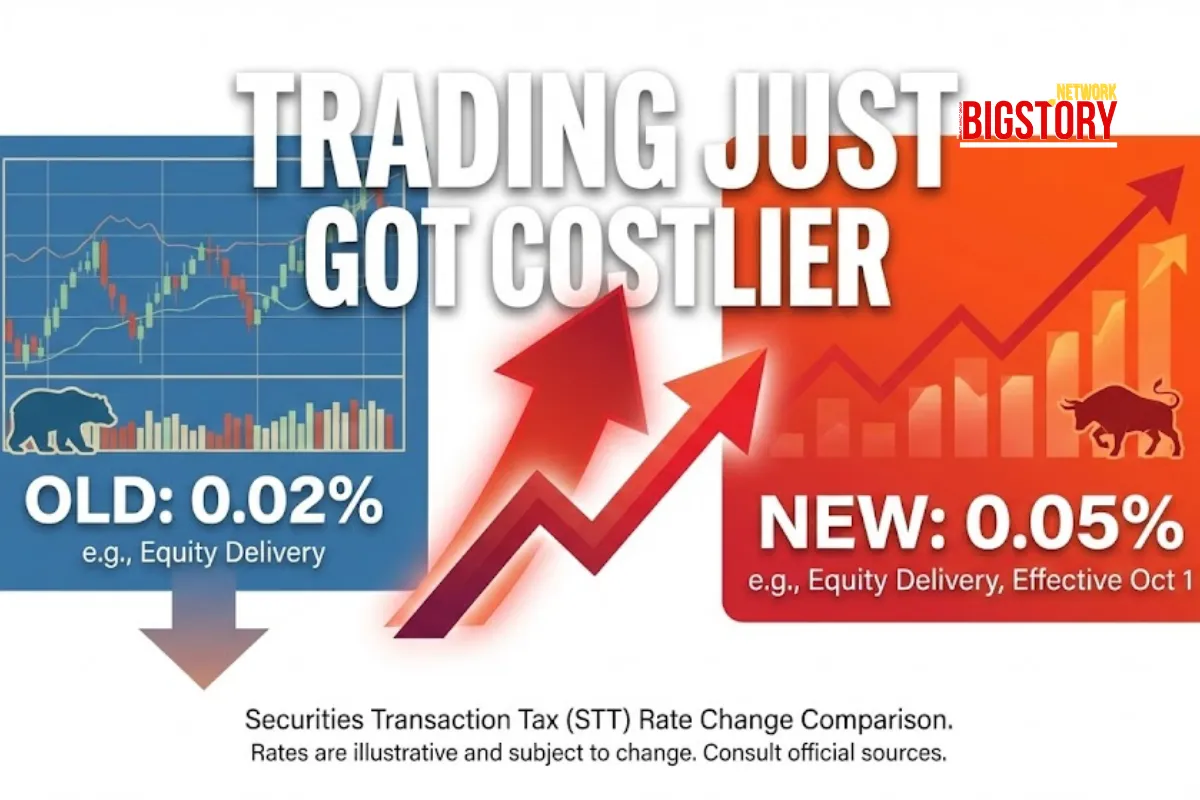
The sharpest blow came for the "newbie" retail trader. In a bid to curb "speculative excess," the budget hiked the Securities Transaction Tax (STT) significantly:
The Logic: The government wants to protect retail investors from burning cash in the F&O segment, where SEBI data shows 9 out of 10 traders lose money. The Reality: This doesn't just hurt gamblers; it hurts serious retail traders trying to hedge their portfolios. It effectively raises the "break-even" point for every trade. The stock market’s sharp dip on Sunday (Feb 1) wasn't just a tantrum; it was a repricing of this new friction cost.
While the FM announced the Income Tax Act 2025 to replace the archaic 1961 law, early drafts suggest it is a cosmetic overhaul. It removes obsolete sections and simplifies the filing process, but without a corresponding reduction in tax rates, it offers no financial relief.
If the taxpayer funds the highways, the defense corridors, and the digital stack, but their own savings remain stagnant, are they partners in nation-building, or just the financiers of it?
1. Did income tax slabs change in Budget 2026? No. Both the Old and New Tax Regime slabs remain exactly the same. There is no change in the tax-free limit (₹3 Lakh basic / ₹7 Lakh rebate) or standard deduction.
2. What is the new STT rate? From April 1, 2026, STT on Futures will be 0.05% (up from 0.02%) and on Options will be 0.15% (up from 0.1%). This makes F&O trading significantly more expensive.
3. What is the benefit for foreign travel? The Tax Collected at Source (TCS) on foreign tour packages and remittances for education/medical needs has been reduced to 2% (down from higher slabs), easing the cash-flow burden for travelers and students.
4. Is the New Tax Regime mandatory now? No. It is the default, meaning if you take no action, your employer will calculate tax based on it. However, you can still file a form to opt for the Old Regime if you want to claim HRA and 80C deductions.
5. When does the new Income Tax Act 2025 start? The new simplified tax code will come into effect from April 1, 2026. It aims to reduce litigation and simplify language, but does not change the tax rates announced in this budget.
News Coverage
Context & Analysis
 Exclusive Content


Sign up for the Daily newsletter to get your biggest stories, handpicked for you each day.



 Trending Now! in last 24hrs


