
Despite the assassination of Iran's top leadership and fierce US ultimatums, New Delhi's back-channel negotiations have held firm, securing the safe passage of the Jag Vasant and Pine Gas to relieve India's crippling cooking gas shortage.
 Brajesh Mishra
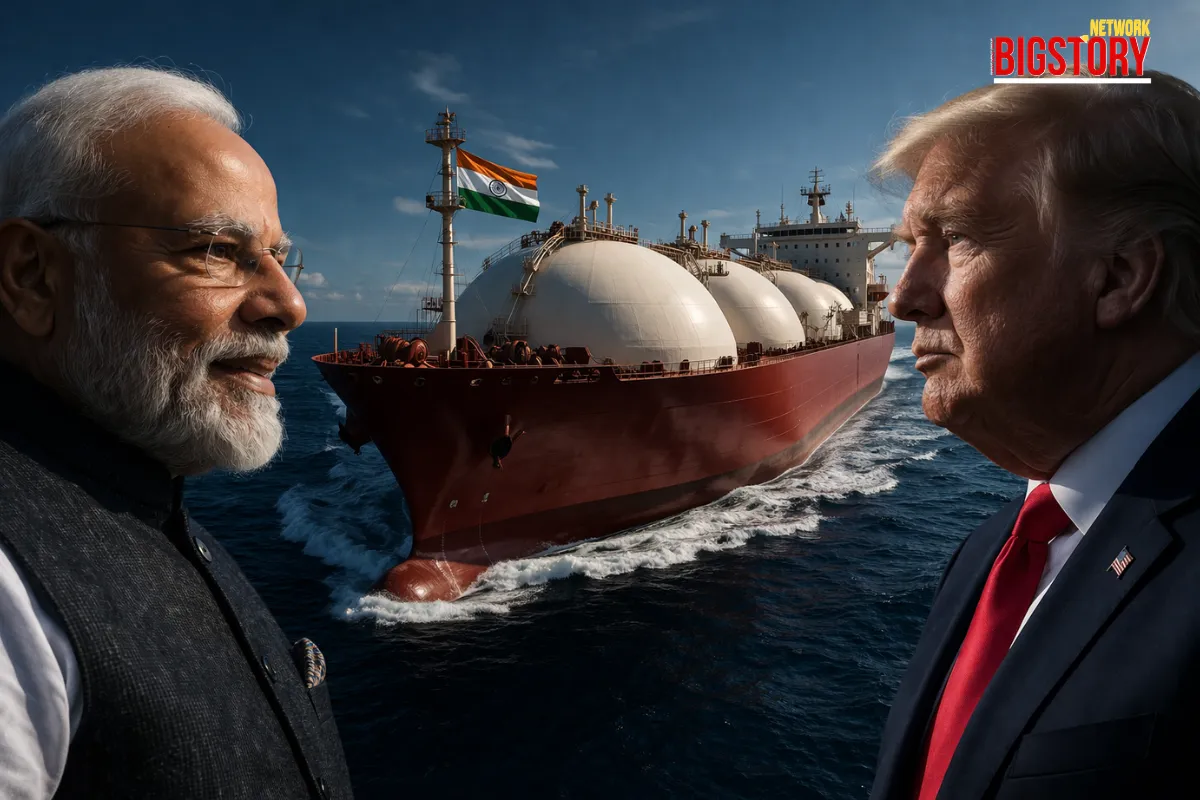
What happened: Two Indian-flagged LPG carriers, Jag Vasant and Pine Gas, successfully navigated the blockaded Strait of Hormuz and are safely en route to India.
Why it happened: The ships were granted case-by-case clearance by Iran's IRGC as part of a bilateral diplomatic agreement between New Delhi and Tehran to keep Indian energy lifelines open.
The strategic play: To ensure safe passage, the vessels utilized a strict traffic control system mandated by Iran, hugging the Iranian coastline near Qeshm Island and exclusively broadcasting their Indian ownership rather than their final destinations.
India's stake: The safe arrival of these massive gas carriers provides critical, immediate relief to India's domestic LPG supply, which has been under severe strain since the US-Israel-Iran war began.
The deciding question: With the Iranian central government in chaos following recent assassinations, can India continue to secure these individual vessel clearances from rogue IRGC field commanders?
In a massive, high-wire victory for Indian foreign policy, two massive liquefied petroleum gas (LPG) carriers have successfully navigated the world's most dangerous maritime chokepoint. On Monday, ship-tracking data confirmed that the Indian-flagged Very Large Gas Carriers (VLGCs)—the Jag Vasant and the Pine Gas—safely transited the highly volatile Strait of Hormuz.
This successful crossing provides immediate, desperately needed relief to India's suffocating domestic fuel supply. More importantly, it proves that despite the escalating Middle East war, the recent assassination of Iran's top security leadership, and furious ultimatums from Washington, India's high-risk diplomatic backchannels with Tehran have held firm, keeping the nation's vital energy lifelines open while Western-aligned shipping remains violently blockaded.
Jag Vasant & Pine Gas, Indian-Flagged VLGCs These two massive tankers are carrying enough liquefied petroleum gas to satisfy roughly three days of India's total national consumption. To avoid being targeted by autonomous drones or rogue patrol boats, they sailed using a specialized transit strategy, turning off standard destination broadcasts and exclusively pinging their Indian ownership to safely bypass IRGC patrols.
Islamic Revolutionary Guard Corps (IRGC) Despite the reported assassination of senior Iranian leader Ali Larijani and the ensuing command chaos in Tehran, the decentralized IRGC naval commanders honored the bilateral safe-passage agreement with New Delhi. They selectively cleared the Indian ships while keeping the strait violently closed to all US and European-aligned traffic.
Ministry of Ports, Shipping and Waterways, India Anticipating the arrival of these vital vessels, the Ministry has issued an emergency directive to major Indian ports, including the Deendayal Port in Kandla, Gujarat. They are mandated to grant immediate, priority berthing to these LPG carriers to ensure the fuel is injected into the domestic supply chain without a single hour of administrative delay.
Standard maritime outlets are tracking the precise coordinates of the ships and the priority berthing protocols awaiting them in Gujarat. But the real story is the geopolitical triumph of India's "Dark" Diplomacy.
Just hours after PM Modi formally addressed the Lok Sabha, warning that the prolonged conflict poses a severe challenge to the economy, the successful transit of these two ships proves something massive: India's bilateral negotiations with Iran are highly resilient. They have survived the total decapitation of Tehran's political leadership. While the United States demands that the global community form a military coalition to break the blockade by force, India is successfully using "maritime diplomacy"—hugging the Iranian coast, flying the Indian flag, and relying on backchannel IRGC clearances.
This specific transit validates the Prime Minister's and the MEA's highly controversial decision to defy US ultimatums in favor of sovereign energy security. India refused to bend to Washington's threats, and as a direct result, Indian kitchens will receive the gas they need to survive the month.
If India can safely navigate its massive gas carriers through the world's most volatile warzone using only a flag and a phone call, is the era of American maritime dominance in the Middle East finally over.
News & Wire Coverage:
Official Statements & Data:
 Exclusive Content


Sign up for the Daily newsletter to get your biggest stories, handpicked for you each day.


 Trending Now! in last 24hrs


