BIGSTORY Network


Supreme Court of India March 10, 2026, 8:22 p.m.

The Judicial Takeover: How the Supreme Court Commandeered Bengal’s Fractured Election Machinery

By importing hundreds of external judges to verify local voter rolls, the apex court exposes a total collapse of trust between the state government and the Election Commission.

by Author Brajesh Mishra
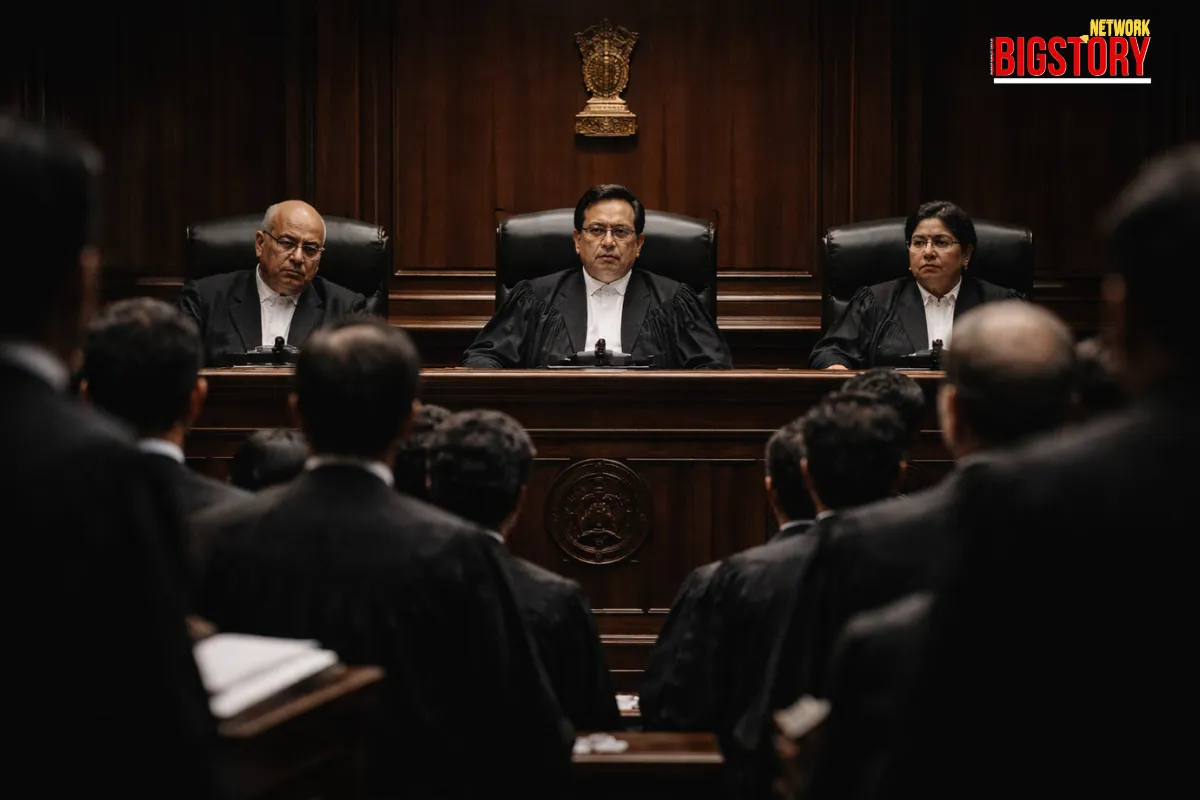
Hero Image

⏱️ 30-Second Brief

Expand to Read

What happened: CJI Surya Kant fiercely rebuked petitioners who questioned the integrity of 700 judicial officers verifying voter rolls in West Bengal. Why it happened: The Supreme Court deployed judicial officers from three states to conduct the Special Intensive Revision (SIR) because of a severe "trust deficit" between the state government and the Election Commission. The strategic play: Petitioners attempted to cast doubt on the judicial officers' work, prompting the SC to explicitly shield them to ensure the voter rolls are finalized before the 2026 elections. India's stake: The judicially supervised exercise will decide the voting rights of over 63 lakh pending claimants, directly impacting the outcome of the volatile West Bengal assembly elections. The deciding question: Will the newly mandated Calcutta High Court appellate tribunals be able to process thousands of voter exclusion appeals before the election dates are officially announced?

The fierce courtroom intervention by CJI Surya Kant during the West Bengal SIR hearings of 2026 fundamentally alters the balance of power ahead of the state's highly volatile assembly elections. On Tuesday, the Chief Justice of India issued a devastating rebuke to petitioners attempting to question the integrity of over 700 judicial officers tasked with verifying the state's electoral rolls, declaring in open court that he would absolutely "not tolerate" such intimidation.

This confrontation highlights a severe institutional crisis. The Supreme Court's decision to deploy judicial officers to oversee voter verification confirms a total collapse of trust between Mamata Banerjee's state administration and the Election Commission of India, forcing the judiciary to directly administer the voting rights of over 60 lakh citizens.

How We Got Here

  • The Trigger: On February 20, 2026, the Supreme Court mandated the deployment of judicial officers for West Bengal's Special Intensive Revision (SIR) due to a persistent "trust deficit" paralyzing the standard Election Commission procedures.
  • The Background: The Supreme Court rapidly expanded this judicial deployment four days later, importing 200 officers from neighboring Odisha and Jharkhand to assist the 500 Bengal officers on the ground.
  • The Escalation: By March 9, Calcutta High Court Chief Justice Sujoy Paul reported that judicial officers working "day and night" had successfully disposed of 10.16 lakh objections.
  • The Stakes: On March 10, petitioners filed fresh applications challenging the officers' handling of the claims. CJI Surya Kant immediately shut down the challenge, ordering the creation of independent Appellate Tribunals headed by former High Court judges to finalize the rolls.

The Key Players

Surya Kant, Chief Justice of India The CJI issued a fierce warning to explicitly protect the deployed judicial officers from political and legal intimidation during this highly sensitive revision. His swift reprimand establishes an uncompromising judicial shield around the electoral roll cleanup.

Sujoy Paul, Chief Justice of Calcutta High Court Tasked directly by the Supreme Court, Paul holds the administrative responsibility of constituting the independent appellate tribunals of former judges, forming the final legal layer to hear appeals against any voter exclusions.

Election Commission of India (ECI) Facing a massive credibility deficit in the border state, the constitutional authority has effectively lost independent control over the ground-level verification. The Supreme Court directed the ECI to bear all logistical expenses and honorariums for the newly formed appellate tribunals while urgently fixing portal technical glitches.

The BIGSTORY Reframe — The Judicialization of Elections

Mainstream coverage treats this story as a standard courtroom drama, hyper-focusing on the Chief Justice's angry outburst and the sheer volume of pending voter claims. This surface-level reading misses the deeper, structural breakdown the case represents. The political warfare between the Trinamool Congress and the central Election Commission has paralyzed standard administration, prompting the Supreme Court to effectively commandeer the ECI's core ground-level functions.

Importing 200 judges from Odisha and Jharkhand specifically to verify local Bengali voter rolls constitutes an unprecedented suspension of normal democratic machinery. It signals that the ECI's authority in volatile border states is fundamentally compromised. The Supreme Court is no longer just arbitrating electoral disputes; it is directly executing the election prep. If this judicially supervised SIR model proves successful, it establishes a new, drastic standard for managing contested state elections, permanently altering the balance of power between the ECI and the Indian judiciary.

What This Means for India

  • Direct Democratic Administration: The Supreme Court is currently determining the enfranchisement of 63 lakh citizens, meaning the judiciary—not the election commission—holds the keys to the demographic makeup of the 2026 West Bengal polls.
  • Urgent Appellate Action: The Calcutta High Court must immediately operationalize the mandated Appellate Tribunals using retired judges to prevent a constitutional bottleneck right before the election code kicks in.
  • Institutional Remediation: The Election Commission must resolve the SC-flagged technical portal disruptions immediately to ensure the supplementary voter list is published without further delays.

The Implications

  • Short Term: The CJI's stern warning immediately silences political proxies attempting to derail the verification process through frivolous litigation, ensuring the 700 judicial officers can complete their mandate.
  • Medium Term: The sheer logistics of processing thousands of exclusion appeals through the new Appellate Tribunals will stretch the Calcutta High Court's administrative capacity to its absolute limit.
  • India-Specific Consequence: The total breakdown of bipartisan trust in the Election Commission forces the Supreme Court into the uncomfortable role of electoral micro-manager, a burden the judiciary is not structurally designed to carry permanently.

If the Election Commission requires 700 imported judicial officers just to finalize a state's voter list, does India's constitutional election machinery still function independently in hostile political territory?

Sources

News & Wire Coverage:

Official Statements & Data:

  • Court Record: Calcutta High Court Chief Justice reports 10.16 lakh objections disposed of by judicial officers — March 9, 2026
  • Procedural Record: Supreme Court expands judicial deployment with 200 officers from Odisha and Jharkhand — February 24, 2026


Brajesh Mishra
Brajesh Mishra Associate Editor

Brajesh Mishra is an Associate Editor at BIGSTORY NETWORK, specializing in daily news from India with a keen focus on AI, technology, and the automobile sector. He brings sharp editorial judgment and a passion for delivering accurate, engaging, and timely stories to a diverse audience.

BIGSTORY Trending News! Trending Now! in last 24hrs

The Judicial Takeover: How the Supreme Court Commandeered Bengal’s Fractured Election Machinery
Supreme Court of India
The Judicial Takeover: How the Supreme Court Commandeered Bengal’s Fractured Election Machinery
The Punchline and the Pendency: What the Supreme Court's Onion-Garlic PIL Exposes About Judicial Abuse
Supreme Court of India
The Punchline and the Pendency: What the Supreme Court's Onion-Garlic PIL Exposes About Judicial Abuse
The Lakhimpur Doctrine: Supreme Court Grants Unnao Survivor Direct Voice in Sengar's Bail Fight
Supreme Court of India
The Lakhimpur Doctrine: Supreme Court Grants Unnao Survivor Direct Voice in Sengar's Bail Fight
Economic Survey 2026: India Projects 7% Growth Despite "Tariff War"
Supreme Court of India
Economic Survey 2026: India Projects 7% Growth Despite "Tariff War"