
As Iranian missiles paralyze critical civilian infrastructure and oil refineries in Manama, the massive Indian expatriate community faces a survival crisis without a clear evacuation corridor.
 Sseema Giill
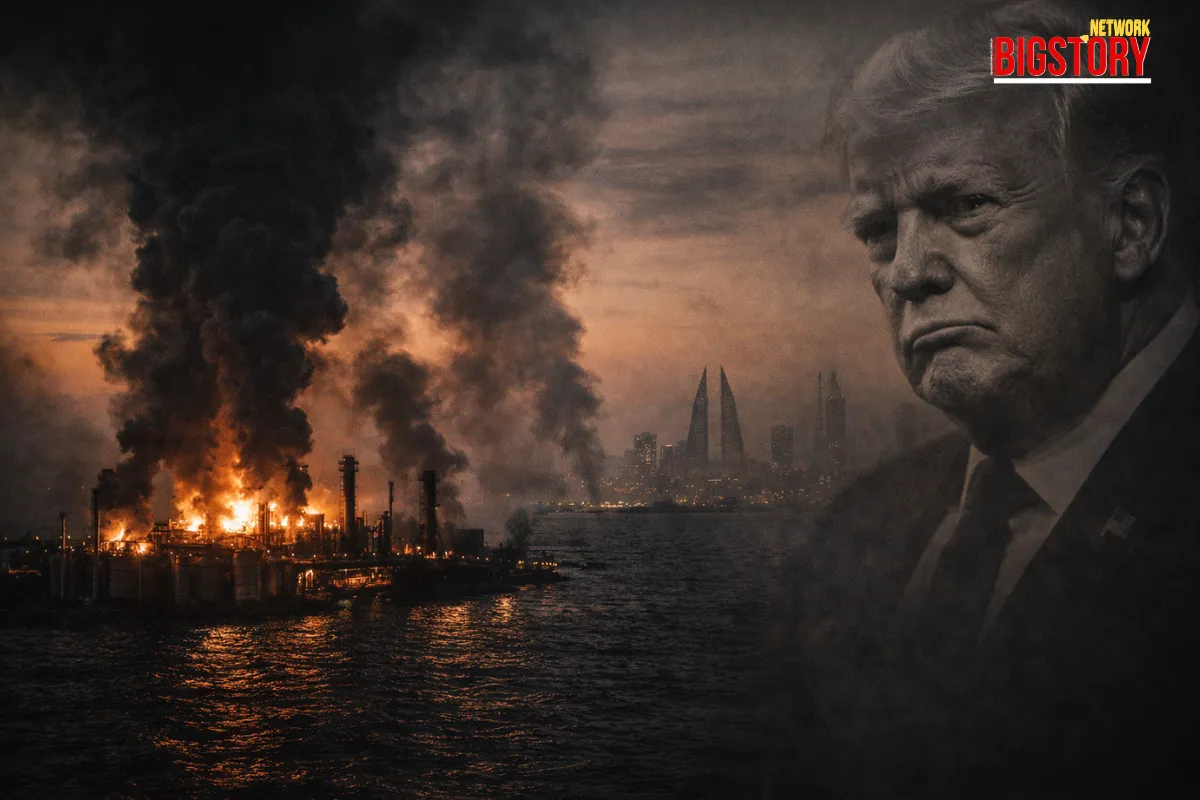
The geopolitical landscape fractured further on Monday as the deadly iran attacks bahrain oil refinery 2026 escalation trapped hundreds of thousands of expatriates in an active war zone. State-owned Bapco Energies formally declared force majeure after Iranian drones and missiles ignited massive fires at its primary Sitra refinery, compounding coordinated strikes that also targeted the US Navy's Fifth Fleet headquarters in Manama.
This aggressive bombardment shatters the illusion of safety in the Gulf. With Iranian projectiles now striking civilian water desalination plants and critical industrial zones, over 300,000 Indian nationals face life-threatening conditions. The Indian Embassy immediately issued an urgent vigilance alert, but the sheer scale of the infrastructure destruction demands a full-scale evacuation strategy before the tiny island nation's borders completely shut down.
Mojtaba Khamenei, Supreme Leader, Iran Under his newly established leadership following his father's assassination, Tehran drastically intensified its aggressive regional strikes against Gulf nations hosting American military assets. He is actively demonstrating a willingness to destroy civilian economic infrastructure to enforce his strategic will.
Masoud Pezeshkian, President of Iran Pezeshkian defended the strikes on Bahrain and the UAE as a "defensive necessity" against US forces. He explicitly warned that increased pressure from Washington and its allies will naturally trigger stronger, more destructive Iranian responses.
Indian Embassy in Bahrain Tasked with the safety of over 300,000 Indian nationals, the diplomatic mission currently relies on vigilance alerts. They face immense, mounting domestic pressure to secure viable, physical evacuation corridors as the civilian infrastructure surrounding the diaspora burns.
Mainstream Western coverage focuses obsessively on the military confrontation between Tehran and the US Navy's Fifth Fleet, treating the transition of power to Mojtaba Khamenei as a purely strategic chess game. This narrow perspective entirely misses the catastrophic reality unfolding for the Global South. Iranian strikes are no longer confined to military installations; they are indiscriminately destroying fundamental civilian lifelines, including water desalination plants and the Sitra industrial zone.
For the 300,000 Indian nationals living and working in Bahrain, this transition from military to civilian targeting turns the tiny island into a lethal trap. Expatriates face falling debris, crippling water shortages, and direct hits on industrial workplaces where thousands are employed. The Indian diaspora are sitting ducks in a proxy war. Simultaneously, Bapco's force majeure instantly chokes off downstream petroleum supplies, driving Brent crude past $114 and directly exacerbating India's domestic fuel rationing and inflation crisis.
If an allied nation's water plants and oil refineries are burning under foreign drone strikes, why is the Indian government merely asking three lakh trapped citizens to "remain vigilant" instead of bringing them home?
News & Wire Coverage:
Official Statements & Data:
 Exclusive Content


Sign up for the Daily newsletter to get your biggest stories, handpicked for you each day.



 Trending Now! in last 24hrs