
After a spectacular trial court discharge in the liquor policy case, the AAP leadership has petitioned the Supreme Court to transfer the CBI's appeal, alleging that the current High Court bench is fundamentally predisposed against them.
 Brajesh Mishra
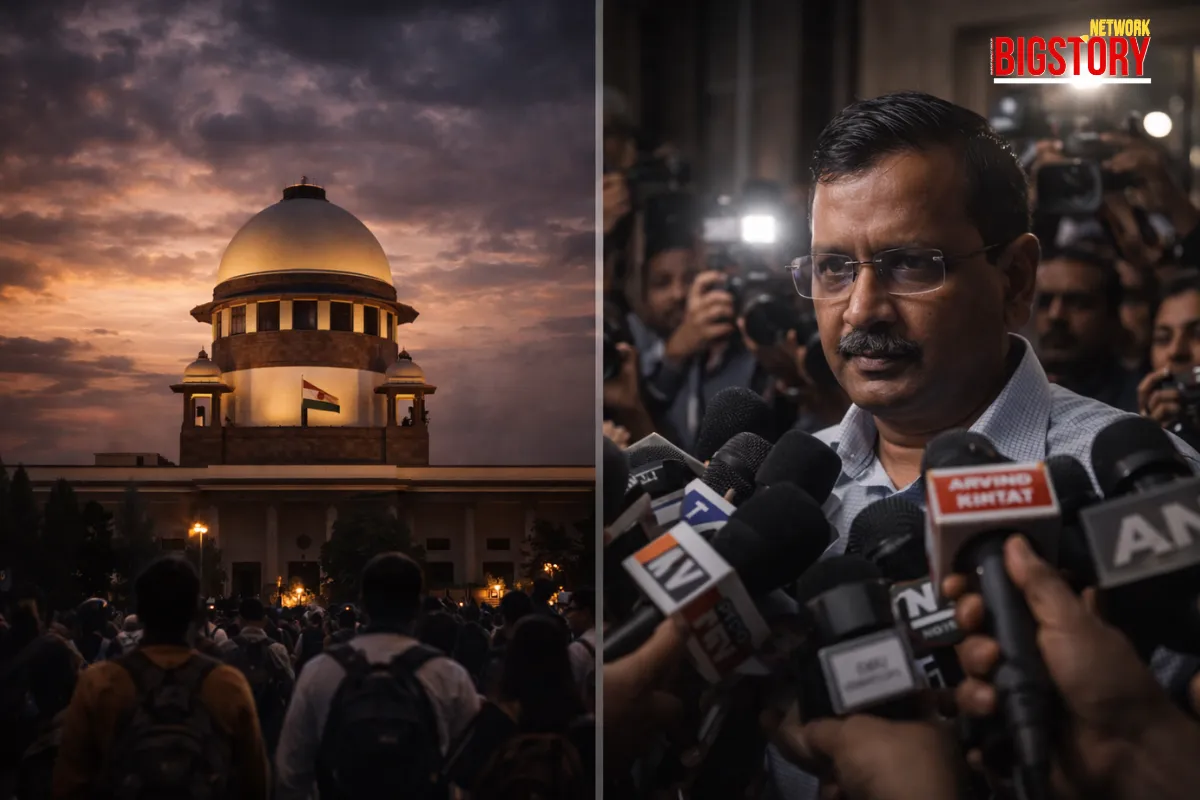
What happened: Arvind Kejriwal and Manish Sisodia petitioned the Supreme Court to transfer the CBI's excise policy appeal away from Delhi High Court Justice Swarana Kanta Sharma.
Why it happened: In February 2026, a trial court completely discharged all 23 accused in the liquor scam. However, Justice Sharma immediately stayed the trial court's strictures against the CBI without hearing the defense.
The strategic play: AAP is accusing the High Court bench of pre-disposition and bias, noting that the Supreme Court had previously overturned several of Justice Sharma's rulings denying bail to AAP leaders.
India's stake: The legal maneuver creates a massive constitutional headache, forcing the Supreme Court to either validate explosive claims of judicial bias or force Kejriwal to face a judge he has publicly accused of lacking neutrality.
The deciding question: Will Chief Justice D.Y. Chandrachud's Supreme Court intervene and transfer the case before the Delhi High Court resumes its hearings on April 6?
The dramatic collapse of the Delhi excise policy case at the trial court level has rapidly escalated into a full-blown judicial showdown. On Sunday, AAP National Convener Arvind Kejriwal officially moved the Supreme Court, seeking an immediate transfer of the CBI's appeal to a different Delhi High Court bench. By explicitly alleging a "grave and reasonable apprehension" of bias against sitting Justice Swarana Kanta Sharma, Kejriwal has ignited a massive legal and political firestorm just months ahead of critical electoral battles.
This extraordinary maneuver—petitioning the apex court to intervene directly in the roster allocation of a High Court—highlights the total breakdown of trust between the embattled political party and the appellate judiciary handling its highest-stakes corruption cases.
Arvind Kejriwal, National Convener, AAP Kejriwal has taken the rare step of directly petitioning the Supreme Court against a specific judge. His legal team argues that Justice Sharma's immediate ex-parte stay—coupled with her historical record of denying bail to AAP leaders in this exact case (rulings subsequently overturned by the Supreme Court)—creates an environment where a fair hearing is impossible. His petition explicitly cites a "grave, bona fide, and reasonable apprehension that the matter may not receive a hearing marked by impartiality and neutrality."
Justice Swarana Kanta Sharma, Delhi High Court Justice Sharma is the presiding judge over the CBI's appeal. Her rapid March 9 interim order triggered the current crisis. By noting that the trial court's remarks were "prima facie foundationally misconceived, especially when made at the stage of charge itself," she halted the strictures against the CBI and effectively paused connected PMLA proceedings, infuriating the defense.
Tushar Mehta, Solicitor General of India Representing the CBI, the Solicitor General fiercely opposed the AAP's request for an adjournment in the High Court on March 16. He accused Kejriwal's legal team of deploying blatant "judge-shopping" tactics, stating: "There has been a pattern. Make allegations and run away. Such litigants can't be encouraged... career (has been made) out of allegations."
Mainstream media framing has largely reduced this event to a standard procedural delay, focusing on the sharp courtroom exchanges between SG Tushar Mehta and the defense counsel. However, ignoring the underlying implications of Kejriwal's petition misses the systemic crisis it represents: the profound breakdown of judicial roster trust.
When a high-profile former Chief Minister officially accuses a sitting High Court judge of "predisposition"—and points out that the Supreme Court has had to repeatedly overturn her previous rulings in this specific controversy—it is a direct attack on the core credibility of the judicial assignment system. The AAP is essentially arguing that the CBI is relying on a "friendly" bench to synthetically resurrect a politically motivated case that was utterly destroyed by a trial court's exhaustive 601-page discharge order.
This presents the Supreme Court with an agonizing constitutional dilemma. If they refuse to transfer the case, the AAP will publicly frame any subsequent adverse ruling by the High Court as premeditated, institutional bias. However, if the Supreme Court does transfer the case, it tacitly validates the AAP's explosive allegations against Justice Sharma, potentially emboldening any powerful litigant to demand a bench change the moment they face an unfavorable interim order.
If a 600-page discharge order by a trial judge can be stayed on day one without hearing the defense, does the presumption of innocence still exist in India's appellate courts?
News & Wire Coverage:
Official Statements & Data:
 Exclusive Content


Sign up for the Daily newsletter to get your biggest stories, handpicked for you each day.



 Trending Now! in last 24hrs