
"A photo of NIA officials carrying thick files labeled 'Pahalgam Chargesheet' into a court building in New Delhi. In the background, a blurred image of a news ticker saying 'LeT Charged'. Serious, legal atmosphere."
 Brajesh Mishra
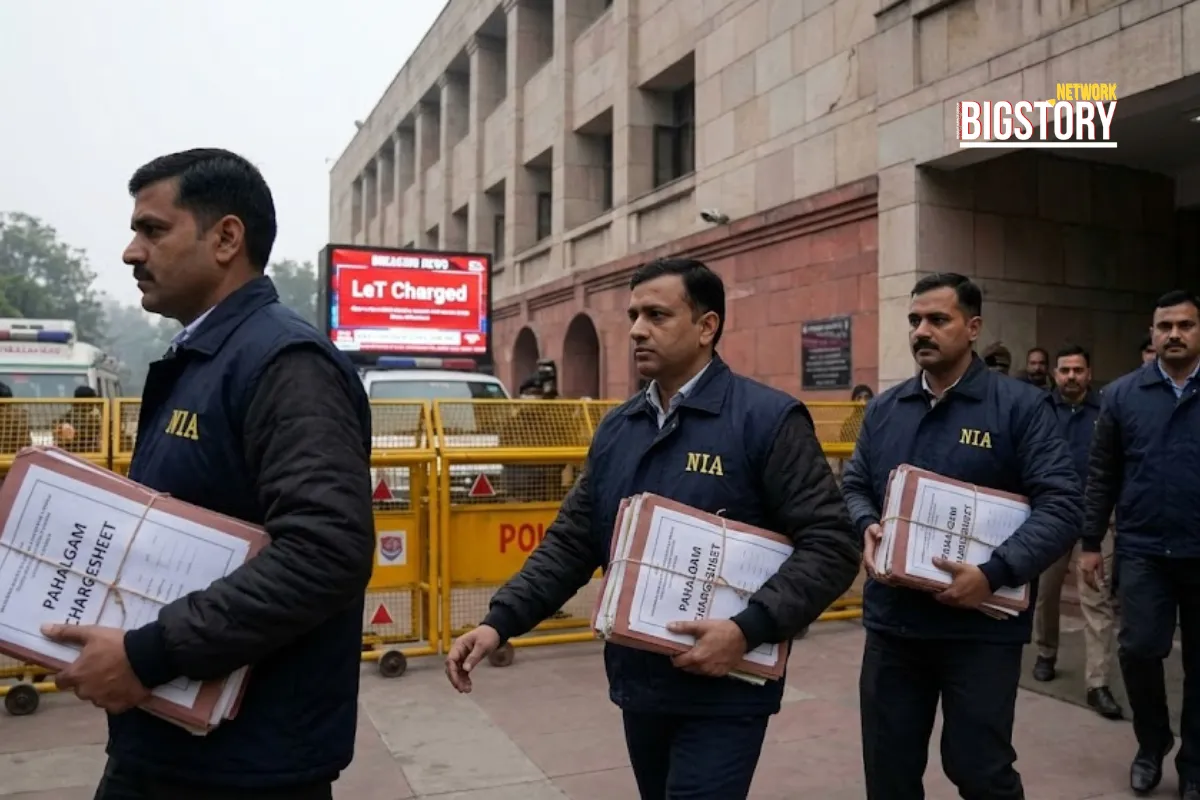
India’s National Investigation Agency (NIA) has formally charged Pakistan-based terror outfits Lashkar-e-Taiba (LeT) and The Resistance Front (TRF) for the horrific April 22 Pahalgam terror attack that claimed the lives of 26 tourists. The comprehensive chargesheet, filed on December 15, 2025, identifies LeT commander Sajid Jatt as the primary handler. This legal move comes amid a disturbing revelation: despite India’s precision strikes in May aimed at dismantling terror infrastructure, groups like Jaish-e-Mohammed (JeM) are aggressively rebuilding using digital wallets to bypass international sanctions.
The Pahalgam attack shattered the fragile peace in Kashmir, leading to India’s retaliatory Operation Sindoor in May, which targeted nine terror camps across the border. While the strikes inflicted heavy damage, including on JeM’s Bahawalpur headquarters, the terror ecosystem has adapted. Post-Operation Sindoor, JeM chief Masood Azhar launched a fundraising drive seeking ₹3.91 billion to construct "313 new centers," leveraging platforms like EasyPaisa and SadaPay to evade FATF scrutiny. This digital pivot poses a new challenge to global counter-terrorism efforts.
While headlines focus on the chargesheet, the deeper story is the "Fintech Terror Loophole." The real battleground has shifted from the Line of Control to the digital ledger. Pakistan’s removal from the FATF grey list in 2022 has inadvertently provided cover for a parallel banking system where terror financing is disguised as micro-transactions. With over 250 active digital wallets channeling funds to groups like JeM, the "lawfare" of NIA chargesheets is being outpaced by the speed of digital finance. India is winning the legal argument but struggling to choke the digital lifeline that keeps terror alive.
The chargesheet serves as a crucial legal document for future international sanctions, but its immediate impact is limited by Pakistan's diplomatic cover at the UN. Meanwhile, the economic fallout in Kashmir is severe; tourism has plummeted by 52% in the six months following the attack, with empty hotels signaling a long road to recovery. The conflict has evolved into a war of attrition—fought in courts, on financial apps, and in the empty markets of Pahalgam.
If terrorists can crowdfund a war through digital wallets while nations are gridlocked at the UN, is the global financial monitoring system broken?
Who is Sajid Jatt, and why was he charged in the Pahalgam terror attack? Sajid Jatt is a senior commander of the Pakistan-based terror group Lashkar-e-Taiba (LeT). The National Investigation Agency (NIA) named him as the main handler in its chargesheet, accusing him of planning and facilitating the April 2025 attack in Pahalgam that killed 26 tourists.
How is Pakistan using digital wallets to fund terrorists? Following the destruction of physical terror infrastructure by India's Operation Sindoor, groups like Jaish-e-Mohammed (JeM) have turned to digital wallets like EasyPaisa and SadaPay. They use these platforms to solicit small donations from supporters, bypassing traditional banking channels and international monitoring systems like FATF to fund the construction of new training centers.
What was Operation Sindoor? Operation Sindoor was a military operation launched by India in May 2025 in response to the Pahalgam attack. It involved precision air and missile strikes targeting terror camps in Pakistan and Pakistan-occupied Kashmir, reportedly destroying facilities linked to JeM, LeT, and Hizbul Mujahideen.
Has Kashmir's tourism recovered since the Pahalgam attack? No. Reports from October 2025 indicate a sustained slump, with tourist arrivals down by over 50% compared to the previous year. Hotel occupancy rates remain critically low, causing severe economic distress in the region.
News Coverage
Research & Analysis
 Exclusive Content


Sign up for the Daily newsletter to get your biggest stories, handpicked for you each day.



 Trending Now! in last 24hrs


