
Addressing the Lok Sabha, the Prime Minister officially acknowledged the unprecedented challenges posed by the prolonged conflict, assuring citizens that strategic reserves and diplomatic back-channels are working to prevent a domestic energy collapse.
 Sseema Giill
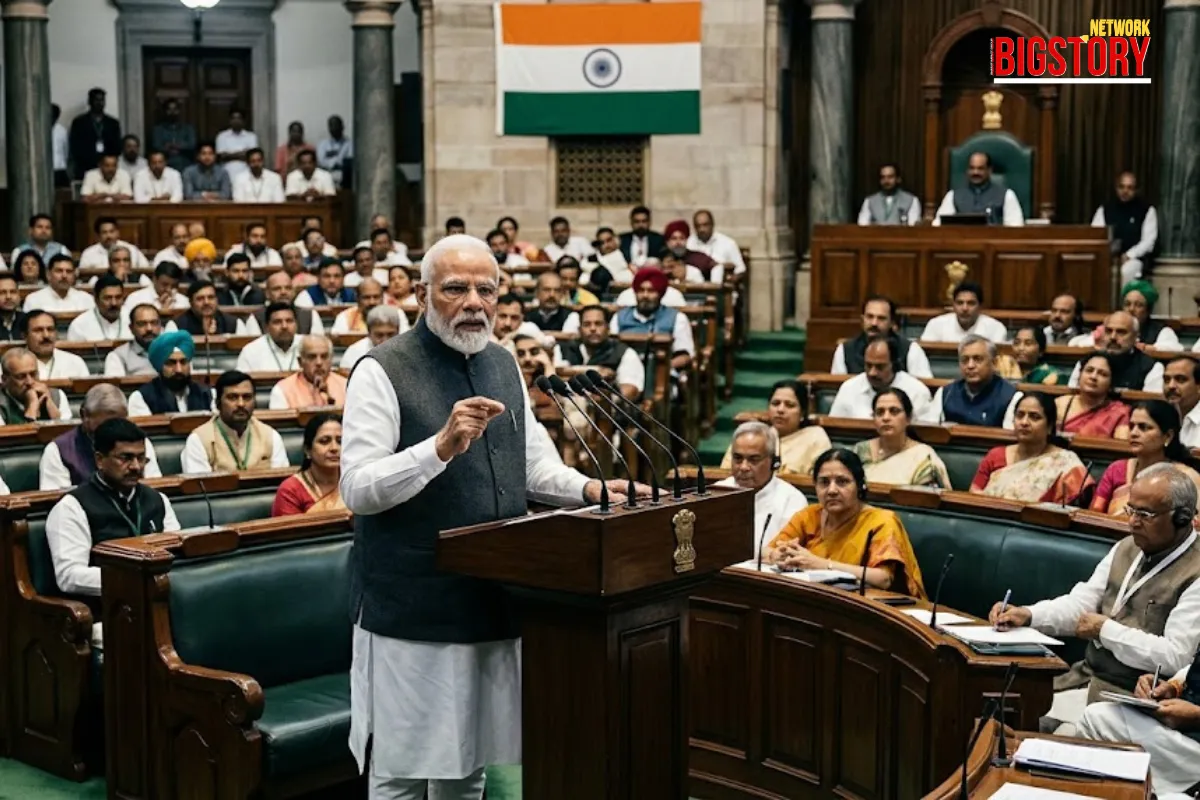
What happened: Prime Minister Narendra Modi addressed the Lok Sabha, calling the ongoing West Asia conflict "worrisome" due to its severe impact on the global economy.
Why it happened: The prolonged US-Israel-Iran war has heavily disrupted the Strait of Hormuz, threatening the vital supply chains for India's crude oil, gas, and fertilizer imports.
The strategic play: The PM used the parliamentary address to project stability, highlighting that India has diversified its energy imports to 41 countries and has successfully facilitated the safe return of 3.75 lakh citizens.
India's stake: Because India imports roughly 60% of its LPG, the government has been forced to prioritize domestic supplies and ramp up local production to avert a severe civilian energy crisis.
The deciding question: As the conflict stretches into its fourth week, can India's diversified import strategy and strategic petroleum reserves outlast the severe, ongoing disruptions in the Persian Gulf?
After weeks of projecting absolute diplomatic control over the escalating Middle East crisis, the Indian government's messaging has taken a sobering turn. On Monday, Prime Minister Narendra Modi addressed the Lok Sabha and formally declared the ongoing West Asia conflict "worrisome." By explicitly acknowledging that the prolonged blockade of the Strait of Hormuz poses a severe, direct threat to India's macroeconomic stability, the Prime Minister prepared the nation for a grinding, long-term supply chain crisis.
This parliamentary address marks a significant rhetorical shift. For the past three weeks, New Delhi focused heavily on highlighting its diplomatic victories. But as the war stretches into its fourth week, the Prime Minister made it clear that while India is actively managing its fuel reserves and protecting its massive diaspora, temporary bilateral carve-outs aren't enough to permanently insulate the Indian economy from the fallout of a massive global conflict.
Energy Security and Diversification The Prime Minister emphasized that India has significantly bolstered its energy resilience over the last decade, expanding its import sources from 27 to 41 countries. With India relying on imports for 60 percent of its LPG requirements, he noted that the government has been forced to strictly prioritize domestic LPG distribution and boost local production to protect household kitchens from the shocks of the maritime blockade. Furthermore, the nation is actively relying on its 53 Lakh Metric Tonnes of Strategic Petroleum Reserves to absorb the immediate volatility.
Safeguarding the Diaspora Nearly 1 crore (10 million) Indians live and work in the Gulf, and their security remains the government's "biggest priority." The PM confirmed the massive scale of the ongoing evacuation and diplomatic efforts, officially stating that over 3.75 lakh Indian nationals have safely returned home since the outbreak of hostilities. Additionally, the government has proactively canceled CBSE board exams for students in the affected Gulf nations to ensure their academic continuity isn't compromised by the war.
A Warning to Hoarders Anticipating the downstream economic panic that naturally follows global supply chain disruptions, PM Modi delivered a stern warning against black marketing. He directed state governments to remain highly vigilant and take strict, prompt action against anyone attempting to artificially inflate prices or hoard essential commodities and fuel.
The most critical takeaway from Monday's Lok Sabha session isn't just the data; it is the deliberate shift in tone. Until now, the government’s narrative was anchored firmly in the success of its "multi-aligned" foreign policy and the MEA's ability to keep Indian ships moving. However, by formally calling the situation "worrisome" on the parliamentary floor, PM Modi is resetting national expectations.
This is a sobering acknowledgment that the war in the Middle East is no longer a distant geopolitical event—it is a direct, daily threat to India's inflation markers. No matter how successfully Indian diplomats navigate the blockade, a sustained freeze in the Persian Gulf will inevitably bleed into the Indian economy. The reliance on strategic reserves and the urgent pivot to protect domestic LPG supply explicitly indicate that the government expects this crisis to be a marathon, not a sprint.
If the world's most critical energy artery remains a war zone, how long can India's strategic reserves hold back the tide of global inflation?
News & Wire Coverage:
Official Statements & Data:
 Exclusive Content


Sign up for the Daily newsletter to get your biggest stories, handpicked for you each day.

 Trending Now! in last 24hrs


