
India's foreign policy is challenged by its strategic balancing act between the US and Russia, complicated by new US tariffs and an evolving global order.
 Sseema Giill
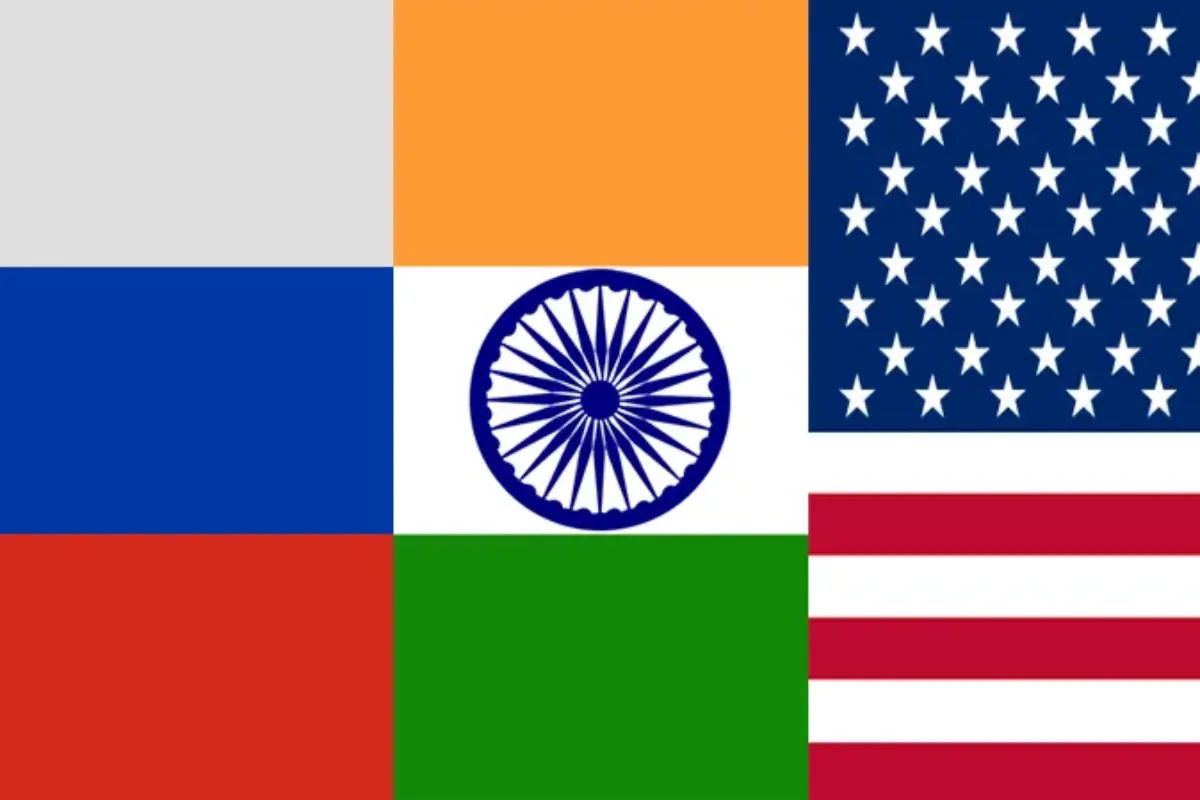
In the ever-shifting landscape of global power, few nations are as adept at diplomatic maneuvering as India. For decades, New Delhi has charted a course of strategic autonomy, successfully maintaining robust relationships with both the United States and Russia. This delicate balancing act, however, has recently been tested by a new set of challenges, most notably the imposition of significant tariffs by the US administration. The return of President Donald Trump to the White House has introduced a transactional and at times unpredictable dimension to geopolitics, forcing India to re-evaluate its long-held foreign policy tenets. This article will decode the complexities of India's stance, examining the historical context, the immediate challenges posed by the US tariffs, and the path forward for New Delhi in a multipolar world.
The Historical Bedrock of India-Russia Ties: The partnership between India and Russia is a legacy of the Cold War, rooted in a bond of trust and mutual benefit. Russia remains India's primary supplier of military hardware, providing critical defense technologies that are the backbone of the Indian armed forces. Deals for sophisticated systems like the S-400 missile defense system underscore the strategic depth of this relationship, a commitment that India has steadfastly maintained despite pressure from the West. Furthermore, the economic relationship has expanded significantly, with India becoming a major importer of discounted Russian crude oil. This energy trade provides crucial stability to India's domestic fuel prices and supports its economic growth, making the ties with Moscow a matter of national interest and energy security.
The Rise of the India-US Strategic Partnership: While India has never abandoned its historical friendship with Russia, its relationship with the United States has blossomed dramatically over the past two decades. The US is now one of India’s most important strategic partners, particularly in the Indo-Pacific region, where both nations share concerns about a rising China. Cooperation in technology, trade, and defense has grown exponentially. Joint military exercises and foundational defense agreements have solidified this bond, with both sides seeing the other as a critical bulwark against regional instability. The partnership has been celebrated as one built on shared democratic values and a common vision for a free and open international order.
Navigating the Trump Era: The Tariff Challenge: The recent imposition of steep tariffs on Indian imports by the US administration under President Trump has brought this complex dynamic into sharp focus. The tariffs, reportedly a direct response to India’s continued purchases of Russian oil, represent a significant departure from the previous administration's approach, which had tacitly allowed such trade to continue. The move has put India in a difficult position, forcing it to choose between its economic and energy security interests and its strategic relationship with the US. While the official reason cited for the tariffs is India’s trade with Russia, many analysts view it as a broader tactic to pressure India on trade deficits, as well as a reflection of the more protectionist and transactional nature of US foreign policy under the current administration.
The “Losing Bet” on Trump?: A Re-evaluation of Strategy The user's phrase "losing bet on Trump" captures a specific geopolitical anxiety. It suggests a potential miscalculation by New Delhi in its approach to the current US administration. Indian foreign policy circles had long banked on a consistent and predictable partnership with the US, regardless of who occupied the White House. However, the unexpected imposition of tariffs and the transactional approach to diplomacy have forced a rethink. The "losing bet" is not a failure of strategy, but rather a realization that a pragmatic, transactional approach is now the defining characteristic of US foreign policy. India’s challenge is to adapt to this new reality without compromising its core interests or its long-standing relationship with a key partner like Russia. This is a moment of re-calibration rather than a complete reversal of policy.
The Path Forward: Diplomatic Resilience and Diversification: In the face of these challenges, India's response has been one of diplomatic resilience and a renewed focus on its own interests. New Delhi has strongly defended its energy purchases as a matter of national security and has sought to de-escalate tensions through diplomatic channels. At the same time, it is diversifying its export markets to offset the impact of the US tariffs and strengthening ties with other global powers. High-level engagements with Russia, including meetings with key officials, are a testament to India's commitment to maintaining its strategic partnership with Moscow. Looking ahead, India will continue to navigate this complex web of alliances with a clear focus on its own economic and strategic imperatives, ensuring that its foreign policy remains a powerful tool for national development in a world of competing powers.
Conclusion: India's foreign policy has always been a masterclass in strategic maneuvering, and its delicate balancing act between the US and Russia is a testament to this fact. While the recent challenges posed by US tariffs have tested this approach, they have also provided an opportunity for New Delhi to reaffirm its commitment to strategic autonomy. The "losing bet" is not a failure of policy, but rather a harsh lesson in the realities of transactional geopolitics. As India continues its journey towards becoming a global power, its ability to maintain robust relationships with all major nations, without being forced to choose sides, will remain its most significant strategic asset.
 Exclusive Content


Sign up for the Daily newsletter to get your biggest stories, handpicked for you each day.

 Trending Now! in last 24hrs


