
By invoking the Essential Commodities Act, the government is forcing domestic refineries to radically reengineer the national gas grid, slashing industrial production to guarantee that 33 crore household stoves keep burning.
 Sseema Giill
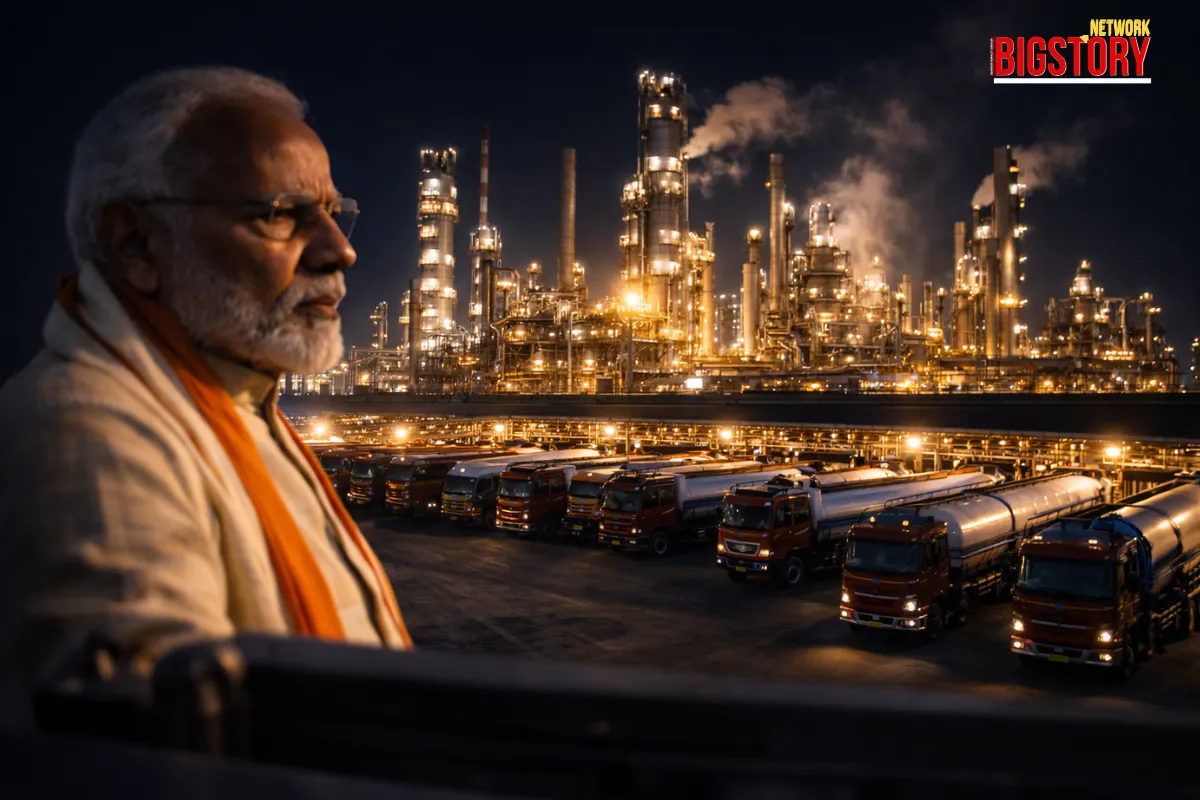
What happened: India invoked the Essential Commodities Act to rigidly prioritize natural gas supplies for domestic LPG, PNG, and CNG over industrial and petrochemical uses.
Why it happened: The escalating US-Iran conflict has blocked the Strait of Hormuz, cutting off the maritime route for roughly 60% of India's LPG and a massive chunk of its LNG imports.
The strategic play: The government is forcing domestic refineries to slash their own gas consumption to 65% and divert all available propane and butane streams into maximizing cooking gas production.
India's stake: To prevent mass civil unrest and a transportation collapse, India is fully shielding its 33 crore households and CNG vehicles, effectively transferring the supply shock to commercial restaurants, fertilizer plants, and petrochemical manufacturers.
The deciding question: Will the massive 30% surge in domestic LPG production and emergency imports from non-Gulf nations be enough to sustain India's kitchens before the industrial rationing triggers a wider economic recession?
The unprecedented disruption of global shipping has forced the Indian government into an aggressive, domestic crisis response. As citizens ask exactly how is India securing LPG and CNG gas during the 2026 Middle East conflict, the answer lies in an extreme reengineering of the nation's energy allocation. By invoking the Essential Commodities Act and issuing the sweeping Natural Gas Supply Regulation Order, New Delhi is ruthlessly prioritizing domestic households and public transport over the industrial sector.
With the Strait of Hormuz blockade paralyzing 60 percent of India's LPG imports, the government is actively cannibalizing industrial feedstock. Refineries are under strict mandates to divert crucial chemical streams directly into the domestic cooking gas pool, a drastic measure designed to keep the nation functioning while simultaneously crippling highly profitable petrochemical production.
Hardeep Singh Puri, Union Minister of Petroleum and Natural Gas
Puri is the architect of India's emergency fuel response. He has capped commercial LPG to destroy black market hoarding while publicly reassuring the nation that 100 percent of CNG and PNG supplies to domestic consumers will be maintained despite the ongoing war.
Reliance Industries Limited (RIL)
The private sector refining giant is currently ramping up operations at its Jamnagar complex under direct government mandates. RIL is actively diverting propane and butane streams away from highly profitable petrochemical manufacturing and into maximum LPG output to flood the domestic market.
GAIL (India) Limited
The state-owned gas utility is tasked with executing the complex new allocation rules on the ground. GAIL is physically diverting natural gas supplies away from lower-priority industrial pipelines and redirecting them heavily toward critical city gas distribution networks.
Mainstream media remains heavily focused on the pain of the restaurant sector dealing with the 20 percent commercial cap and the frustration of households adapting to the 25-day cylinder rule. However, this consumer-centric focus misses the massive, hidden industrial cost of India's survival strategy.
To secure gas for the public, the government is deliberately sacrificing its manufacturing base. By ordering mega-refineries like Reliance and ONGC OPAL to cut their own gas consumption to 65 percent and divert all propane and butane streams entirely away from high-margin petrochemicals into the subsidized LPG pool, the Centre is purposefully crippling plastics, synthetics, and chemical manufacturing. This emergency maneuver has successfully driven a massive 30 percent surge in domestic LPG production as of March 13, staving off immediate civil unrest. Furthermore, this crisis is rapidly accelerating India's long-term policy shift, pushing the grid away from highly vulnerable cylinder logistics toward a more resilient piped natural gas (PNG) and electric cooking "hybrid model."
If the government is willing to shut down the nation's petrochemical engines just to keep domestic stoves burning.
News & Wire Coverage:
Official Statements & Data:
 Exclusive Content


Sign up for the Daily newsletter to get your biggest stories, handpicked for you each day.



 Trending Now! in last 24hrs


