BIGSTORY Network


International News March 10, 2026, 8:27 p.m.

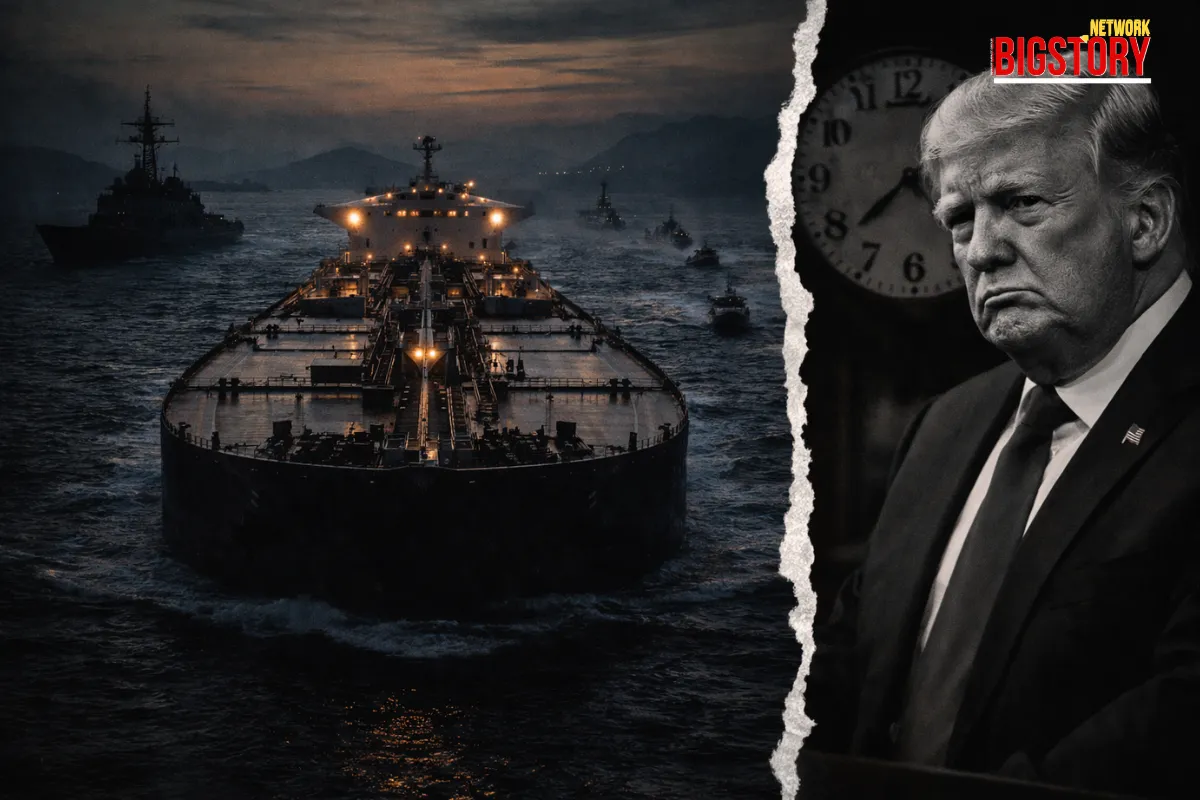
The 50-Day Clock: Trump's Strait of Hormuz Ultimatum Puts India's Energy Survival on Notice

As Washington threatens unprecedented military force to keep the world's most critical oil chokepoint open, New Delhi faces a catastrophic energy shortfall that waivers alone cannot fix.

by Author Sseema Giill
Hero Image

⏱️ 30-Second Brief

Expand to Read

What happened: US President Donald Trump threatened Iran with "death, fire, and fury" if it attempts to block the Strait of Hormuz.Why it happened: The Strait handles roughly 20% of global oil, and Iran's IRGC threatened to stop all regional exports in retaliation for ongoing US-Israeli military strikes.The strategic play: Trump is attempting to use massive military deterrence to force shipping lanes open and suppress surging global oil prices.India's stake: With 90% import dependency and only 50 days of strategic reserves, India's economy is sitting on a ticking time bomb if the strait completely closes.The deciding question: Will Iran call Washington's bluff and further restrict the strait, or will it back down to preserve its remaining infrastructure?

The global market panic ignited as Donald Trump threatens Iran over the Strait of Hormuz in early 2026 instantly destabilizes India's fragile energy security. On Monday, the US President issued an apocalyptic warning to Tehran, declaring that any attempt to block oil shipments through the critical maritime chokepoint would result in American forces hitting the country "twenty times harder" with absolute destruction.

With Brent crude hovering near $120 per barrel, this military standoff effectively freezes commercial shipping in a channel that handles 20 percent of the world's oil supply. The threat of total infrastructure annihilation guarantees that the Middle East war now directly dictates the fate of inflation, supply chains, and daily economic survival in highly import-dependent nations like India.

How We Got Here

  • The Trigger: The launch of 'Operation Epic Fury' by the US and Israel on February 28 sparked a massive regional war, violently disrupting established Middle East supply lines.
  • The Background: The IRGC threatened to halt all regional oil exports in retaliation for the ongoing bombardment of Iranian territory.
  • The Escalation: Trump posted on Truth Social on March 9, explicitly drawing a red line and threatening the total annihilation of Iran through "death, fire, and fury" if it disrupts the Strait.
  • The Stakes: Top Iranian security official Ali Larijani fired back on March 10, warning Trump not to "get eliminated yourself," sending crude prices surging and leaving the shipping channel paralyzed.

The Key Players

Donald Trump, President of the United States Trump issued an unprecedented, apocalyptic warning to Tehran. He asserts that the US is defending global trade routes, but his primary mechanism is threatening to entirely destroy Iran's ability to exist and rebuild if oil flow stops.

Ali Larijani, Top Security Official, Iran Larijani directly rebuked Trump's ultimatums. By declaring that the "sacrificial nation of Iran" does not fear American threats, he escalates the rhetoric and heightens global fears of an uncontained military confrontation.

Hardeep Singh Puri, Union Minister of Petroleum and Natural Gas, India Puri operates at the center of the domestic fallout. As the Centre faces intense political pressure over soaring LPG and retail fuel prices resulting from the Hormuz standoff, his ministry must secure alternative supply lines before the nation's reserves deplete.

The BIGSTORY Reframe — The 50-Day Countdown

Mainstream international media remains entirely captivated by the bombastic exchange of threats between Donald Trump and Ali Larijani, treating the standoff as a dangerous but distant military theater. This framing fundamentally misses the immediate domestic clock ticking loudly in New Delhi. While Washington and Tehran trade insults over a 21-mile-wide canal, India is staring down a catastrophic 50-day countdown.


India holds only about 50 days of strategic petroleum reserves. If Trump's extreme brinkmanship fails and the IRGC executes its threat to block "even one litre" of oil, India faces an energy shortfall of devastating proportions. New Delhi relies on imports for roughly 90 percent of its crude requirements. The recent US waivers granting India 30 days to purchase Russian oil provide a minor buffer, but they cannot mathematically mitigate the total loss of Gulf crude. A completely closed Strait of Hormuz guarantees a massive, unavoidable spike in domestic fuel and LPG prices, derailing national inflation targets and shredding broad macroeconomic stability across the subcontinent.

What This Means for India

  • Emergency Procurement Required: The Ministry of Petroleum and Natural Gas must instantly strategize and execute emergency procurement via non-Hormuz routes, such as the Red Sea or Oman bypasses, regardless of the premium costs.
  • Parliamentary Backlash: The Union Government must brace for a highly turbulent session in Parliament, where the Opposition is aggressively demanding a dedicated "war debate" over the immediate economic fallout hitting Indian citizens.
  • Consumer Price Shock: With global crude touching $120 a barrel, the Centre faces the impossible choice of absorbing astronomical subsidy costs or passing the global shock directly to retail consumers at the fuel pump.

The Implications

  • Short Term: Commercial shipping insurance rates for vessels operating anywhere near the Persian Gulf will skyrocket, embedding massive premium costs into every product imported into India.
  • Medium Term: The physical depletion of India's strategic reserves will force New Delhi to rapidly burn through foreign exchange reserves to secure spot market energy allocations at heavily inflated wartime prices.
  • India-Specific Consequence: The standoff proves that India's strategic autonomy doctrine cannot shield its domestic economy from severe inflation when two foreign powers decide to weaponize the world's most vital energy artery.

If the United States is willing to risk total regional war to keep the Strait of Hormuz open, what is India's concrete plan to survive the 50 days it takes for that war to conclude?

Sources

News & Wire Coverage:

Official Statements & Data:

  • Political Record: US President Donald Trump posts statement regarding Strait of Hormuz on Truth Social — March 9, 2026


Sseema Giill
Sseema Giill Founder & CEO

Sseema Giill is an inspiring media professional, CEO of Screenage Media Pvt Ltd, and founder of the NGO AGE (Association for Gender Equality). She is also the Founder CEO and Chief Editor at BIGSTORY NETWORK. Giill champions women's empowerment and gender equality, particularly in rural India, and was honored with the Champions of Change Award in 2023.

BIGSTORY Trending News! Trending Now! in last 24hrs

The Death of Multi-Alignment: Iran's Diplomatic Ultimatum Traps India in the Strait of Hormuz
International News
The Death of Multi-Alignment: Iran's Diplomatic Ultimatum Traps India in the Strait of Hormuz
The Zero-Buffer Nightmare: How Strait of Hormuz Data Exposes India's Gas Vulnerability
International News
The Zero-Buffer Nightmare: How Strait of Hormuz Data Exposes India's Gas Vulnerability
The Illusion of an Endgame: IRGC Rejects Trump's Timeline and Threatens India's Energy Lifeline
International News
The Illusion of an Endgame: IRGC Rejects Trump's Timeline and Threatens India's Energy Lifeline
The Extraterritorial Blacklist: How the Anthropic-Pentagon Lawsuit Traps India's IT Giants
International News
The Extraterritorial Blacklist: How the Anthropic-Pentagon Lawsuit Traps India's IT Giants